Japanese Writers

When I first became interested in Japan, I was only interested in Japanese animation and manga. It wasn’t until college that I decided to read Japanese authors to get a better perspective of Japan. Although I think that anime and manga are great ways to learn more about a culture, books have a unique way of presenting cultural information in a gentle manner; the reader gets to walk in the footsteps of a Japanese person, not just look at drawings of Japanese people. The thoughts and mannerisms of a Japanese are ingrained in the writing–if readers can read between the lines.

Haruki Murakami

Murakami is one of my favorite writers in general, let alone, Japanese writers. His works are very famous around the world, and almost every book I’ve read by him has amazed me. His most popular books include 1Q84, Norwegian Wood, and Kafka on the Shore. Each of his stories deal with the surreal, whether they encounter dreams, ghosts, or the character’s own tormented psyche.

Banana Yoshimoto

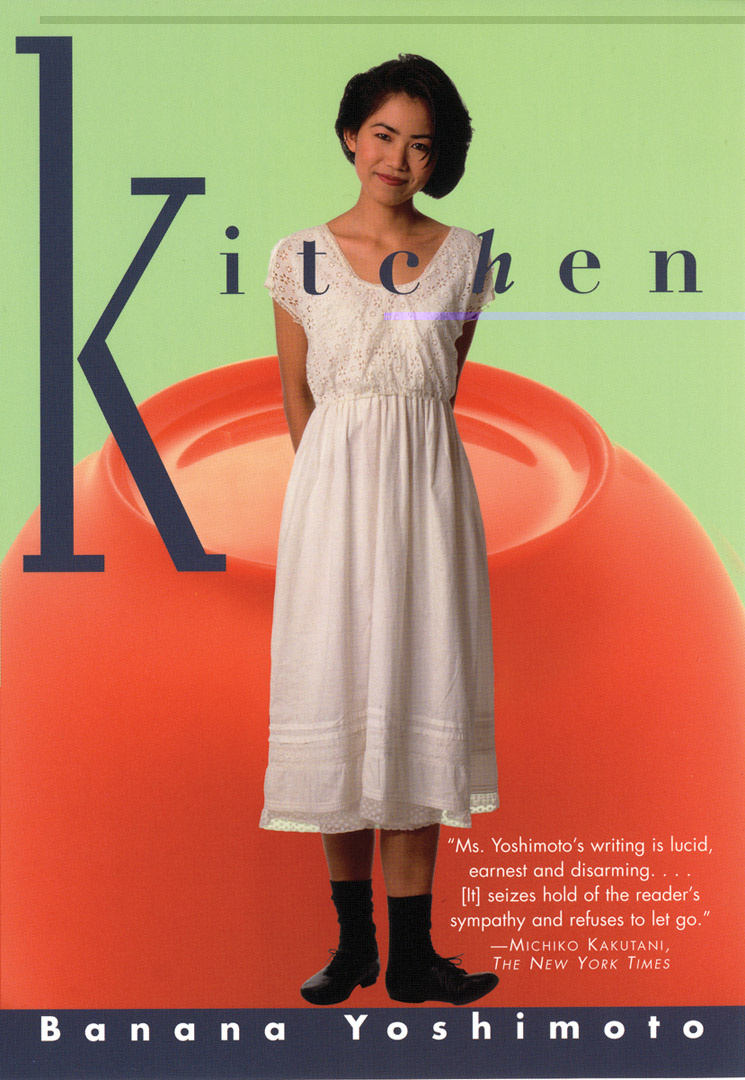
Though I would say that Yoshimoto is a female version of Murakami, her works stand well on their own. She also writes surrealistic stories, such as n.p., Goodbye, Tsugumi, and Kitchen, but she focuses on a situation that leads the main character towards different relationships with people. What I like about Yoshimoto is that her work is really honest and straightforward, something that’s difficult to find in writers nowadays. Her work is easy to digest, but don’t be fooled. There’s always a deeper concept playing beneath the surface of her words.

Kenzaburo Oe

Nobel Prize winner, Kenzaburo Oe, is a well-known Japanese writer with many of his works translated around the world. A prolific writer with heavy themes, Oe captures the depth of human psychology while infusing existentialism into his stories. His works include A Quiet LifeThe Changeling, and A Personal Matter. Although his works are more difficult to read–his audience seems to be for people above a tenth-grade reading level–Oe’s works are worth reading, especially for readers looking to find the gritty side of the human soul.


Yukio Mishima

Though this writer, actor, poet, and film director was born in the early years of the 20th century, Mishima’s works still breathe of lives that face the same issues of loss, death, and reality. Similar to Oe’s dark-themed works, Mishima faces his readers with brutal honesty that isn’t easy to absorb sometimes. Still, his books like Death in Midsummer and The Sea of Fertility tetralogy are worthwhile reads.

Amy Yamada

Although Amy Yamada isn’t so popular like Murakami or Yoshimoto, Yamada’s books are engaging and interesting. Her books, like  Trash and Bedtime Eyes, appeal to older women–many of her titles embraces life as a Japanese woman in the U.S. and the relationships she engages in. What I like about Yamada is her confidence in writing about gritty subjects, like sexuality, racism, alcoholism, and interracial coupling. She’s not shy about the reality of relationships, good or bad.

Yasutaka Tsutsui

Author of popular stories that spawned multiple anime and movie titles, Tsutsui’s books are more suited for the complicated teenage mind. It’s not the plot lines that I would suggest books like The Girl Who Leapt Through Time for the teen-book section. Simply, the English versions I’ve read are written at a fifth or sixth grade reading level with the same level substance. Like Murakami and Yoshimoto, many of Tsutsui’s books have a surreal quality, but more fantasy or science fiction is weaved into the stories. Unlike Murakami and Yoshimoto, who use simplistic vocabulary, Tsutsui hasn’t mastered how to create depth in the stories. As I mentioned before, I would only suggest Tsutsui’s books for complicated teenagers.

As an English teacher in Japan…

As an English teacher in Japan, you realize:

1. How horrible your penmanship is.

2.  How difficult it is to explain English grammar

3. That English can be fun in class

4. How hard English is to learn as a second language

5. How hard English is to teach as a second language

6. That the Japanese teachers write on the blackboards way straighter and better than you

7. That English is a strange language

8. That you’re no speech therapist, but you sure as hell have to try to teach kids how to say “R” and “L” words

9. That your whining about your classes or students will probably go unheard

10. That stickers and candy can get the laziest student to do the activities

Anime and Manga is Funnier When You Get It

Since I was twelve years old, I enjoyed watching anime and reading manga. Fourteen years later, I still watch  anime and read manga, but now, I enjoy them in Japan–and they’ve taken a whole new dimension in my eyes. Anime and manga are actually funnier than I realized!

One series that has Japanese culture bombarding every page in big and small ways is Great Teacher Onizuka, or G.T.O. for short. Blow-up dolls, booty grabbers, and bad boys of Japan spring up in a rather simple premise. Among them are the comical antics of the main character, teacher-in-training Eikichi Onizuka. Somehow, the stupid yet charming things he manages to pull off in a rigid society like Japan makes me laugh.

What a bad Japanese application looks like.

What a bad Japanese application looks like.

In one part of the second volume, Onizuka submits his application for a teaching position at an academy. One look at it, and you’d think, “OK, here’s an honest applicant with zero experience.” It’s truthful, but what makes it funny is how some poor applicant in Japan will take this at face value and submit an application identical to this one. As tempting as it is to copy the anime or manga lifestyle, the sad reality is it’s not reality.

If you’re like me, and you’re inside the Japanese educational system, you’d probably change that line to, “This guy is a dumb-ass.” Everything is wrong with the application! You don’t write what you honestly think. Just write what the interview panel wants to read. You don’t put “my physical body” as a personal attribute. What does that have to do with teaching? And you definitely, under no circumstances, use a cute perikura picture for the required picture–it’s obviously not to size.

Aside from G.T.O., many series have cultural points laid out for foreign readers like the hierarchical system in addressing people (i.e. Tanaka-san, Tanaka-kun, Tanaka-chan) and references to Japanese history or pop culture. Some cultural points can’t be explained, but rather, seen firsthand. For example, seeing characters fall over suddenly when someone says something stupid or ridiculous seems to belong in anime and manga. The keel-over reaction is something I’ve seen at work in Japan again and again. Another piece of Japanese culture that most fans readily identify with is the panty vending machines. I’ve only seen one in a ladies’ changing room at a hot springs resort, but other than that, they don’t exist on every corner of Japan. Cigarette and soft drink vending machines can be seen every kilometer you go in Japan.

I started reading a manga called ARISA about a junior high school student by the same name with an outgoing personality. In the first read, I grasped the story and the characters, but in the second read, I noticed some mundane parts of the manga that are hilarious—that is, if you know the cultural significance of it. Arisa clobbers some boys for throwing a carton onto the ground, something that is illegal in many parts of Japan. I found myself encouraging the boys’ clobbering. “Get ‘em, Arisa! They didn’t recycle!” But only if you’ve lived in Japan could you find that funny while claiming a moral responsibility towards the situation.

Although there are some things that are pretty dead-on between Japanese animation and Japanese culture, the funniest part about it all relies on the cultural points—and how much you get them. Once I was able to understand the real situations from living in Japan, anime and manga took on a different significance.

American Burgers Suck. Go Japanese!

Japan isn’t known for its meat, aside for Kobe beef, but one thing that I’ve come to love–and ironically despise from the States–is the hamburger. Japanese places around Okinawa and mainland Japan can make really good burgers.
The meat that they use is similar to the run-of-the-mill ground beef, but the way it is cooked makes a big difference. The Japanese people take great care in keeping food less satuarated in oils while maintaining flavor. Not only that, but the lettuce, tomatoes, onions, and buns that add up to an overall burger are fresh. No deflated, dry buns. No soggy lettuce and tomatoes. Basically, you get a burger that looks like the picture.
Although A&W is a nice burger joint, I would suggest trying the smaller mom-and-pop shops around Japan. Recently, my husband and I found a great though tiny burger place called B.B. Burger. They have great-tasting burgers with curly fries, bacon, or ham added between the buns, and they always look like the pictures. What I appreciate about this place besides the burgers is their reasonable price. But you have to be careful–you won’t see burgers the same when you go back to the States.

Different Country, Different Candy

The wonderful world of Japanese candy includes a lot of Western candy, but the flavors are different. This Kit-Kat bar is a strawberry shortcake flavor bar, a flavor I have yet to see in the U.S. Even though strawberry shortcakes are notorious for their high sugar content, this Japanese spin on an old favorite concentrates on the taste, not the amount of sugar.

If You Opened This in Okinawa…

If you opened a taco shop in Okinawa, you’ll make a lot of money. But the rule here is that the taco shop can’t be the typical Okinawan/Japanese taco shop. No El Paso corn taco shells from the box. Let’s think about the mom-and-pop shops where the owners only speak Spanish. They have the best tacos with the cheap prices!

If you opened an all-day pancake house, everyone who doesn’t want to cook and just loves pancakes would also love you. There is only one pancake house in Okinawa, but it’s far for the southern folk.

If you opened a Chick-fil-A, many people would flock to this all-day all-chicken fast food restaurant. In the United States, Chick-fil-A restaurants have spanned across the country with many loyal customers. And who doesn’t like chicken?

If you opened an American doughnut shop that was open by 6 AM, salarymen and single people could indulge in a sweet morning bite. Most doughnut shops in Okinawa like Mr. Donuts aren’t open until 9 AM, a time when everyone has to be sitting in their morning meetings.

If you opened a Planned Parenthood in Okinawa, local people and foreigners alike can benefit from the specialized help. Getting birth control is like a leap through fire. Women have to make an appointment, go through several tests, and talk to a gynecologist before they’re administered birth control that might not work for them while shelling out a lot of money, even when insurance can pay partially for it. And the unlucky part of it all is that, unless you get more than a month’s supply of birth control, women still have to go through the same process just to get another month’s supply. At Planned Parenthood, all you do is make an appointment, they give you a pregnancy test and ask a few questions before receiving a year’s worth of birth control for very little. Also, Planned Parenthood specializes in gynecology-related matters (i.e. pap smears, pregnancy, and abortions) and also, like it’s name, planning a family.

If you opened an independent DHL, Fedex, or UPS store, so many people would appreciate it. There were so many times I’ve needed to ship something or mail something, but I couldn’t because the post office only stayed open until 4:30 PM or 5 PM. (Yes, there is Black Cat shipping store, but you have to go in search of their green banners next to stores.)

If you opened a big-and-tall store, mostly foreigners and big Japanese people could be happy about being big in Japan. Clothing in Japan has a “one size fits all” only sign on the tag, so it’s really difficult trying to find something that actually fits people who are taller than 5’2″ with wide hips, broad shoulders, big butts, big busts, and big guts. The only places that sell big sizes–and ironically, they hardly fit–are in the plus size sections of San-A, Shimamura, or Uniqlo, that is, if you can’t get on base.

If you opened a sandwich shop in Okinawa, summertime would bring in tons of sweltering customers trying to find a delicious yet cold fix that isn’t shaved ice or ice cream. Right now, the only places that make good sandwiches–and we’re talking the Subway-esque type sandwiches loaded with ham, cheese, and a myriad of toppings–are on base with the real Subway.

Since October of 2012, a Subway opened up in Okinawa. It’s located in Oroku of Naha City. The prices are slightly expensive compared to the base Subway, but their menu is a little different from the American brand (expect to see teriyaki-flavored chicken and tandoori chicken). For a half-foot sub with french fries and a drink, it’s about 430 yen. If the Naha Subway is too far, it’s better to make your own sandwich.

Goodbye,Rabbit. Hello,Dragon.

2011 is coming to a close, and I couldn’t be happier. With the U.S. economy in a downturn and the politicians doing more to make the situation more disgustingly difficult, this year has been a year of ups and downs.

Since I’ve become used to Japan, being there is like a lifesaver for a recent college grad as myself. I’m still doing a good and comfortable job in English teaching that grants me a relaxed atmosphere in both my work life and my personal life. Professionally, I’ve made a few good decisions, like renewing my contract for another year of teaching in case the U.S. economy continues to be a sanctuary for severe underemployment. Although I did well to continue with a good job and stable income, I’ve tried my hand at writing and art while in Japan. It’s a bit laughable how I haven’t won even one simple writing contest or that I’ve left my favorite manga writing position for writing for myself, but regrettable things happen like that every year, so it’s no big deal.

Financially, my life could’ve been better starting out. I didn’t really know how to save, and when I finally found an attainable goal, I learned. Still, my husband likes to make fun of how much I blew before he came to live with me and how bad I was at money. Now that I’m saving, the future looks a little brighter financially for the year 2012.

As for my personal life, I think my life went in the direction as the economy, with fluctuations here and there, and I’m not sure how I should feel about them. I can’t say I personally became a better person this year. I usually concentrate a lot of energy on my overall goals in my professional life while balancing a healthy relationship with myself. I usually dig a little bit deeper into my psyche and try to fix damaged areas, finding more and more reasons to be comfortable in my own skin. But I don’t think I’ve actually repaired anything within myself this year. I feel like I’ve taken a step back, and at times, I feel like I’ll break. I’ve thought that maybe 2011 was for me to change and break down and rebuild even stronger than before, like a fatigued muscle. But people don’t operate the same way as muscles.

As 2012 looms, I have no resolutions. They all seem futile  when I look at the scheme of life. But there are things that I want to accomplish while I’m trying to live. I want to go back to volunteering in my community so I can feel connected to people somehow. I want to make a difference somewhere in the world, and going away from that makes my heart feel heavy. I also want to work on being less selfish. My husband says I’m a brat and selfish. I won’t discount this because it’s true. I have an expectation of what I deserve, and there are a lot of things that I don’t feel like I deserve just because of certain nonsense things. And I have to work on being more loving and caring for my husband, being more understanding and be like an extension of him. If not, I’ll probably be a bad wife or a continuous selfish person. We won’t have to fight about my selfishness. We can just be a happy wedded couple. If I keep my professional life separate from my personal life, keep my finances controlled and abundant, and become less selfish and more understanding, I’m sure 2012 can be a great year for everyone and myself.

Buying Anime Gifts on a Budget

‘Tis the season to be jolly–or to be more exact, to be mall-y. It’s the holiday season, and that means, buying gifts for friends and family. Unfortunately, if you’re still new to shopping for your anime-lover friend or brother or sister, the mall is the last place I would go to shop. Why? Because it’s expensive! Imagine paying $10–whole price–for a manga volume! Well, if you’re on a budget and paying that much for manga, anime, or Japan-related gifts isn’t something that’s on your Christmas list, I would heed a few points that I’ve learned from buying some great gifts.

Before you head out there, actually make a list of who you’re buying what for. If you make a list, you’re likely to stick with that list instead of buying impulsively and spending all of your money. Also, you should set a price limit as to what you want to buy for each person.

Now that you know more about what to do before shopping, on with the tips!

1. If you have time, go online. There are a lot of websites out there that offer deals just for buying merchandise from them. Websites like rightstuf.com and jlist.com offer savings on anime, manga, apparel, and Japan-related items. And before you decide to roam their pages, sign up for an account with them. You can get additional deals just for making a new account. Re-sell sites, like ebay.com and half.com, offer new manga and anime for cheaper prices outside of regular retailer websites. For instance, you could buy a Bakuman Volume 1 manga for less than $3 on half.com, versus getting it at $7.49 (rightstuf.com) or $9.99 (retailer). The only thing about shopping online is making sure the shipping fee is reasonable, if any, and that the package will arrive on time.

If you’re worried about receiving the gift by Christmas, I would suggest getting a gift certificate. If the gift certificates are still shipped, the shipping fees are really low and it’s more likely to arrive on time because it’s not a box. On some websites, gift certificates aren’t sent out, like on jlist.com. They are sent to the purchaser via email, and all you have to do is print it out (on nice paper, I hope!) and wrap it like a Christmas gift. It takes the hassle out of buying a specific gift for your anime friend and they’ll appreciate not having to return an item they don’t like.

If you live outside of the United States, bookdepository.com offers free shipping to all countries.

2. If you have time and got a dime, get in line. If you already booked yourself to go to a convention, make sure to remember your anime friends and family. For a list of your local anime convention, check out http://animecons.com/events/. If you’re one of those people who don’t go to anime conventions, there’s always the option of going to your local comic book retailer (not a mall one, hopefully), and having them order the manga or anime, if it’s not available in the store. Normally, there isn’t an extra charge for ordering, but sometimes, a deposit of the item’s price will be asked, so come with some cash. In some towns and cities, there are also manga and anime stores. Although they don’t have as many deals as online websites, if you’ve signed up for a point card, you can earn some much-needed points on your Christmas purchases.

3. No dime, no time, draw a line. If you don’t have money but you have some artistic skills, like drawing, painting, or even using Adobe Illustrator, make them a gift. You can personalize it to your choice, and it’s something original for your friend or family to keep. If it’s drawing or computer-generated images, just make sure to frame the piece or put it in a plastic sleeve like the ones used for American comic books (any comic book retailer can sell it to you for less than $1 each).  If you have left over clay or plaster, sculpt a figurine of their favorite anime character, use acrylic paint to color it, and let it dry. Presto! You have a gift that didn’t take hours to construct and zero dollars to make.

How to Survive in Japan: Basics Edition

Many people who have been looking to get away from the dragging economy in their home countries have come to Japan, either as teachers, military personnel, or translators. Though there’s much to be offered in the Land of the Rising Sun, newly Western-world expats still have a thing or two to learn about living comfortably in Japan.

Household

Japan has a lot of humidity in the air, which means that there is a lot of water coming into your apartment or house, becoming trapped in shoe boxes and closet spaces. To deal with the trapped moisture, it’s best to get moisture packs, which can be purchased from Daiso (105 yen shop), the local grocery store, or a D.I.Y. store. If there’s anything that you need in your household, moisture packs are those things. Otherwise, you’ll have moldy sweaters and boots.

COMMAND adhesive hook and strips

COMMAND Adhesive Hook (image from Select2Gether.com)

Although most people don’t come to Japan to decorate their apartments, some people (like myself) feel the urge to make their place as homely as possible. One way is by posting frames, pictures, and posters on the walls. However, if you live in an apartment and there’s no putting holes into the walls for fear of losing a deposit, using adhesive hooks are a good option. But just to say, adhesive hooks from Daiso (105 yen shop) or the local D.I.Y. shop aren’t the best things to use because they leave behind a sticky residue. Tape can also strip walls, especially wooden walls. Best option? Buy some COMMAND Adhesive Hooks in your home country or at your local D.I.Y. shop (online at Amazon also sells them). When using these hooks, the adhesive strips must be applied exactly as the directions state, otherwise, you’ll find some broken frames on the floor soon after.

Of course, clean up is important. My hated part of the household to clean is the bathroom. Do I use toilet paper or paper towels to clean the toilet seat? (There’s no way I’d use a rag or towelette!) Thankfully, Daiso has flushable toilet wipes, strong enough to wipe down the toilet seat without crumbling without worrying about losing a trusty rag or towelette. They’re only 105 yen for a pack of 50 wipes.

Food

Cooking at home is the best way to save money. You can easily rack up a 5,000 yen bill by going to an izakaya (bar) or eating out. Although 5,000 yen doesn’t seem like a lot, when you do it once a week, you’re spending 20,000 yen or more than $200 a month. Instead of spending that much on one meal each time, taking a trip to your local San-A or Marudai can save you a bunch of money. That 5,000 yen can feed you for 3 weeks, or 1,500 yen per week, that is, if you don’t mind making some simple meals. My favorite website to visit for this money-saving cooking skill is RealSimple.com.

Another money-saving option to grocery-buying is purchasing produce from a local produce vendor. Normally, they look like a bunch of obaa selling fruits and vegetables on the side of the road, or there’s a humbly-decorated store with fruits and vegetables in boxes. Either way, these modest vendors sell their produce for dirt cheap. My husband and I saved a bundle of cash (about 200 yen per bag of veggies) just by buying from a local produce vendor. Not only does saving money help you, but purchasing food from a mom and pop shop helps them out too.

Buying frozen foods can save even more money than anything else. If there are no frozen food stores in your local Japanese neighborhood, buying cheap meat in bulk is an alternative. Beef, for instance, can last for over 2 months frozen, so buying in bulk won’t make it go bad. Chicken and seafood are a little more sensitive, but they can be frozen for a while as well. I go to a local frozen food store and buy 7 pounds of frozen chicken breasts for 980 yen. For less than 1,000 yen, I can eat chicken breasts for dinner for a week. Not only does it save money, but your gut won’t expand as easily as your wallet.

Communication

Although English education has been incorporated into Japanese society as its second language, most Japanese people can’t speak English. It’s a reality that most expats realize the first month of arriving in Japan, and it puts a damper on communication efforts. If you’re planning to stay in Japan, learning some basic Japanese starts the process of breaking down cultural barriers. For me, the most useful thing to learn was katakana, a simple writing system that’s used for sounding out words, especially foreign words. I’ve mostly had to read katakana on restaurant menus, product covers, and most sports-related things and events.

Also, it’s good to have a paper dictionary or electronic dictionary that translates between Japanese and English. They come cheap in Akihabara (Tokyo) and in recycle shops. If you only have a paper dictionary and you need to use Japanese immediately, learning certain phrases ahead of time is good. I always use Google’s translation page to help me learn words and phrases that aren’t found in a paper dictionary.

Bank

Depending on where you’re working, getting a Japanese bank account should be pretty easy. First, you need your inkan, or your registered personal seal (it’s as valuable as a signature), your passport, your registered address paper (from your city office), work contract paperwork, and a few thousand yen to deposit. One other thing you need is a letter written by the director or supervisor of your company that states you are working for their company and the length of the contract. Some banks or bank tellers (depending on their viewpoint of foreigners) ask for this as an extra leap of bureaucracy. I personally think it’s stupid red tape when you already have an official work contract available, but you’ll face moments like this in Japan, so you might as well get this letter ahead of time. It’ll save a lot of time and confusion.

Since many people come to Japan with some type of debt or remaining bills to pay in their home countries, sending money home is really important. Still, many people worry about sending cash in airmail envelopes or even just talking to a nice person at the post office and asking them to exchange yen into dollar. Although Western Union is now available in Japan, it has limited offices around Japan. The simplest and best thing to do is link your Japanese account with your home country’s bank account. You can do this by getting a GoLloyds account, a Japanese company that specializes in transferring money. It costs 2,000 yen each time you transfer money, but the transfer also includes a money exchange based on the exchange rate available now.

Clothes

Finding clothes in Western sizes is a little difficult if you’re bigger than a medium size. There are a few places to get some fitting clothing, but the best thing to do is to bring your own clothes ahead of time. If you’re a bigger size (bigger than a size medium for women with a shoe size 7 or smaller, or size 36 pant size in men with a shoe size 9 or smaller), you should bring some comfortable walking shoes, “indoor” shoes, or comfortable slippers you can wear inside only, and a few suits with thin and/or cotton material. Still, if you’ve forgotten something, there are a few places to get clothes. San-A has a plus size section, though it’s very limited, but you can get business clothing there. Uniqlo also has larger sizes, but if you have a bust size bigger than 36″, San-A is better suited with it’s XXL sizes. Another place to get bigger sizes, especially for women on the heavier and bustier side, is Shimamura (しまむら). Like San-A, you’ll find a plus size section.

If you go online to buy clothes, I would recommend going on ebay. Sometimes, sellers ship worldwide (don’t forget to click that option on the left side options) and they’ll give a decent price for international orders. However, if you want something new and right away, some American brand companies are available, especially if you’re on mainland Japan. Forever 21, Victoria’s Secret, Old Navy, and the Gap are available brands in Japan.

Car

If you plan on driving in Japan and you have a driver’s license, you can get an International Driver’s Permit (U.S.) or an international permit to drive. It’s good for a year, but before that year is up, transferring your international permit to a Japanese driver’s license is a good way to go. Depending on what part of Japan you’re in, my advice would be to call a driving school and get lessons before taking the test. The Japanese driving test isn’t about driving safely or practically; it tests your ability to follow directions. Many people fail the first time because of the most trivial things, like not looking under the car before getting into the car. In some places, like Okinawa, the tests are more flexible, and in other areas, they’re more rigid. Just be prepared for it!

Using Anime Influences in the Classroom

I’m a big anime and manga fan. I try to put anime into anything I can: art projects, interior decorum, notebook doodles, anything really. Now that I’m an English teacher, I get to expand all things anime into a new area–the Japanese classroom.
You might be wondering, “How does Japanese animation work in a Japanese classroom with Japanese students?” Speaking English is the first step. Although most students don’t speak and understand English, they know their anime. Using words from the anime puts them on track to understanding something, anything.
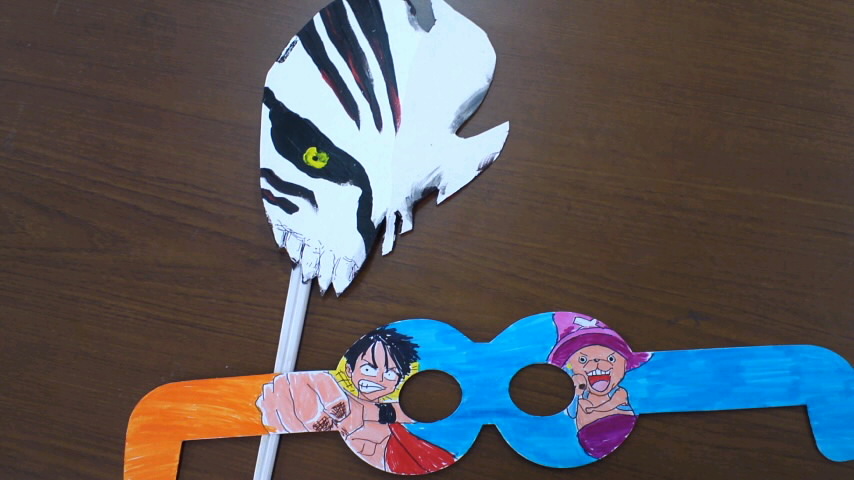
For example, I did a Halloween lesson about Venetian masks. I did a Venetian mask of Bleach’s Vizard mask. “The Vizards in Bleach have masks.” Maybe students will recognize the words “Vizards”, “Bleach”, and “masks”, and with the visuals, they can put two and two together. Plus, anime has become a medium for teaching, and students can relate to something within their generation. Already, most things in Japan have illustrative instructions, and you can see some recognizable mangaka’s work on something as mundane as hair dye. Bringing a little bit of their world into a class setting with English makes it all more relatable.
Even grammar lessons, like “Are you…” and “What is … doing this Saturday?” works wonders in getting the students to pay attention. I know for anime fans/English teachers like myself, I have fun with it every class lessons.

Back from Hiatus: My Bads!

So, I’ve taken a hike for a while here in the Land of the Rising Sun, but I’m back. Where did I go? I mean, the Internet is right there. So are my fingers. But I decided to take a minor break just to collect my bearings and dive into the restart of my new high school.

What I love about my high school is that the atmosphere is really different from that of the other schools I’ve visited, both Japanese and American. It’s calm with a subdue excitement traced back to the students’ carefree nature and the teachers’ peaceful personalities. It feels fun and productive to work at my school.

Going from junior high school to high school is a bit of a jump. In junior high school, it’s a little more stressful than high school. The students are required to be there, and because the elementary schools don’t have a uniform, junior high school is the place where students suddenly have to conform to uniforms, amongst other things. Junior high schools impose some rigid rules on these innocent students, like constantly monitoring their ties and uniforms, or their hair land eyebrows. Teachers are more strict; they’re tasked with changing former elementary students into young, responsible teenagers. People are stressed on both sides: students for the sudden change and teachers for imposing that change.

As for high school, students pay tuition, but they’re left more to themselves to do what they want. They already know the uniform rules, but they have freedom to pick different shirts to wear, girls can wear pants, and everyone can fix their hair, makeup, and eyebrows the way they like. Depending on the rules of the school, teachers are also free to do what they want. There’s minimum supervision and micromanagement compared to junior high school.

I’m enjoying this freedom from being an English assistant teacher, too. I don’t get as many classes, and since teachers rely on me for activities and cultural exchange, I’m also free to do whatever I choose to. In the free time, when I’m done planning lessons and preparing materials for school or English activities, I’m reading. I’ve read many books since starting as a teacher, including some classics like Martin Luther King Jr.’s Why We Can’t Wait, Franz Kafka’s Metamorphosis, and Jack London’s White Fang and Call of the Wild. I’ve picked up some books by Haruki Murakami, or Japan’s contemporary noir-esque writer, George Orwell’s 1984 and Animal Farm, and several black civil rights books.

Of course, I don’t read all of the time. Normally after school, I train students for English speech contests, English spelling battles, and other English-speaking presentations. In some cases, I come back home after being at school for 10 hours. I really like my job, and recently, my husband and I decided on a career in speech-language pathology, or speech therapy. It’s pretty similar to this profession, so I’ve just been preparing for that.

But I really needed time away from blogging. It helps to step away and use that time to spend with people in reality or do things for yourself minus the blogging. Hopefully, once I get my bearings down, I’ll be able to get back to regular blogging until the next time I need some time off.

Getting Through a Typhoon

I remember my mother worrying about typhoons in the Philippines. I didn’t understand what a typhoon was really. I mean, I knew what a hurricane, tornado, and thunderstorm looked like, but a typhoon? Did it have all of those things? Now that I live in a place where typhoons hit as much as hurricanes hit any coastal U.S. town, I have a better idea of what a typhoon is, and why my mother worried so much.

I live in Okinawa, Japan, where the people seem to instinctively know when a typhoon is going to hit. They can even break down what kind type of typhoon it is and where and when it will hit. Particularly, they always warn me about them ahead of time because they don’t want me to be caught unprepared, as so many foreign residents are sometimes wondering where their buckets and patio furniture covers disappear to in the aftermath.

I’ve learned that if someone tells you a typhoon is coming, you have to hit the stores and lock up belongings that are outside. The normal warning is to stock up with enough food for 3 to 4 days, since some typhoons can last for more than 24 hours. Of course, the food that you get is really important. The best kind of food to get for typhoons is food that doesn’t require heat to be cooked nor cold to be refrigerator. In case of a power outage, which happens more often when the typhoon is a Category 3 out of 5 or higher, none of your appliances will work, and it may take some time before they work again. Food like canned perishables, bread, and fruits can be good for those times, as they don’t require heat or cold to stay fresh or be cooked. (Ramen may seem like a good option, but you need hot water for the noodles to become soft).

Aside from food, bringing in all of your outdoor belongings will keep your things from becoming gone with the wind. Anything can be blown away, from buckets and garbage cans to clothes and light patio furniture. Normally, my husband and I bring in our bikes from the veranda (we live in an apartment) so that the rain doesn’t turn them into rust. Whatever is easy to move is better to be taken inside. The wind is really, really strong.

I always have certain supplies on hand in case something does happen. Besides a first aid kit, I have a working flashlight for power outages, charged cell phones in any case of emergency, and entertainment items, like movies, games, and cards to keep from boredom, since you will get stuck inside your place during a typhoon.

With typhoons, you don’t want to be caught outside. Not everyone puts their belongings away, so it becomes a flying hazard for anyone outside. Power lines and trees can get dislodged, giving more threatening hazards. And even if you see cars outside, it’s better not to drive yourself because the roads are slippery, the rain is heavy, and the wind is howling.

All in all, typhoons can be really scary, but if you’re prepared, you won’t have to worry much.


The Personal Side of Being an “Expat in Japan”

There are many expats in Japan, many of which are under the guise of the Japan Exchange and Teaching (JET) Programme. I happen to be one of those expats. It’s not so much the fact that I’m outside of the United States, my home country, that makes me an expat. It’s based off of a matter of choice; I wanted to get out of the United States. I felt suffocated being there. Don’t get me wrong, the United States is pretty cool. Home of the Free. The American Dream. But sometimes, there’s a deeper calling in life than the commercialization of everything that was once precious. I decided that I wanted to develop outside of American culture because there was a whole world to experience. Why not go to the country I’ve always wanted to live in?

Now that I’m here, I’m glad I made the choice. Some things I’ve come to realize aren’t tangible or measurable. I came to Japan, thinking the same thoughts as all otaku think when they arrive in the Land of the Rising Sun: “Oh my God! I’m in Japan! Anime! Manga! School girls! Weird stuff!” Of course, Japan’s culture isn’t just about those things. There’s a quiet respect for people–though, some people will argue it’s a facade–and people will come to help someone in need without expecting something in return. You can’t find that freely in the United States. Also, there’s a need to connect to and respect nature, such as appreciating the flowers and the rich, green landscape that can unfold in the middle of nowhere.

Besides those extrinsic aspects of Japanese culture that I’ve come to love and respect, I’ve realized more about myself. This was my first time striking it out on my own without any of my family members to guide me. I was making my own money (which wasn’t new, by the way), but I was responsible for everything–rent, utilities, food, and entertainment funds. I had to learn how to ask questions. If I didn’t ask, I was bound to miss something and pay the price, literally and figuratively.

Not only did I have to come to terms with my responsibilities, I had to come to terms with myself. I had rid myself of the negative aspects of my American life. No more nagging, nosy mother. No more people assuming because I’m black, I’m stupid or lazy or like all of the stereotypical things. No more having to deal with bummy guys. I was separated from those things, and I could develop into someone that I thought didn’t exist. This development prepared me to accept certain aspects of myself that I saw as faults, as well as accepting others more, like marrying and living with my husband. (Let’s just say that marriage is a whole different blog post to begin with.)

Aside from my personal growth, the things that were tangible and measurable became more apparent with life in Japan. My husband and I realized that being in the United States at this time period was devastating to working people. The economy is currently disastrous, and even some of our friends are having difficulty finding a minimum-wage job, though they have a Bachelor’s degree. Frankly, being able to save up in a different country is fun and economical, especially when the dollar is so weak and federal taxes give you a “pass” card the first year abroad. In monetary terms, being abroad is great. On top of the savings, there’s gaining work experience in a prestigious field along with learning Japanese that makes being an expat in Japan pretty appealing.

But being away from the United States gives any open-minded expat a common foundation: there’s a new perspective on the United States waiting to be scooped up. It could be a positive perspective, like seeing how people the U.S. are free to speak out, or simply understanding more of the good points of the United States. The perspective can also be more negative, such as realizing how spoiled Americans can be, or realizing the bad aspects of American cultures mostly visualized through obese people and the growing numbers of prisoners. Either perspective that expats choose to acknowledge, being an expat in Japan is one experience that can never be forgotten.

4 Strange Things to Notice About Japan

Japan is known for having some useful things, but what comes with great machines are also strange inventions and innovations.

1. The Sense-roid is more than a mannequin with a vest–it’s a hugging device. Yes, a hugging device that you hug and hugs you back. It’s simple. Just strap on an identical vest that’s packed with sensors and give the unarmed mannequin with silicon skin a hug. It’ll vibrate to simulate a hug. What’s weird about it–besides the informational video found on Youtube–is that the Sense-roid is really depressing. Do you really need to buy a hug machine for some human affection? I bet if you ask a stranger on a street, you can get a nice, fully-armed hug for zero yen.

2. If you thought tofu burgers were strange, there’s another kind of burger that’ll make you swear by tofu burgers. They’re called turd burgers, or burgers made from human excrement. A scientist in Japan developed a process to extract proteins from sewage mud, and by making it into an artificial meat shape, it is edible in burger form. According to the scientist, the meat itself would cost more than twice the amount of normal meat because of the careful process. “But it’s high in protein,” he claims, adding that the meat is very healthy. At those prices and my wallet, would I really trade in a tofu burger for a shit burger? I think not.

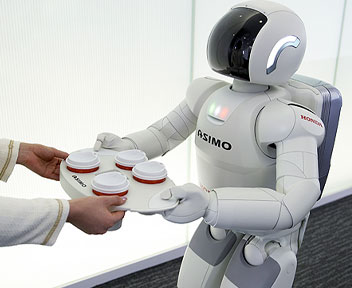
3. Like every industrialized country, Japan also seeks to push the limits of technology. Still, Japan definitely has some neat yet strange robots lurking in the daily aspects of their citizens’ lives. One of the most popular robots from Japan is a Honda-created robot named Asimo, who can walk, run, and serve coffee. Another robot is the catwalk robot from the 2009 Japan Fashion Week who can walk and talk like a young Japanese woman. And lastly, there’s the Gundam Wing mecha that was sitting in Tokyo.

ASIMO serves coffee

You’ve got served…by ASIMO (from “World of Houg” blog)

4. Japan is good at “borrowing” other countries’ stuff and claiming it as their own. Sometimes, they make it better. For instance, bread is actually a commonality to the Japanese grocery store, unlike what Western people tend to believe that Japan is a non-bread country. In actuality, bread is done better in Japan than in the United States. (Of course, this is my personal opinion, but there’s a sure reason to not hate Japanese bread). The bread is soft and moist, and some breads are thick–perfect for sandwiches or even homemade burgers. Sometimes, Japan borrows foreign food and makes them, well, not as good. The ever-popular taco rice from Okinawa comes from, you guessed it, tacos of Mexican descent. Taco rice is made with ground beef and seasonings that you can find underneath “taco seasonings” from the El Paso brand. The beef goes on top of tomatoes, lettuce, and rice. It’s just as it sounds, and if you’re an avid taco-eater like I am, you’ll definitely want real Mexican food to wash it down. Then there’s curry rice, commonly called kare (カレー). For people who like Indian curry, it doesn’t have a lot of spice, but as a Japanese food, it tastes pretty good without the spicy burn.

Japanese Curry Rice

Japanese Curry Rice (from the “Closet Cooking” blog)

The Living Sea – Dragons in the Water

Sleeping on the boat ride over to Kudaka Island, a tiny island several miles from the southern shore of Okinawa, felt like a waste of a perfectly peaceful morning. From the emerald green mountains that loomed in the distance to the rolling blue sea immediately beneath the boat, the sight was worth more than a few extra snores. The sea itself amazed me. It looked like a living thing, the sea, with every tiny depression appearing closer to an azure dragon’s skin. It swelled and fell, breathing, waiting for something to challenge it before it broke white, hungry waves over everything in its path.

I suddenly understood why people strove tirelessly to protect the sea. When you look at it with keen, clear eyes, the sea is just as alive as humans are. Pushing garbage into it is the equivalent to forking rotting food into our mouths. And though humans can dispose of any poisonous morsels, the damage can’t be undone. The beautiful sea is the same way. Trash builds up on the shoreline and the sea creatures within its belly suffer. Ironically, at the end, we humans pay the penalty for our inconsideration. The infected sea creatures, like shrimp, calamari, and fish, go straight into our mouths, and the beaches our children delight in cannot grant them love anymore.

But, if humans with seeking eyes, take a boat ride–any boat ride–over the sea, they will understand its distress. After all, the sea is an extension of life.

3 Things to Notice While living in Japan

Another list about living in Japan, narrowed down to three things.
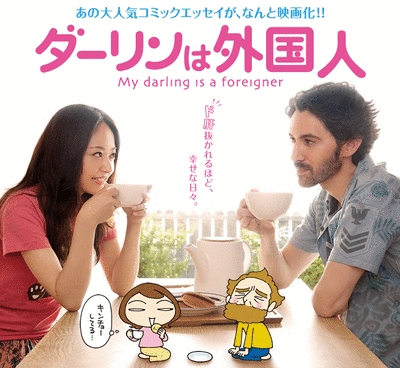
1. You’ll see foreign men with Japanese women, but not so much Japanese men with foreign women. I don’t know the exact reason, but there are many half-Japanese kids I’ve met with foreign dads. Maybe it has something to do with the ratio of men to woman, or if Americanized imports, like Hollywood movies and Disney fairy tales, play any role in these couples, but there’s a stereotype that foreign men will do chores. Every foreign bachelor who comes to Japan will have a Japanese girlfriend within a few months. (Just look at the 2010 movie make of the popular My Darling is a Foreigner manga!) But for foreign bachelorettes, it’s not the same. The way that Japanese culture is set up doesn’t support Japanese men–who are used to being served first–to be with a foreign woman–who is more likely to see everyone as equals, especially if they are from the Western world. There isn’t much space for outright opinions, which is a stereotype towards foreign women.

My Darling is a Foreigner

My Darling is a Foreigner from icollectmovieshq.blogspot.com

2. You get more for your buck…er, I mean, yen. The quality is better, but so is what you can get. At the convenience store, I can buy breakfast for my husband and I for under five hundred yen. There are already prepared dinners–not the frozen kind– for sale at the supermarket that can feed a small family of four for around a thousand yen (less than $10). And if you like to drink, there’s all-you-can-drink specials for around eight hundred yen. Even car insurance is reasonable and you can easily customize your coverage. It may seem expensive to live in Japan, but the actual value and quality gives a lot of worth.

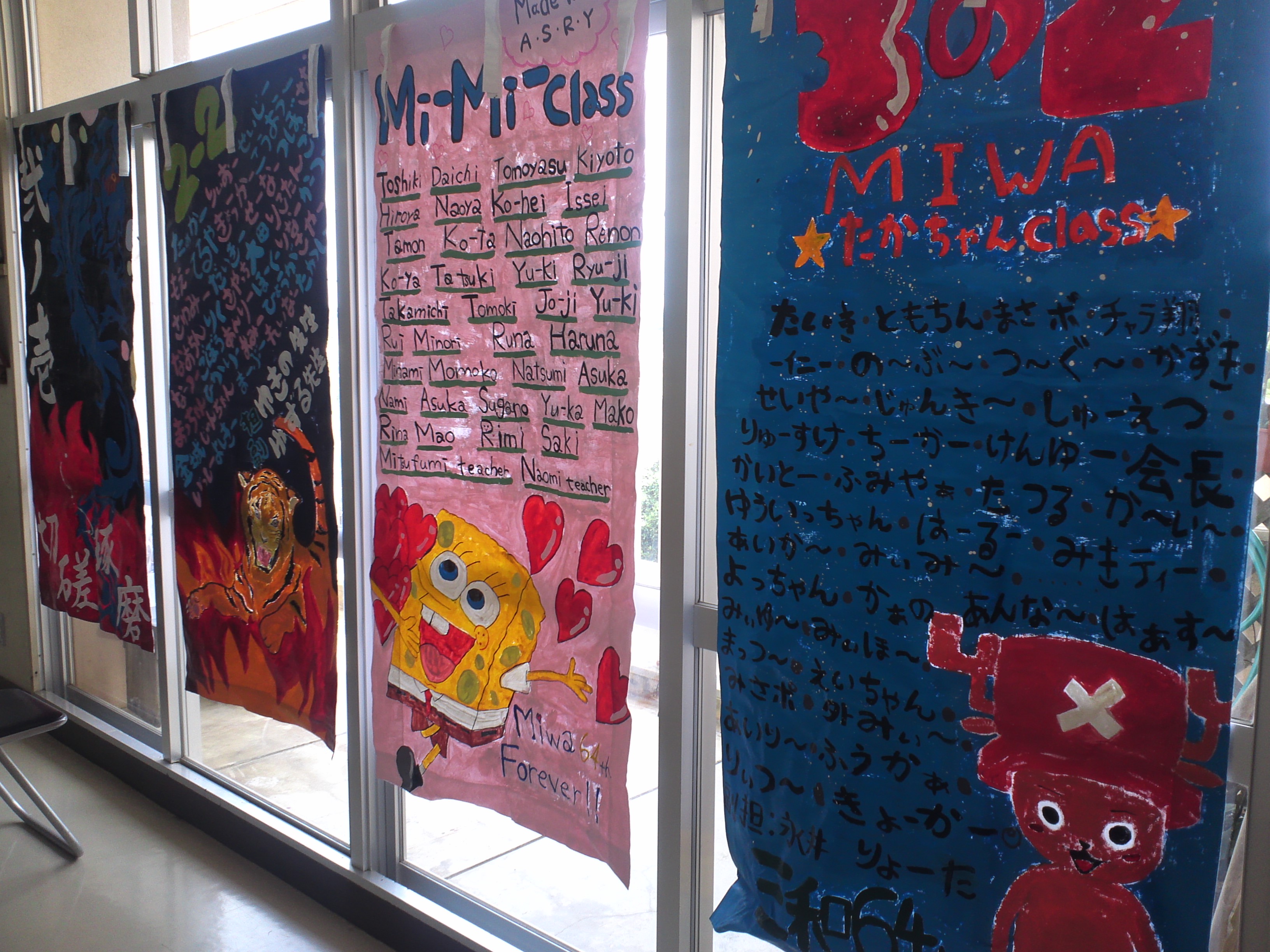
3. Characters and mascots are everywhere. All products have cute or appealing characters to entice buyers or explain instructions. My students even like putting popular characters to represent their class banners.

Mascots on my students' class banners (Chopper from ONE PIECE, SpongeBob, and Tigers)

5 Things to Think About in Japan – The Downer Edition

Since I’ve been doing a lot of lists about things in Japan that might not be known by the people in my home country, I’ve decided to do a more thoughtful list. But, this list isn’t as happy-go-lucky as the other ones, so be prepared to think and wonder.

1. Japan has a lot of nice countrymen–so nice, that the usual codes don’t feel like discrimination. I’ve read stories of foreigners in Japan being turned away from clubs, bars, and other places because they aren’t Japanese. For those who don’t know Japanese, you probably won’t understand the situation until someone points it out. For others who do and have learned Japanese culture and code, it will always be a shock and disappointment. I’ve learned that Japan can still have close-minded people or methods. For example, when I went to open a bank account, the bank requested that a letter of employment from me–and the person who I went with was a bit angry. “That’s discrimination,” he pointed out later, and I didn’t understand until he told me that this was his first time hearing this and he’s helped many people open bank accounts in Japan. Another example happened more recently. My husband and I decided to check out a nearby bar that had pool. Right when we walked in, a bartender stopped us and kindly stated, “You must have a member’s card.” We were refused before ordering a drink. Everyone else in the bar was Japanese. This event also happened to some ALTs on mainland Japan, who noted it in a JET writing contest, the code of having a “member’s card” or being a “VIP” as the same thing. So, before anyone thinks that Japan is a quiet haven free of stereotypes and discrimination, remember that Japan was once closed to the rest of the world for several decades.

2. The quality of service in Japan is one that makes Western countries pale in comparison–or is it? In the United States, everyone expects McDonald’s hamburgers to be slapped together without a care, or other people to ignore you when you’re in a state of need. In Japan, it’s a little different. Food is made with more care, presents can be wrapped at any store, and people generally help you out when you look like you need help. My husband made a great point when he looked around with fresher eyes than myself; “Is it because the quality in Japan is so good, or is it because the quality in my home country is so bad?” My answer would be the latter. Why? Individualism has to have sacrifices, and one of them is human decency. The mantra, “Think of yourself! Buy for yourself! Be yourself!” rings more strongly than “Think of others! Buy for others! Be kind to others!”

3. Image is too important. When I went to a soccer match for one of my schools, all of the students that weren’t involved in the sports had to go to the match to cheer on their school. I sat there with my students–and became immediately bored and disgruntled. Why were these kids sitting in the hot, sweltering sun in these thick uniforms? Most of them were digging in the dirt or trying to stay cool. They weren’t even paying attention to the soccer match, and some teachers lectured them about it. What’s the point of dragging these kids to “cheer on” their school if they don’t want to? To form a stronger bond with their school’s team when the players don’t even realize they’re there? Or is it really just about images, like the image that there’s so many people to support you because there’s bodies in the stands? This is something to see in every aspect of Japanese life, too. Going to a nomikai, or a drinking party, is attended by a whole office to reinforce bonds for working. A non-drinker could feel left out, so why should they go? For an evening of watching other people get drunk? Or is it image again, the image that there’s unity amongst the office workers who really don’t know each other?

4. Everyone does everything hard–school, work, and playing. Students start studying rigorously for exams in junior high school. Adults work well past 5pm–sometimes until 8 or 9pm–just to complete a report. Additionally, adults can party hard in Japan. Lined on every street, there are armies of izakaya, or bars. Some you can recognize simply by the red lanterns glowing outside of their doors. Others are openly advertised with 100-yen beers on banners. Many adults go to these bars, drink until they’re drunk, stumble onto another bar, drink, maybe go to a karaoke place or bowling, then go back to drinking. And this can happen on any given night, most of the time, immediately after that 10-hour or more job. It’s really common to see a salaryman stumbling through the streets drunk. But does all this de-stress people, or does it add to the stress? It’s not like their livers are getting any better at filtering beer, work, or studying.

5. As a teacher, there is another close-mindedness that extends beyond the classroom. Many people just assume that as a foreigner, you don’t speak Japanese. For example, in meeting my husband’s school principal, he could introduce himself in English very well. Then, he looked at the Japanese librarian and said in Japanese, “She’s cute.” I said to him in Japanese, “Thank you,” and his eyebrows went up in surprise. In class, it’s fine if the students struggle a little bit to find the English word–they’re studying the language and every bit of practice can help them on their tests and in the real world. But as an adult, it’s somewhat sightly to see the internal struggle. Just say it in Japanese, and if I don’t understand, it’s not a big deal. Gestures work too. English, or any other language that’s learned, doesn’t have to be perfect. This is where students and people get in an unnecessary panic. I, as a native English speaker, simply just appreciate the willingness to try to communicate in English.

6 More Things to Learn When Living in Japan

Here are a few more things to learn when you’re a foreigner living in Japan:

1. Everyone loves to say “kawaii” (cute), “kakkoi” (cool), or “ikemen”  (slang – cool or hot) whenever you wear, say, or do something interesting. It seems that Japanese people are always watching you, especially when you’re a newcomer. If you’re new to an office or school, people will notice even the smallest things about you, like your hair, earrings, bracelets, watches, or clothing. It’s a little more daunting if you’re not used to being watched, but for teachers like me, it’s a good conversation starter in English.

2.  You’ll get invited to everything. Whether the invitation is from other foreigners or from Japanese people, there is a need for everyone to invite you to every event taking place in the city. For foreigners, it’s just another chance to hang out with part of the 4%-foreigner statistic in Japan. For Japanese people, it’s a way of showing off their culture that most foreigners would be unaware of.

3. If you know how to use chopsticks, you’ll get comments wherever you go. Because there’s this misconception that foreigners don’t know how to use chopsticks, if Japanese people see a foreigner eating with them, they’ll point out in Japanese, “You use chopsticks very well.” If you come to Japan to work or teach, you’ll hear that incessantly. It’s just a way for Japanese people to get to know you. (For me, I tell them that I’ve used chopsticks since I was in high school because I knew I would come to Japan one day.)

4. It’s hard to get anywhere with “maybe”. It’s more of a cultural thing than foreigners realize. In the United States, “maybe” means that you’re considering something, but there is no clear-cut “yes” or “no”. If you say “maybe” when talking to a colleague in Japan, unless they’ve lived in a Western country before, most Japanese people will take it as a “yes”. Also, most students don’t learn the word “maybe” until they’re in senior high school, so using it freely in a conversation with junior high schoolers and elementary school students will get you confused stares. Be careful about saying “maybe” when someone invites you to an event you don’t want to go to. They’ll be expecting you to show up!

5. Customer service runs really high in Japan. Even if you’re a customer in a McDonald’s, you won’t find customer service like that in Japan. Being a foreigner who hasn’t studied Japanese, going to a fast-food place can be a little scary because everything is written in Japanese. However, most places in Okinawa has an English, Korean, Chinese, and/or Spanish menu ready for foreigners. There are some restaurants on mainland Japan where the menus have Japanese with English translations. Aside from language, places like airports are really impressive with customer service, though they must be strict with the rules. Recently when my husband and I were at Haneda Airport looking for their popular roll cake, a worker told me that they didn’t have it at their shop, but she called around to find which shop had the roll cake. She directed us and when we arrived, the other worker was ready with roll cake in spite having to close in that last few minutes.

6. Advertised food actually looks like the pictures. More than likely, when you order something, the food actually looks like the pictures. It’s not just slapped together like someone didn’t care. There isn’t too much of anything on it (unless you’re a picky type). Just right.

Mega Burgers from McDonald's

Mega Burgers (2007) from McDonald's (source: supersizedmeals.com)