Devil Pocky for Pocky Day 2014

Japan has many food holidays on specific numbers such as Strawberry Day (January 5th), or ichi go, which means “strawberry”, and  Veggie Day (August 31st), or ya sa i, which means “vegetable” in Japanese.  One food holiday that uses dates with a special meaning is November 11th’s Pocky Day. November 11th, which is 11-11, looks like a pack of the chocolate-coated biscuit sticks. Glico and their amazing marketing team put together a commercial just for this sticky snack.

This year’s commercial idol is Gantz live action star and ARASHI boy bander Kazunari Ninomiya. In the commercials, he plays a “demon of sorrow” while holding his precious Pocky.

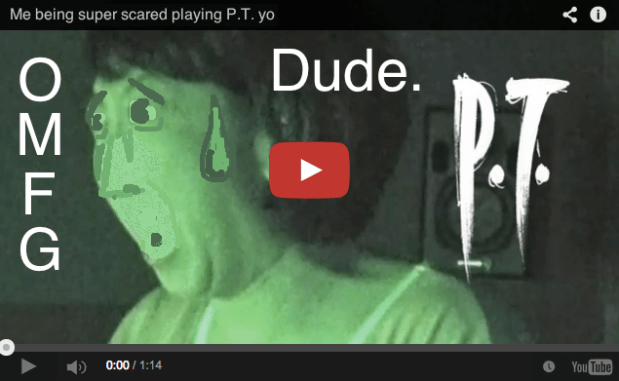
I love how Kazunari screams, “Help me!” at the end of this commercial. Dude, you’re a demon. Even you’re sad, stop tearing up my neighborhood!

Anyways, how can you celebrate this fun and simple holiday? You can buy Pocky or try the Pocky Game Challenge.

#9 of 33 Art Projects: Fall Cover of the Ryukyu Star

I’m getting used to making digital art nowadays, and this next project proves it. In my past art projects, especially the last Ryukyu Star cover and my personal avatar picture, I had trouble with the coloring. There was a thin layer of white surrounding all the lines I filled in even when I made the pictures into vectors in Illustrator. I finally looked up how to color hand-drawn images from a free class on Skillshare.

skillshare

I highly recommend joining this website. It has classes on art, writing, and marketing–all things artists, writers, and self-promoting bloggers need in this digital world.

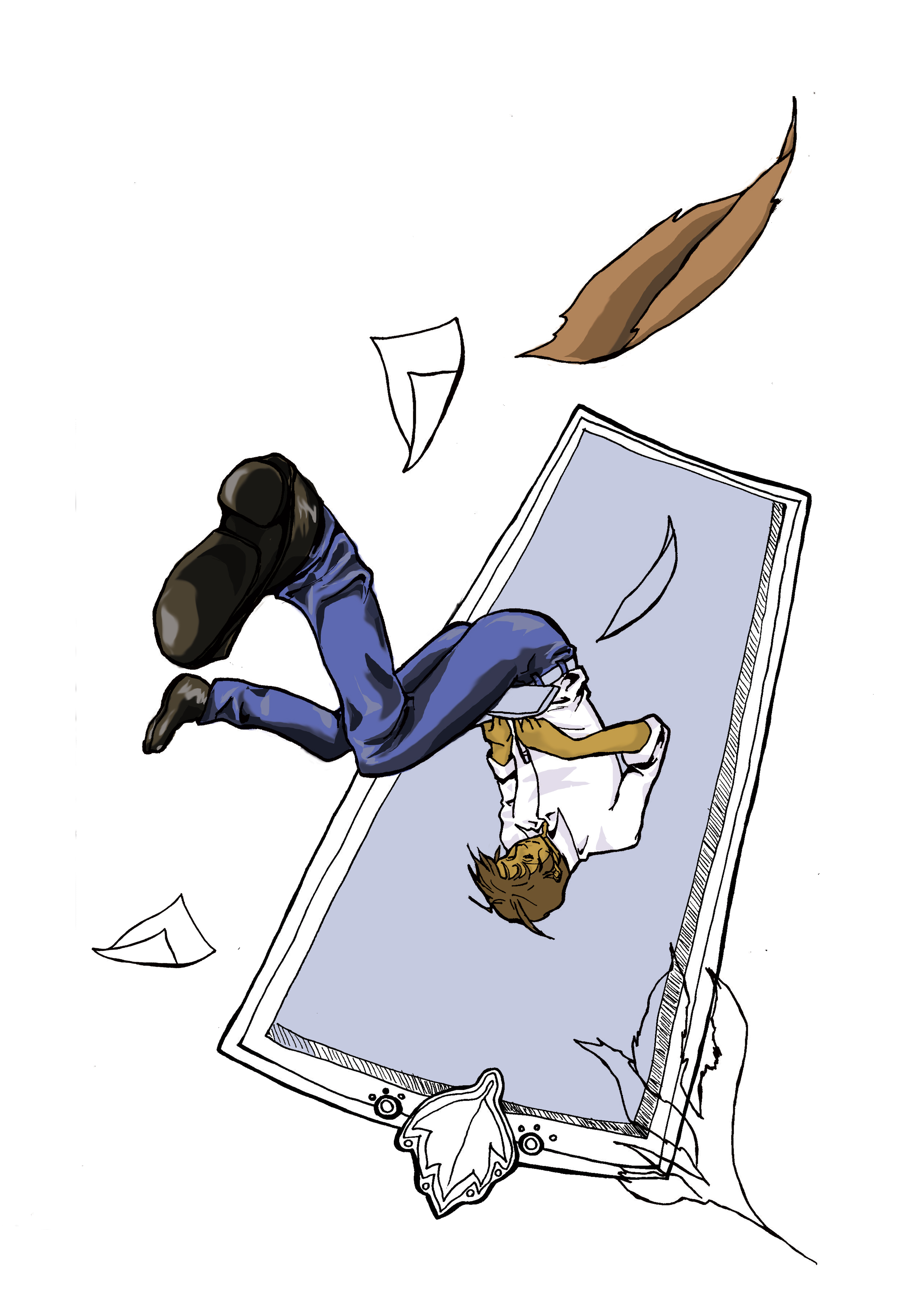
The hardest part about this project? The actual concept. I hate re-using other motifs, and if I have to, I’d rather just not do it or tackle it in a different way. I pulled out the most famous part of Alice in Wonderland–falling down the rabbit hole–and replaced Alice with a man working on something because this is the busiest time for English teachers.

Image (69)

I ended up changing the original concept and added a fall-to-winter doorway.
rsFallcover2014_1 After changing the original design, I started to paint the image in Photoshop. I learned that if I put the image’s layer in Multiply mode (it’s usually set in Normal mode), all whites in the picture would become transparent. This solved my white line problem and made my life a lot easier.

rsFallcover2014_2

I did almost lose the colored picture. I was happy to play with lots of colors and gradients to get the final image below.

rsFallcover2014_3

Devil May Cry: The Animated Series

Devil May Cry: The Animated Series

Review by: Jd Banks

Licensed by: FUNimation Entertainment

Production by: Madhouse

Devil May Cry hands over what fans want in the form of blood, swords, and platinum white hair. Following the premise of the popular Capcom game, Devil May Cry stars Dante, a rumored half-demon, half-human demon hunter with an affinity towards pizza and sundaes. In spite of being an odds-job mercenary, Dante only services a client base looking to kill demons. Between bouts with man-eating demons, many of which prove to be either annoying or perpetually idiotic, Dante lives a simplistic life waiting for more jobs to filter into his business called Devil May Cry. At his side is his agent, Morrison, who carries in the information and clientele. Other characters thrown into mix include other demon hunters and an orphaned girl masquerading as Dante’s immature sidekick.

The main plot is casual compared to the anime’s game predecessor, but it is in animation that Dante can truly flaunt his personality. With Madhouse’s superb productions making each sword-swinging and gun-toting scene memorable, Devil May Cry reaches the same dynamism as the game. Most of the action scenes are filled with bullets hitting their targets, swords clashing, and Dante dodging deadly attacks made by demons three times his size. There is a monochromatic nature to the anime, excluding the bright-colored orphaned girl, but the animation is on par with the Devil May Cry video game.

Aside from the animation that leaves fans hungering for more action, the characters are downright predictable, bringing down a grade-A anime. Conventional characters and character personas drag an anime down, no matter how great the animation may be. Though Dante is a bonafide badass in killing demons to protect the human world, he has a kind streak that prevents him from paying off his debts. His agent, Morrison, is kind as well, but his nature is more business-like. He may go out of his way to fix a jukebox, but he only does nice things to pass the time without work. Most of the time, he scolds Dante when a job is uncompleted.

Beside Morrison and Dante is little Patty Lowell, an orphan chosen to unwittingly impersonate another Patty Lowell during one of Dante’s assignments. Her vibrant and rambunctious personality contrasts with Dante’s lazy persona as well as everything else that Devil May Cry represents. Typical of anime, Patty plays a crucial role at the end of the series, but other than that, she’s a cheap form of comedic relief, if there is any. Even the squabbles between Dante’s ex-partner, Trish, and another demon hunter dubbed Lady, are not very funny. They just part the awkward silence between demon-hunting.

Discarding the nature of the characters, Devil May Cry has many selling points. The entire anime series is only twelve episodes long, keeping the attention span of those itching to get right to the good stuff. There is the option of picking the English dub version or Japanese language setting with English subtitles. Even the riveting music from Rungran gives the anime an interesting audio backdrop.

Devil May Cry offers an above-average anime within the confines of the conventional anime box. If you want to boost your anime collection, pick up Devil May Cry: The Animated Series.

Uzumaki Volume 1 Review

Uzumaki Volume 1

Art and Story by: Junji Ito

Published (JP) by: Shogakukan Inc.

Licensed (US) by: Viz Media

Spirals seem pretty harmless—until Junji Ito’s Uzumaki comes into the picture.

Uzumaki is a manga about Kurozu, a small coastal town cursed by all things spiral. When Shuichi Saito’s father becomes obsessed with anything spiral, a series of events reveal the deep-seeded curse of uzumaki, or the spiral. Told from the perspective of Shuichi’s mild-mannered girlfriend, Kirie Goshima, Uzumaki follows the twisted fates of the town’s inhabitants.

Uzumaki is more of a psychological horror with a corporeal feeling about it—almost as if spirals can grab any reader and drive them crazy. With each event surrounding the residents of Kurozu, readers become just as confused and fearful as the townspeople. No one knows why the spirals are causing such chaos, and the characters don’t try to seek out why the events are happening in the first place.

By the end of the first volume, the spirals seem to be just a natural occurrence. With the repetition of spirals throughout the manga and the characters not making a break for another city, Uzumaki leaves any reader wondering how much more damage can be inflicted by spirals.

The art of Uzumaki is truly beautiful while depicting gory scenes. There are points in the manga where certain scenes could be isolated from the rest of the manga and framed inside a J-horror exhibition. Ito does an excellent job in making impossible things—Shuichi’s father twisting his entire body into a spiral—believable. It helps the imaginative story become more realistic and visceral for the reader.

Uzumaki showcases the talent of Junji Ito, one of Japan’s leading horror comics artist. Besides Uzumaki, Ito has released horror greats like Gyo and Tomie, which was turned into a live-action movie. Drawing from famous inspirations Kazuo Umezu, Hideshi Hino, and H.P. Lovecraft, Ito has forged several unforgettable horror manga that garnered him the prestigious Umezu Prize for Horror. His background as a dental technician also appears in his work, especially in the various illustrations of the human body.

With its chilling story and convincing artwork, it is easy to see why Uzumaki was nominated for “Best U.S. Edition of Foreign Material” in the 2002 Eisner Awards.  Uzumaki has the whole package in a horror manga. This is one manga that will definitely have readers thinking twice about spirals.

This Week at Jade’s Escape: Bloody Kiss and the Vampire Trend

vampiretrend

Topic: The Vampire Trend in Manga

Manga: Bloody Kiss by Kazuko Furumiya

The first installment of Bloody Kiss is one manga fit for the Twihards and the Vampire Knight cosplayers who aren’t tired of bloodsuckers and half-baked romances. It begs the question– do manga creators just decide that no matter how overworked a vampire story is, they should add to the fantasy simply to make sales?

It’s no secret that the vampire mythos can sell. Among the uprising of TV shows and movies boasting vampire stories, anime and manga have followed the neck-sucking trend with the same aggression. The sales drown out the opportunity for releases to settle into a legacy. There’s a stop sign in red somewhere, and creators ignore it. For instance, after Blood: The Last Vampire took the anime movie world by storm in 2000, fans received a subsequent anime series, Blood+, in 2005. However, Blood: The Last Vampire was made into a live-action movie in 2009, biting a big fat hole into the entire Blood franchise. If creators had stopped at the anime series, the Blood line would be pure enough to be considered memorable anime.

In trying to squeeze out dollar bills from a perfectly fine anime, creators don’t know when to call it quits with the vampire trend in general. It shows in several shabby releases, including the transparent Tokyopop title, Bloody Kiss. The plot is ordinary: a high school girl inherits her grandmother’s dilapidated mansion, instantly becoming a landlord to two male vampires. On a daily basis, Kiyo has to maintain her school life while trying to keep her vampire roommates off her neck. It’s a step up from Vampire Knight–at least Kiyo wants to be a lawyer someday–but Bloody Kiss falls flat when it comes down to conveying depth. Every serious moment has to have a joke, and even those aren’t really that funny, just sad.

On top of the failed comedy, the characters aren’t that lovable, and in a vampire story, you can’t expect them to be. Vampire stories aren’t about connecting with people– it’s all about the angst, undead creatures who suck blood. What can be so lovable about those Debbie Downers? Bloody Kiss makes the attempt to humanize these bloodsuckers with humor, but it doesn’t work in copious amounts of annoyance. It seems that this lifeless manga was rushed to the world just to make a few more bucks off the popularity of the vampire trend. But was it really worth it? Was it even good timing?

Though it appears that the vampire trend is as alive as the main characters are undead, a closer look at the trend reveals that it’s starting to wane. Between 2005 and 2008, at least 8 vampire manga or manhwa circulated at the same time. Blood+, Hellsing, Rosario + Vampire, and Trinity Blood were released or already circulating in 2005. Dance in the Vampire Bund started its serialization in Comic Flapper in 2006 while Vassalord was released that same year. But after 2008, some series ended and fewer began. Since then, at least 3 series have continued giving fans the bloodsucker treatment, a big drop from the 8 vampire stories from years prior. In 2010, Bloody Kiss, along with equally unfinished and un-funny vampire manga, would’ve had little chance of surviving its predecessors in an overall downturn of vampire stories.

The deflation of the vampire trend in manga may relate to the quality of content from titles. Today’s vampire manga rely heavily on the bells and whistles, not enough on the interesting aspects of the vampire-human interaction. Look at the late 1990’s vampire manga. The core story lines featured vampires without overdoing the dramatic plot twists. Former CMX’s Canon (1994) starred a sickly girl who uses her second chance as a vampire to exact revenge on a powerful vampire responsible for her classmates’ deaths. The late Tokyopop’s Lament of the Lamb (1997) depicted a high schooler who learns that he and his sister were born with the same vampire-like terminal illness inherited from their mother. Even Hellsing (1997) hosted an engineered vampire who works against other undead creatures in the interests of Great Britain. No vampires from another planet, no stupid jokes, and aside from Alucard’s love of humiliating enemies, no games. The straightforward approach for these vampire stories did well in humanizing the undead.

Even though taking a hint from the past is a world apart from planning for the future, giving Bloody Kiss and similar manga some extra time for development would have helped their overall quality. Given that more time means pushing against the trend, sometimes the best thing to do is not to cash in on the current tasteless buzz.

#8 of 33 Art Projects: Bingata Lends Itself to Ukiyo-e

Every summer, the art teacher in my school does bingata lessons. I did this last year and the year before.

140730_1544


First, a water-soluble resin is put through a stencil with wire and dried. Afterwards, you can paint directly on the dried parts. The painting process is similar to making woodblock prints (ukiyoe). You first apply the base layer, which is usually a light color. In all of my paintings, I use really light colors that contain yellow (unless I plan on painting blue or purple over them). It’s really important to know what the final picture will look like so that you can plan the base accordingly. If not, it’s easy to drawn out the base color with indecisive colors.  After the base colors are applied, you dry the dye with a hair dryer and go on to the next part of the painting.
140819_1427The second part of the painting process is putting the final shades and tones. I use a small soft brush and a regular brush (one in each hand) and blend the colors. Because I started out with bigger brushes, the phoenix in this image came out funny. It’s my own lesson to choose my brushes carefully from now on. Once all the colors have been applied, you dry the dye until the resin flattens. Place your finished painting into water for a few hours, or if you want the resin to come off more easily, put it in water for a couple of days. Finally, you wash the resin off without rubbing the fabric together, and let the fabric dry.

This one wasn’t my favorite bingata because I only had an hour to make it where I previously took two or three hours to make.

What do you think about it?

This Week on Jade’s Escape: How Attack on Titan Isn’t Actually About Titans


aotheader1

Topic: How Attack on Titan Isn’t Actually About Titans

Manga: Attack on Titan by Hajime Isayama

When anime fans look at Japan, they look at the anime and manga and the weirdness that seems to pour out of its red sun. They are part of Japan, but just as The Simpsons, American football, and twerking don’t represent the Western world, strange otaku culture doesn’t encompass all of Japanese society. The only way to truly understand Japanese culture is to live in Japan—and from there, things like Hajime Isayama’s Attack on Titan become commentaries on today’s world.

Most fans would say that Attack on Titan, a horror manga where Titans eat humans, is a story about survival, the key component to all horror manga. If survival was removed, the walls that protect human civilization from Titans would be the barrier dividing traditional Japan from foreign cultures.

Since the end of sakoku, or national isolation (literally “chained country”), and the atomic bombings of Hiroshima and Nagasaki in 1945, Japan has been chasing the rest of the world in technological advances and cultural inclusion. However advanced Japanese society seems to foreigners with its cars and ASIMO robots, Japan hasn’t broken away from its traditions. Miso soup and zen gardens are still part of Japanese homes and schools, and tattoos continue to be scary marks of the Japanese mafia. One of the most-iterated proverbs in Japan, “The nail that sticks up gets hammered down”, is ingrained in Japan’s soul—so much so creators have made a living from selling uniqueness.

Just as the first wall in Attack on Titan is easily compromised by a single Titan in the first volume, foreigners and visitors will see through Japan’s image after living in Japan for a few months. Though Japan has English education, revised immigration laws, and communication with foreigners, those things just say, “We’re not totally oblivious to the rest of the world.” The reality is Japan is uncomfortable with diversity: Japanese students can’t use the impractical English they’ve memorized; biracial Japanese people can’t hold dual citizenship after the age of 22; and Japanese people are not likely to meet foreigners in their entire lifetimes.

The other two walls in Attack on Titan aren’t easily fallible. After living in Japan for a few years, foreigners see Japan’s true colors, and they’re redder than people think. In Japan, being different or individualistic isn’t a good thing. People who are selfish, have outgoing personalities, or don’t look like other Japanese people are “less Japanese”. Students are punished more for long hair, shaven eyebrows, or ear piercings than their classroom behavior and grades. Handicap or disabled citizens have “bad blood”. Students who have mental or learning disabilities are placed in regular classes because everyone must have an “equal” opportunity to education. Speaking English is also viewed as a big difference, and many times, foreign language teachers of Japan won’t speak English with others because they’ll be labeled “strange”. These kinds of images aren’t seen by foreigners even when they’re placed in a Japanese workplace. It takes time and English-speaking friends to find the real Japan underneath its otaku underbelly.

But the walls aren’t the only thing that links Attack on Titan to the undazzling sides of Japan. When readers look at the three main characters, Eren, Armin, and Mikasa, they’ll find that they represent the different eras in Japan. Mikasa, the unaffected muscle of the three, doesn’t just represent Japanese women who still endure harsh sexism even till now—she’s the old Japan. In the past, it was good etiquette to never show emotions, as depicted in historical hand scroll paintings such as Ban Dainagon Ekotoba (12th Century) by Tokiwa Mitsunaga. Mikasa’s perseverance is a characteristic of the bushido code which has changed its samurai heritage into lengthy work and cram school hours.

Mikasa is accompanied by physically weak yet genius Armin who looks outside of the walls, and in essence, outside of Japan to improve their chances of survival. Unlike Mikasa, Armin shows his emotions, but he doesn’t go as far as Eren in expressing his thoughts. Armin represents Japan’s post-World War II attitude towards rebuilding the nation, as seen with Japan’s quick advances in technology. Japan’s advances in the public domain, such as artificial intelligence in cars via robots and Shinya Yamanaka’s stem cell research, owe their successes to outside influences (German A.I. specialists and British researchers).

The last and most pivotal character, Eren, is the opposite of Mikasa. He has a bold personality with a grandiose idea of destroying Titans. He represents the new Japanese person, one who is trying to break out of the sameness that Japan wants all its constituents to mimic. Because of his differences, Eren is punished the most in Attack on Titan. Though both him and Mikasa have lost their families, Eren watched a Titan eat his mother. During his military training, Eren faced multiple setbacks from his friends, peers, superiors, and later, his own government. But Eren drives the story and the reader because he exists—the outgoing, selfish, passionate, inquisitive, diverse Japanese person is alive at this very moment. Japanese people are questioning the government and using any means to get attention on important issues in Eren-like fashion. A salaryman in Tokyo lit himself on fire to protest the Japanese Constitution changes in June this year. Okinawan people marched against the Ospreys and the American military’s acquisition of Henoko. And most citizens are vocalizing their disapproval of Prime Minister Shinzo Abe, especially with Abenomics’s unsuccessful inflation plan to improve the economy. Of course, these kinds of Japanese persons are very proud of their nation. They also juggle their questions with their patriotism as does Eren throughout the entire manga series.

While most readers look at Attack on Titan as a simple horror manga or another odd manga from an artist’s mind, people who live in Japan will uncover the hidden side of Japan buried within its metaphoric walls and diverse characters.

This Week: The Worst Stop (Cyber)Bullying Day

Topic: Stop (Cyber)Bullying Day

Manga: Worst by Hiroshi Takahashi

Bullying is something that happens everywhere: school, work, the playground, even at home. We as humans are culprits and victims to this circular action. We are bullied by our parents, relatives, so-called friends, and strangers, and to feel better about ourselves, we also bully our kids, siblings, schoolmates, and minorities. At the heart of bullies–and really, all of us–is a scared little person. We’re all capable of lashing out in trying to appease that little heart dweller, but until we recognize that we are being bullied and we get out of that situation, we’ll always be afraid.

However horrible bullying is, it’s no reason to feel down about yourself nor turn to violence. From an otaku perspective–which is, in essence, being a nerd and geek–having a bully only means that somebody else has a shorter self-esteem than you. Normally picking on others is a way of making themselves feel superior. Sometimes, it’s just a form of control that they don’t have at home or in their past.

In Hiroshi Takahashi’s Worst manga, the main character, Hana, is really strong, but he’s also very nice. He rooms with four other freshmen boys in a boarding house run by a yakuza man. Although the personality types in the house are known for bullying and fighting, it’s Hana who diffuses the tension and breaks barriers with his optimism. He strays from being a typical delinquent by keeping a clear line between good and bad which to some characters (and people, too) is strange to find in his age.

Similar to Hana, I’d have to say it’s not the end of the world if somebody does bully you. It’s never really about you and it’s never your fault. They probably feel threatened by you because they’re jealous–you seem to be in control of your life or you have some attribute they wish they had. Sometimes its just that you seem weak because you’re a child or you’re a girl or you’re a smaller person, so bullies jab at you. It’s not your fault.

As simple as this sounds, it’s not easy to just walk away and leave it alone, but it’s the best route. Getting into a fight with a bully doesn’t help anyone or anything, and sometimes, it’s exactly what a bully wants–a license to bring you down.

Just think of it this way in the long run: Geeks and nerds rule the world. Bill Gates (nerd), Oprah Winfrey, Donald Trump– do you think they’re stupid? They certainly aren’t, but I bet in high school, people thought they looked like nobodies.

If you need someone to talk to about this “This Week” topic or you would like to submit a “This Week” topic, please contact me!

A Try in Japonism

tryinjaponism
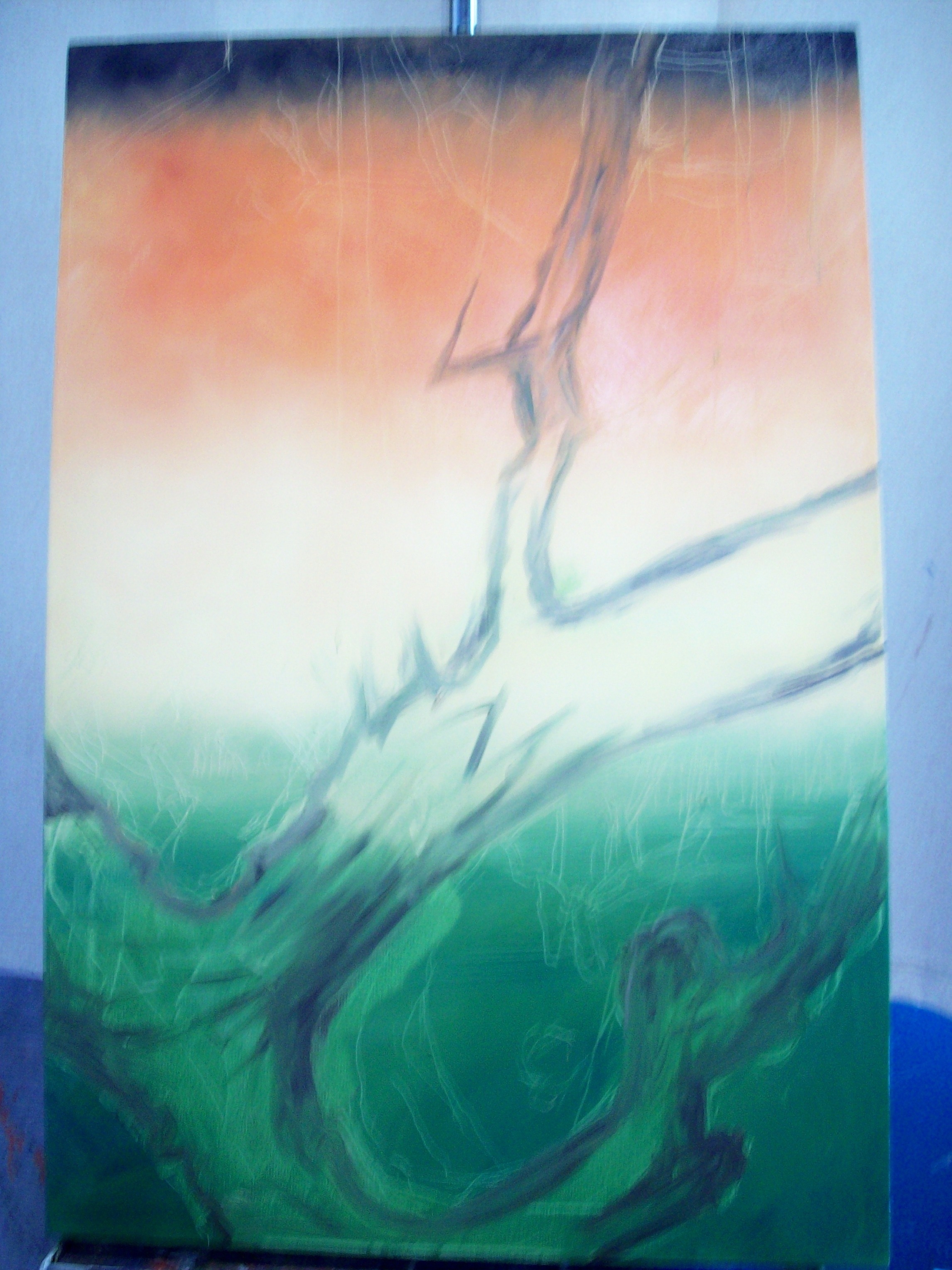
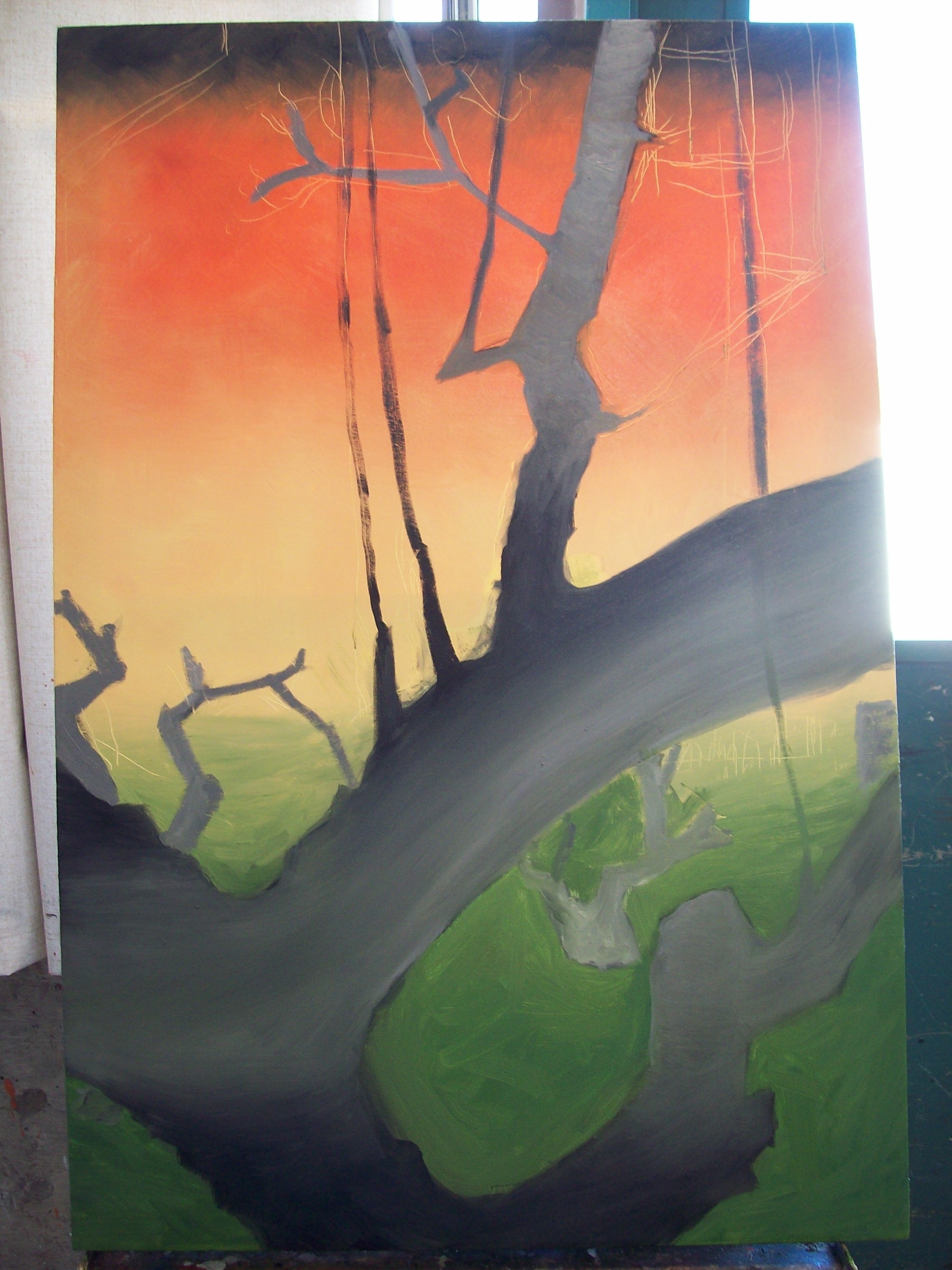
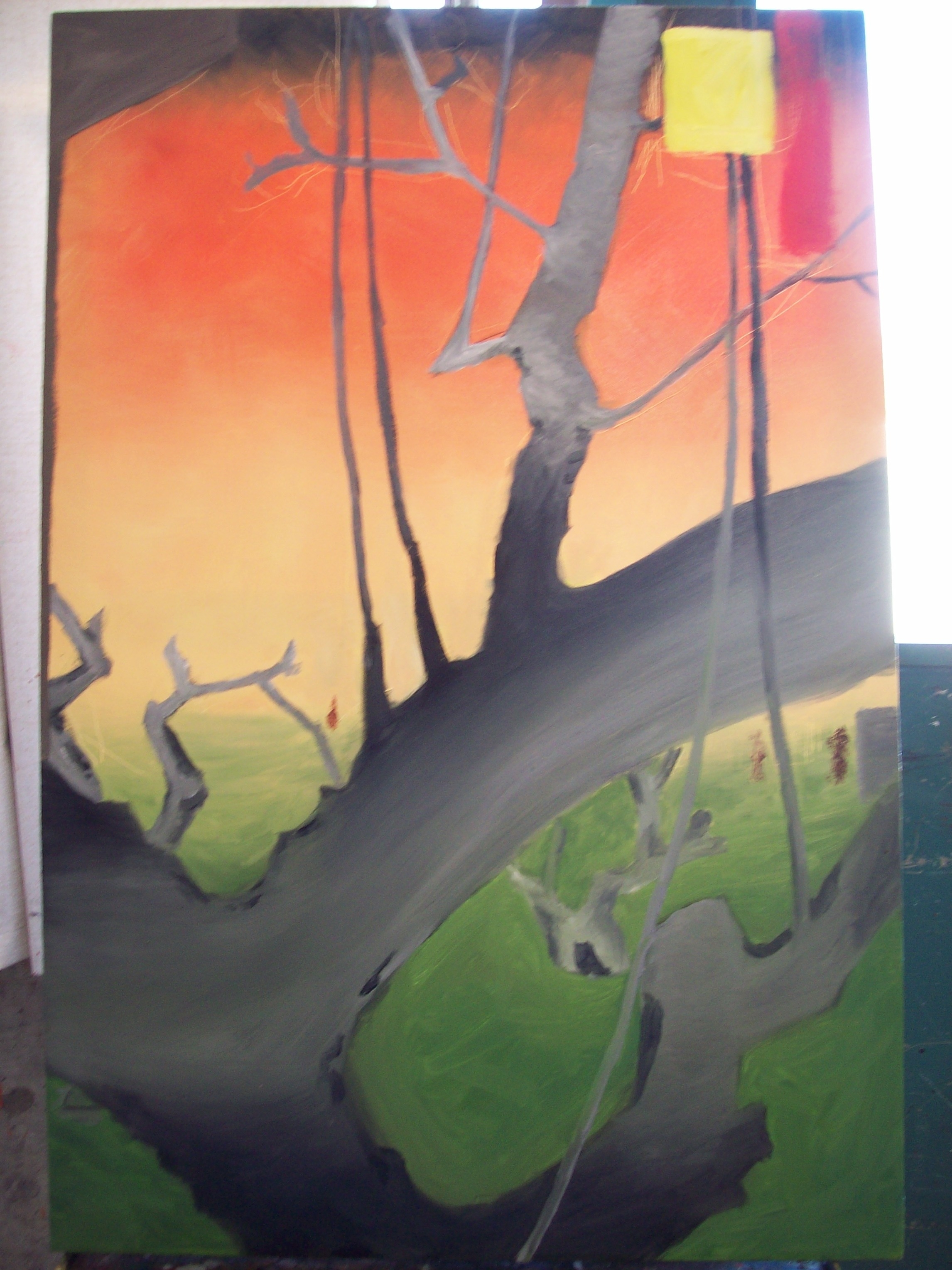
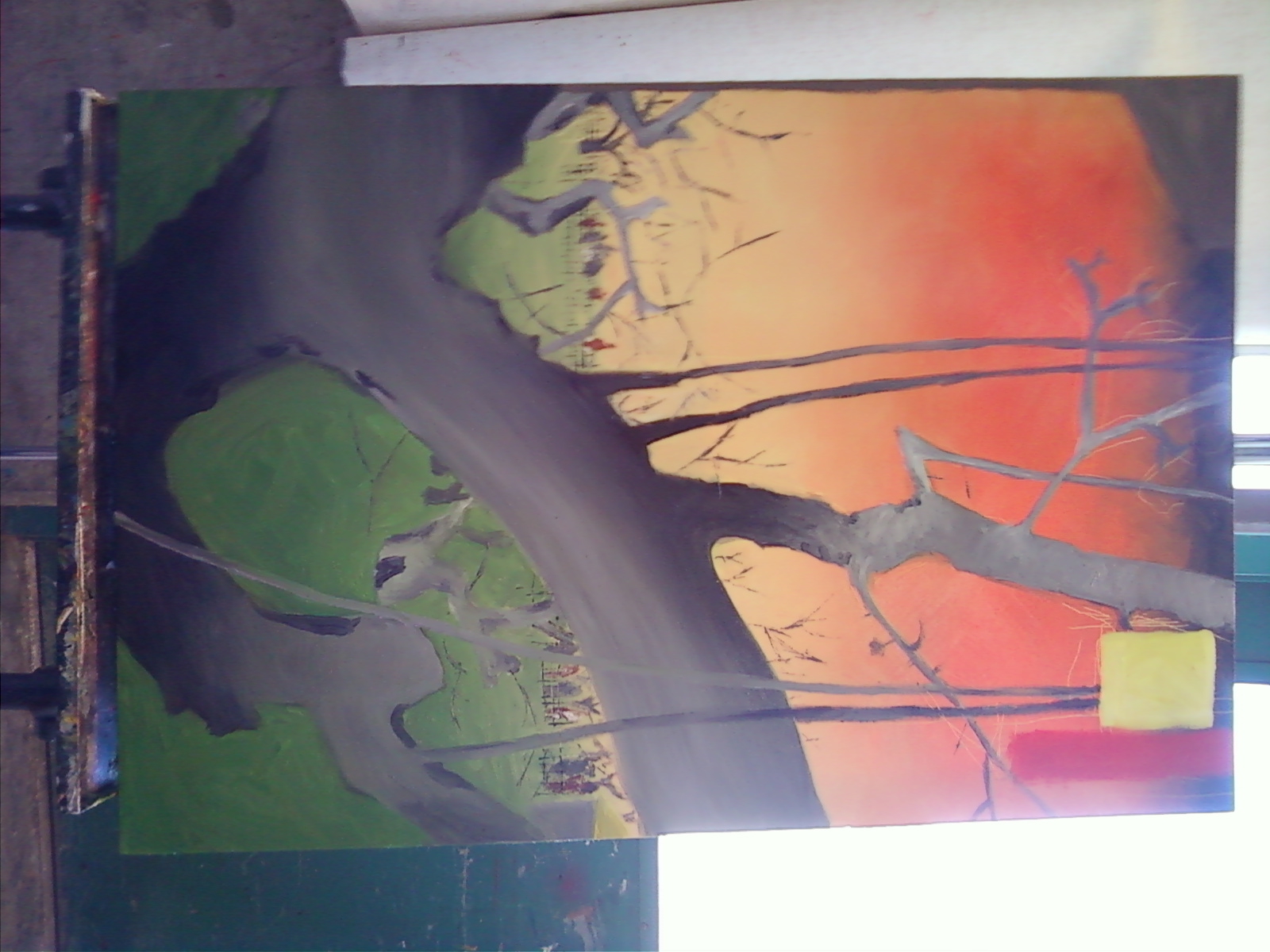
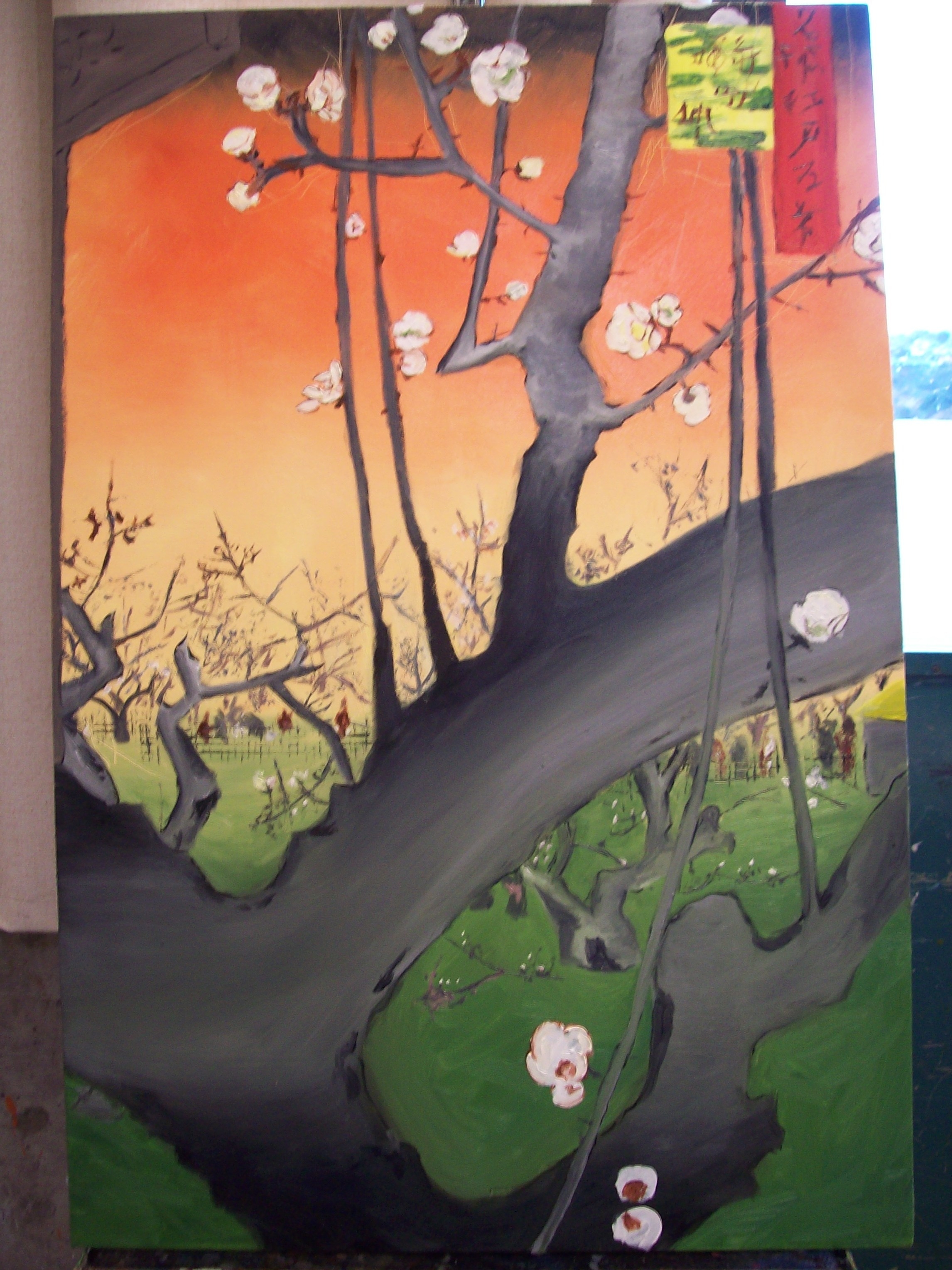
My last project for Japanese art history was to practice the funpon, or copying the master, technique. We had to find one artwork from all that we had studied and reproduce it using any medium. Of course, I chose Utagawa Hiroshige’s Plum Orchard at Kameido Shrine (1857) from 100 Famous Views of Edo. It took me 6 days to make it because I could only work on it between classes and work.

I started with the background before painting the rest of the image so that the oil paint would set by the time I started the foreground images.

finalpic1finalpic2finalpic3finalpic4finalpic5finalpic6finalpic7finalpic8finalpic9finalpic10hiroshige_oil
When it came to the little people in the background, I used several twigs to get the details. At the time, I didn’t have money to get really small brushes.

brush

Vincent van Gogh also painted this ukiyo-e (on the right), renamed Flowering Plum Tree (1887), in oil paint. 7710-620x-HiroshigevsVanGogh

Hiroshige’s ukiyo-e (on the left) was considered a higher level than other ukiyo-e artists in his time. While other artists were using a traditional method of simple block coloring, Hiroshige used gradients in his work as you can see in the trees’ realistic shading and the background. If you’d like to know more about Utagawa Hiroshige, you can check out my Art Project Presentation.

If you’re a fan of ukiyo-e, you can participate in Tokyo Five‘s Book review & giveaway 3: Ukiyo-e; The Art of the Japanese Print. One lucky winner will get a free copy of this book!

Viz Media’s “Jump Start” Initiative to Deliver English Digital Premieres of Brand New Weekly Shonen Jump Manga Series on the Same Day as Japan

That’s great! Man, the digital age sure is delivering!

Lesley Aeschliman's avatarLesley's Anime and Manga Corner

VIZ Media generates additional synergy between its English language Weekly Shonen Jump digital manga magazine and the original Japanese print counterpart with the launch of the new “Jump Start” initiative.

Moving forward, VIZ Media will simultaneously premiere the first three chapters (one chapter per week) of every brand new, first-run manga series that appears in the Japanese Weekly Shonen Jump in its digital English language edition on the same day of that issue’s general print release in Japan.

The first “Jump Start” title to be featured is the high impact martial arts series – Judos – by Shinsuke Kondo, which launches September 8, 2014 in the latest issue of Weekly Shonen Jump. Hana Yanagi is just fifteen and aims to be the best judo practitioner in his village – a remote hamlet that just happens to produce the world’s most powerful fighters.

VIZ Media’s Weekly Shonen Jump is also…

View original post 272 more words

Why I’m a Literacy Advocate

literacyadvocate

Happy International Literacy Day!

When I came home from school, my “friends” were always waiting for me. They dressed in primary colors—reds, blues, and greens—and stood at attention. As any old friend would do, they accepted me without judging me. Together, we smiled, laughed, and cried. I thought that they would stay with me forever. After I turned eleven, I never saw these friends again. We had to sell them to other children who needed them. I felt sad because we’d have to separate, but I accepted the fact that my best friends were books. There were more of them for me to find.

My relationship with books from an early age filled the void of being friendless. For whatever reason, I was too different from the other kids, so I read. I went into the books and played with the characters in a playground where everyone was accepted. I didn’t feel lonely or get angry at my situation. It was because no matter where I went, books were waiting for me.

Now as an adult, I support literacy, and I think all readers should be advocates for reading. It’s important for children to understand that they aren’t alone in a world that wants them to look like perfect images. Without that support, children fall into bad habits, destructive behaviors, and limitations. I know that if I hadn’t read books, I would’ve been a problem child who would turn into a problematic adult. Studies show that people who lack basic literacy skills are more likely to face health, financial, employment, imprisonment, and social problems in their futures (ProLiteracy,  Conference Board of Canada).  Adult readers and adults who have participated in literacy programs are generally better at getting and keeping their jobs, being unemployed less, earning more money, understanding their health problems and treatment better, and are less likely to go to jail (Lume Institute, LiteracyConnects). People can find benefits in improving their literacy skills through anything that gets them reading.

I think literacy isn’t limited to conventional trade backs and children’s books. Graphic novels, comics, manhwa, and manga are part of the reading circle. They stimulate imaginations which leads to better creative problem-solving skills that can be used in daily life. I know I exercise my creativity every day, especially since I have to make materials for Japanese kids who don’t know English. Even though I’ve left my original friends behind, they’re still inspiring me in all aspects of my life now.

This Week at Jade’s Escape: Liars = Itsuwaribito

itsuwaribito_header

Topic: Liar Liar

Manga: Itsuwaribito by Yuuki Iinuma

Whether it’s been for good or for bad, everyone’s told a lie. As humans, we’ve convinced ourselves that white lies, honest lies, and noble lies are acceptable in society. Why are we dishonest? The simplest answer is that we’re selfish. We want money, fame, kids to leave us alone, things our way, even if it means setting traps for unwilling and inquisitive souls, namely investigators and child protective services. (That’s what spam blockers, boogiemen, and fact checkers are for.) The other answer is childish–we don’t want to hurt anyone’s feelings. The lies in which feelings are spared are seen to have good intentions while truths that lead to depression or anger because they’re honest are seen as rude or cruel. Those who can’t master lies in certain situations–“Do I look fat in this?”, “Am I annoying?”, “Was I a mistake?”– are labeled weird, rude, and immature.

itsuwaribitoItsuwaribito, which translates to “a person who lies”, is a manga that focuses on the good and bad of lying. Utsuho Azako first has trouble with lying. Not that he’s a bad liar, quite the contrary, but he doesn’t know how to use his deceitful skills. When his orphanage is raided by a pack of itsuwaribito, he realizes that lying can be used for good. Some people could look at Utsuho as a professional scammer, especially in today’s society, but I see him as K-20, an acrobatic Japanese version of Robin Hood. Utsuho takes from richlings, gangs, and other itsuwaribito and gives to the untouchables and wronged peasants.

Not only does this manga illustrate the difference between a good lie and a bad lie, it also shows that no matter what, lies have consequences. Maybe some truths can lead to a happy ending, such as in many of Itsuwaribito‘s scenes, or they can lead to hardships, as is the case in Utsuho’s past. I think that nowadays humans can’t accept the consequences because we don’t recognize the lies coming out of our mouths. How many times have we said, “You don’t look fat in that” when your friend does look fat; “You’re not annoying” when your best friend asks; and “Santa Claus won’t bring you presents” to kids when they won’t behave? Do we think, “Hey, that’s a lie”? No. We simply brush it off. Manga like Itsuwaribito reminds us that lies will never stop being lies, and we should accept our punishment for frequently using them.

The Escape!

Different kinds of lies: http://en.wikipedia.org/wiki/Lie#Honest_lie

Viz Media Announces New Digital Manga Series Premieres and Updates for September 2014

Glad JoJo is taking the lead. Now to get Shueisha’s Numero Uno…

Lesley Aeschliman's avatarLesley's Anime and Manga Corner

Viz Media invites fans to dive into a variety of new manga series marking their North American digital premiere in September 2014.

Leading off the update is the exclusive digital-first premiere of Hirohiko Araki’s JoJo’s Bizarre Adventure: Part 1 Phantom Blood Volume 1. Also available is Time Killers, a single-volume collection of manga short stories by Kazue Kato, creator of the Blue Exorcist manga series.

The VIZ Select imprint will also delight fans with the debut of the previously out-of-print in North America zany gender-bending, high school demon drama Kyo Kara Maoh!, which launches on September 30, 2014.

Additional notable updates to popular continuing manga series include the exciting conclusions of Midnight Secretary (Vol. 7; available now ONLY on VIZManga.com and from select partners), Dawn of the Arcana (Vol. 13; available now), Bokurano: Ours (Vol. 11; available September 16, 2014), St. Lunatic High School (Vol. 2; available September…

View original post 426 more words

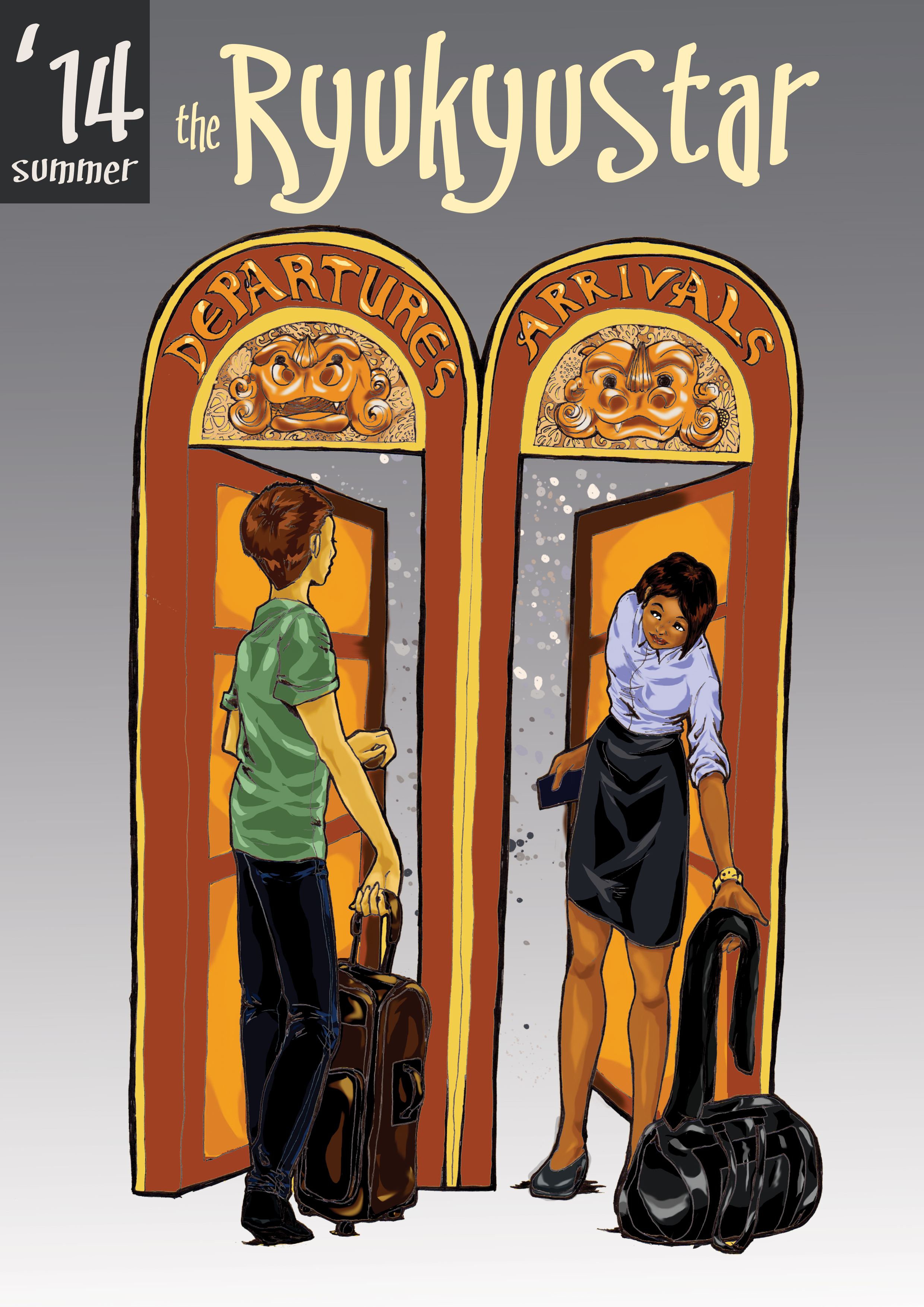
#7 of 33 Art Projects: Summer Cover of the Ryukyu Star

“How do digital artists take drawings from pencil to fully-colored images?” I’m always wondering this. In every digital art project, I’m looking for a breakthrough, and even if I flip through magazines and tutorials on the subject, the best way to learn is to practice.

This was the first image I colored without converting the inks to vectors. I deleted the negative space, going in as far as pixel by pixel, and darkened the inks with some level adjustments.

rs-cover-bw

I created a separate layer and colored it as the base color.Maybe it’s just habit from painting, but putting down a bright base color makes the other colors brighter, especially if the colors are placed using around 80 percent opacity. In this project, I used a bright orange-yellow that would lend itself to dark and light colors.

rs-summer-cover-baseI made different layers for each color, usually starting with the medium color followed by the dark colors and highlights.

rs-cover-color2


rs-cover-color3


rs-cover-color4

rs-cover-colorfinish

rs-summe2014r-cover

What do you do to digitally color images? I really like to get constructive feedback and how I can improve my art!

6 Dead Frankensteins in the Manga World

frankenstein_header

My story began with a search inside the famous Google, its grey strip begging me to ask my question, to give it a task. I did so with two words: “Frankenstein manga.” What was to follow only betrayed my expectations. I found fewer than 10 titles–only 6 titles–that involved the moody fictional character, Dr. Victor Frankenstein, and the monster he created now called Frankenstein. From these 6 measly titles, I thought half of them would be in English being that Mary Shelley’s Frankenstein was in English, and so, many Western readers would also enjoy them in their origins’ native language. To my dismay, all 6 Frankenstein titles were unlicensed manga. “How could I ever wish to write about these without guiding readers to scanlations and pirated websites?” Of course, I found no answer waiting at my fingertips.

“How could these manga creators do this to me, to other faithful followers?” I complained, but a thought struck me as devastatingly as lightning. Manga creators simply make the stories, not publish and translate them into other languages. Editors, letterers, and translators only followed their duties. So who, if anyone, could be to blame for allowing these 6 titles to remain on the lab table, only to be viewed by 125 million Japanese speakers when there are 360 million English speakers? Surely readers can’t be to blame. Complaints aside, I felt that manga lovers were done a great injustice when titles that have been poked, prodded, and even robbed by many go unnoticed by manga publishers.

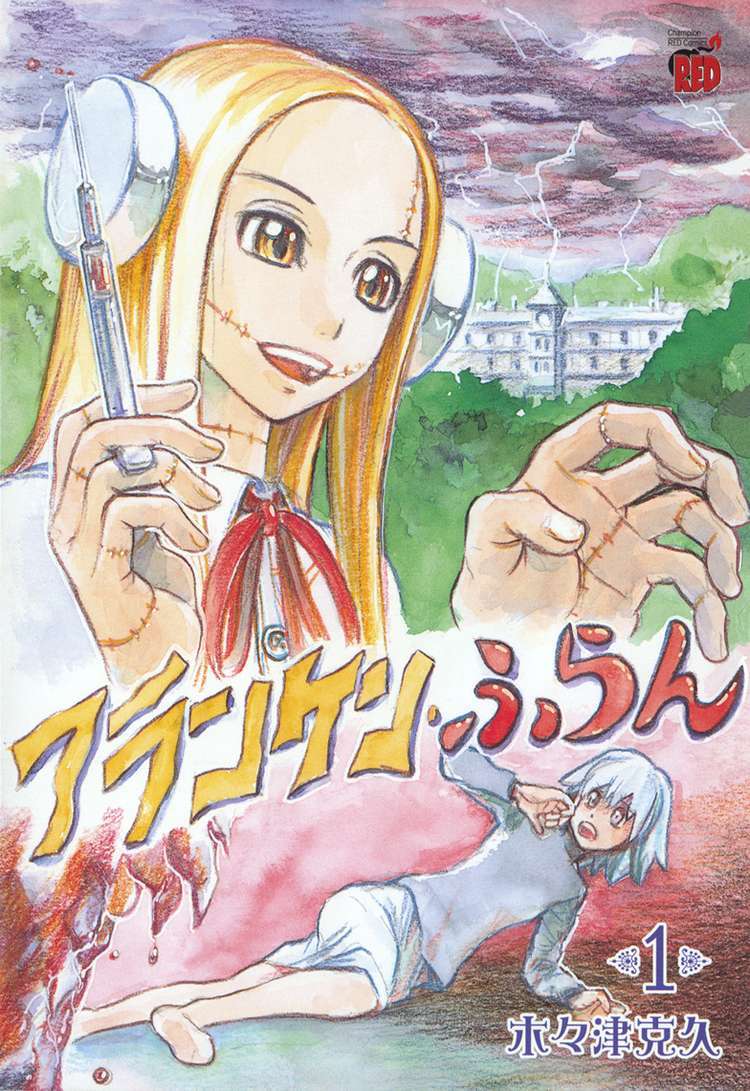
I am certain many people have looked for Franken Fran, Embalming: Another Tale of Frankenstein, Noblesse, Frankenstein, Mondlicht: Tsuki no Tsubasa, and Wagatomo Frankenstein in the darker realms of the internet. Even I, an advocate of licensed manga and a resident within the Japanese language, have ventured there for such reasons. But I must say, when sub-par titles about vampires, werewolves, demons, and zombies are tramping through English bookshelves while these little bolts of genius float in obscurity, it makes me ponder, “Can I not go forward and talk about these unlicensed manga?”

“‘Live, and be happy, and make others so,'” Justine Mortiz in a dying whisper.

The first of the Frankenstein children to stay in Japan’s lab is Wagatomo Frankenstein. Born in 1972 in Shueisha, Wagatomo Frankenstein is an elusive child. Even in the smokiest alleys of the cyber world, its real story is hidden from English speakers, thus we move to its  siblings.

wagatomo

Wagatomo Frankenstein‘s sisters, Franken Fran (fathered by Kigitsu Katsuhisa) and Mondlicht: Tsuki no Tsubasa (fathered by Juichi Iogi), are still housed under Akita Shoten’s label, but they have gained a cult outside their imprisonments. Franken Fran uses a female version of Frankenstein to grant the wishes of hapless humans in rather unwishful, Pet Shop of Horrors ways. The junior of the sisters, Mondlicht: Tsuki no Tsubasa, bears little resemblance to Mark Shelley’s Frankenstein–it’s simply a battle waged between lonesome vampires and Dr. Frankenstein’s monsters who take the form of pretty schoolgirls.

*As of 4/29/2015, Franken Fran has been licensed by Seven Seas Entertainment and is slated for release in February 2016 in omnibus editions. Thank you, Leslie!

frankenfran

Along with Franken Fran and Mondlicht, three brothers have joined the Frankenstein manga family. Similar to most human families, the eldest brother takes its name from the father: Frankenstein. Despite being younger than Wagatomo Frankenstein, Junji Ito’s creation is the closest to their mother’s children, Dr. Victor Frankenstein and his monster’s awakening. The second brother, Embalming: Another Tale of Frankenstein, comes from the 2007 Jump SQ generation, born from Rurouni Kenshin creator, Nobuhiro Watsuki. If Dr. Frankenstein truly lived and he assembled his grotesque monsters, Embalming shows how these undead beings run amuck in Europe 150 years after Dr. Frankenstein’s original creation.

Embalming_main

I must say, though the baby of the brothers is a Korean webcomic, it mimics its elder siblings, right down to the typical high school premise. Noblesse from Son Jae-Ho has Frankenstein, a devoted scientist who follows a vampire lord, operating a prestigious academy. Though this Frankenstein offspring has his scientist father’s brain, its history is completely warped. He has made himself into a monster and granted himself immortality in completely following his master’s wishes.

However much I seem to know about these 6 titles, I have yet to read their copies within legitimate terms. I had hoped that several publishers would need these titles in English to appease the cults who follow them. With my confession now in front of the whole world, I can find solace. I and these manga creators have re-told Mary Shelley’s story. I hope English manga publishers would like to hear them.

Japan AIDS Prevention Squeeze-A-Thon Charity Event: ‘I Never Thought My Boobs Could Contribute to Society’

This is the funniest thing I’ve heard this week.

Pundit Planet's avatarpundit from another planet

BOOB-AID

 Japanese porn stars to have boobs squeezed for AIDS research

A Group of Japanese porn actresses are preparing to have their breasts squeezed by fans for 24 hours this weekend for a charity event loosely translated as “Boob Aid”

tetas

“But I would be very happy if you would please be delicate.”

The nine adult movie stars told local media on Monday they could barely contain their excitement about the “Stop! AIDS” campaign event — which will be televised live — but asked, perhaps somewhat optimistically: please be gentle.

.Screen-Shot-boobaid

“I’m really looking forward to lots of people fondling my boobs,” Rina Serina told Tokyo Sports.

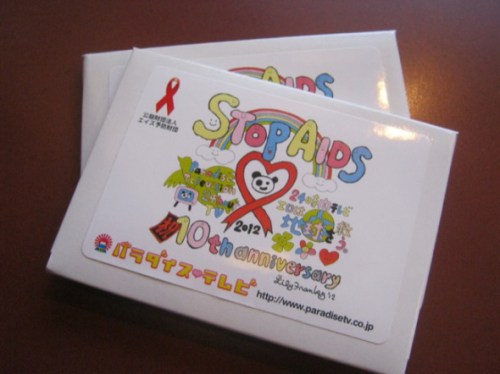
The event, the 12th since its launch in 2003, will be broadcast on adult cable television, with punters donating to the anti-AIDS campaign in exchange for a feel.

redpolkaribb2608e

It comes after sexist heckling of a Tokyo assemblywoman hit the headlines, highlighting old-fashioned views towards…

View original post 227 more words