Food Blog?

I have decided to start blogging about what I eat so that I can keep track of my diet and how I make things. Lately, I’ve been cooking more at home to help lessen my tummy fat, fatten my wallet, and condition my cooking skills. One of the suggestions I’ve read in losing weight without categorizing calories (something I was guilty of) was by keeping a food blog. It forces me to see what I’m eating and also garners support (or criticism) from people reading about the food I post. In a way, it’s a way to kick my ass into shape. Along with the food blog, I’ve been upping my cardio workouts, switching between dancing, kickboxing, and ballet to keep things interesting. However, I’m looking forward to food blogging. I like cooking for my husband, especially when I can make the meal look and taste good, which is harder than it looks.

Today, I felt like eating a creme pasta with baked chicken, though not the best choice in the healthiest of meals (whip creme is made out of percentage of fat and pasta has carbs). But baking chicken curbs the extra fat from pan-frying and the fresh ingredients give the food a more wholesome taste. Tomorrow, I hope the meal is more healthy. Wish me luck!

Lightly-seasoned baked chicken, creme sauce pasta with fresh basil, and freshly-cut tomatoes and onions

Creme Ingredients:
-1 small carton of whipped creme, liquid
-2 tablespoons of fresh sliced basil
-1 tablespoon of onions
-spaghetti pasta
-2 tablespoons of margarine
These are cheap and local items at any Japanese grocery store or produce place.

First, cook the onions and any other vegetables. Put the cooked veggies to the side. Under low to medium heat, melt the margarine in the pan until the water has evaporated and before the margarine can brown. Pour the whipped creme into the pan and slowly stir the melted margarine with the creme. Let the combination simmer a little before turning down the heat. Stir it for 5 minutes. Add all of the ingredients into the pan and enjoy!

American Burgers Suck. Go Japanese!

Japan isn’t known for its meat, aside for Kobe beef, but one thing that I’ve come to love–and ironically despise from the States–is the hamburger. Japanese places around Okinawa and mainland Japan can make really good burgers.
The meat that they use is similar to the run-of-the-mill ground beef, but the way it is cooked makes a big difference. The Japanese people take great care in keeping food less satuarated in oils while maintaining flavor. Not only that, but the lettuce, tomatoes, onions, and buns that add up to an overall burger are fresh. No deflated, dry buns. No soggy lettuce and tomatoes. Basically, you get a burger that looks like the picture.
Although A&W is a nice burger joint, I would suggest trying the smaller mom-and-pop shops around Japan. Recently, my husband and I found a great though tiny burger place called B.B. Burger. They have great-tasting burgers with curly fries, bacon, or ham added between the buns, and they always look like the pictures. What I appreciate about this place besides the burgers is their reasonable price. But you have to be careful–you won’t see burgers the same when you go back to the States.

The Katsudon of my (Anime) Dreams

One of the teachers took me to a family restaurant that sold katsudon (かつどん), a dish that’s common in anime and manga.
What is it besides a common anime and manga dish? It’s deep-fried chicken over eggs, rice and onions. It can be made in different ways, but it’s delicious anyways.
This katsudon was huge! It was as big as my face, and it came with miso soup and a small dish of pickled radish. For all of that food, I only paid 500 円 (around $5). What a deal! I only finished half, and I felt so guilty for not finishing it. Normally someone would say, “Mottainai”, which is a way of saying, “What a waste”, but thankfully no one did. (^_^)v

Different Country, Different Candy

The wonderful world of Japanese candy includes a lot of Western candy, but the flavors are different. This Kit-Kat bar is a strawberry shortcake flavor bar, a flavor I have yet to see in the U.S. Even though strawberry shortcakes are notorious for their high sugar content, this Japanese spin on an old favorite concentrates on the taste, not the amount of sugar.

If You Opened This in Okinawa…

If you opened a taco shop in Okinawa, you’ll make a lot of money. But the rule here is that the taco shop can’t be the typical Okinawan/Japanese taco shop. No El Paso corn taco shells from the box. Let’s think about the mom-and-pop shops where the owners only speak Spanish. They have the best tacos with the cheap prices!

If you opened an all-day pancake house, everyone who doesn’t want to cook and just loves pancakes would also love you. There is only one pancake house in Okinawa, but it’s far for the southern folk.

If you opened a Chick-fil-A, many people would flock to this all-day all-chicken fast food restaurant. In the United States, Chick-fil-A restaurants have spanned across the country with many loyal customers. And who doesn’t like chicken?

If you opened an American doughnut shop that was open by 6 AM, salarymen and single people could indulge in a sweet morning bite. Most doughnut shops in Okinawa like Mr. Donuts aren’t open until 9 AM, a time when everyone has to be sitting in their morning meetings.

If you opened a Planned Parenthood in Okinawa, local people and foreigners alike can benefit from the specialized help. Getting birth control is like a leap through fire. Women have to make an appointment, go through several tests, and talk to a gynecologist before they’re administered birth control that might not work for them while shelling out a lot of money, even when insurance can pay partially for it. And the unlucky part of it all is that, unless you get more than a month’s supply of birth control, women still have to go through the same process just to get another month’s supply. At Planned Parenthood, all you do is make an appointment, they give you a pregnancy test and ask a few questions before receiving a year’s worth of birth control for very little. Also, Planned Parenthood specializes in gynecology-related matters (i.e. pap smears, pregnancy, and abortions) and also, like it’s name, planning a family.

If you opened an independent DHL, Fedex, or UPS store, so many people would appreciate it. There were so many times I’ve needed to ship something or mail something, but I couldn’t because the post office only stayed open until 4:30 PM or 5 PM. (Yes, there is Black Cat shipping store, but you have to go in search of their green banners next to stores.)

If you opened a big-and-tall store, mostly foreigners and big Japanese people could be happy about being big in Japan. Clothing in Japan has a “one size fits all” only sign on the tag, so it’s really difficult trying to find something that actually fits people who are taller than 5’2″ with wide hips, broad shoulders, big butts, big busts, and big guts. The only places that sell big sizes–and ironically, they hardly fit–are in the plus size sections of San-A, Shimamura, or Uniqlo, that is, if you can’t get on base.

If you opened a sandwich shop in Okinawa, summertime would bring in tons of sweltering customers trying to find a delicious yet cold fix that isn’t shaved ice or ice cream. Right now, the only places that make good sandwiches–and we’re talking the Subway-esque type sandwiches loaded with ham, cheese, and a myriad of toppings–are on base with the real Subway.

Since October of 2012, a Subway opened up in Okinawa. It’s located in Oroku of Naha City. The prices are slightly expensive compared to the base Subway, but their menu is a little different from the American brand (expect to see teriyaki-flavored chicken and tandoori chicken). For a half-foot sub with french fries and a drink, it’s about 430 yen. If the Naha Subway is too far, it’s better to make your own sandwich.

How to Survive in Japan: Basics Edition

Many people who have been looking to get away from the dragging economy in their home countries have come to Japan, either as teachers, military personnel, or translators. Though there’s much to be offered in the Land of the Rising Sun, newly Western-world expats still have a thing or two to learn about living comfortably in Japan.

Household

Japan has a lot of humidity in the air, which means that there is a lot of water coming into your apartment or house, becoming trapped in shoe boxes and closet spaces. To deal with the trapped moisture, it’s best to get moisture packs, which can be purchased from Daiso (105 yen shop), the local grocery store, or a D.I.Y. store. If there’s anything that you need in your household, moisture packs are those things. Otherwise, you’ll have moldy sweaters and boots.

COMMAND adhesive hook and strips

COMMAND Adhesive Hook (image from Select2Gether.com)

Although most people don’t come to Japan to decorate their apartments, some people (like myself) feel the urge to make their place as homely as possible. One way is by posting frames, pictures, and posters on the walls. However, if you live in an apartment and there’s no putting holes into the walls for fear of losing a deposit, using adhesive hooks are a good option. But just to say, adhesive hooks from Daiso (105 yen shop) or the local D.I.Y. shop aren’t the best things to use because they leave behind a sticky residue. Tape can also strip walls, especially wooden walls. Best option? Buy some COMMAND Adhesive Hooks in your home country or at your local D.I.Y. shop (online at Amazon also sells them). When using these hooks, the adhesive strips must be applied exactly as the directions state, otherwise, you’ll find some broken frames on the floor soon after.

Of course, clean up is important. My hated part of the household to clean is the bathroom. Do I use toilet paper or paper towels to clean the toilet seat? (There’s no way I’d use a rag or towelette!) Thankfully, Daiso has flushable toilet wipes, strong enough to wipe down the toilet seat without crumbling without worrying about losing a trusty rag or towelette. They’re only 105 yen for a pack of 50 wipes.

Food

Cooking at home is the best way to save money. You can easily rack up a 5,000 yen bill by going to an izakaya (bar) or eating out. Although 5,000 yen doesn’t seem like a lot, when you do it once a week, you’re spending 20,000 yen or more than $200 a month. Instead of spending that much on one meal each time, taking a trip to your local San-A or Marudai can save you a bunch of money. That 5,000 yen can feed you for 3 weeks, or 1,500 yen per week, that is, if you don’t mind making some simple meals. My favorite website to visit for this money-saving cooking skill is RealSimple.com.

Another money-saving option to grocery-buying is purchasing produce from a local produce vendor. Normally, they look like a bunch of obaa selling fruits and vegetables on the side of the road, or there’s a humbly-decorated store with fruits and vegetables in boxes. Either way, these modest vendors sell their produce for dirt cheap. My husband and I saved a bundle of cash (about 200 yen per bag of veggies) just by buying from a local produce vendor. Not only does saving money help you, but purchasing food from a mom and pop shop helps them out too.

Buying frozen foods can save even more money than anything else. If there are no frozen food stores in your local Japanese neighborhood, buying cheap meat in bulk is an alternative. Beef, for instance, can last for over 2 months frozen, so buying in bulk won’t make it go bad. Chicken and seafood are a little more sensitive, but they can be frozen for a while as well. I go to a local frozen food store and buy 7 pounds of frozen chicken breasts for 980 yen. For less than 1,000 yen, I can eat chicken breasts for dinner for a week. Not only does it save money, but your gut won’t expand as easily as your wallet.

Communication

Although English education has been incorporated into Japanese society as its second language, most Japanese people can’t speak English. It’s a reality that most expats realize the first month of arriving in Japan, and it puts a damper on communication efforts. If you’re planning to stay in Japan, learning some basic Japanese starts the process of breaking down cultural barriers. For me, the most useful thing to learn was katakana, a simple writing system that’s used for sounding out words, especially foreign words. I’ve mostly had to read katakana on restaurant menus, product covers, and most sports-related things and events.

Also, it’s good to have a paper dictionary or electronic dictionary that translates between Japanese and English. They come cheap in Akihabara (Tokyo) and in recycle shops. If you only have a paper dictionary and you need to use Japanese immediately, learning certain phrases ahead of time is good. I always use Google’s translation page to help me learn words and phrases that aren’t found in a paper dictionary.

Bank

Depending on where you’re working, getting a Japanese bank account should be pretty easy. First, you need your inkan, or your registered personal seal (it’s as valuable as a signature), your passport, your registered address paper (from your city office), work contract paperwork, and a few thousand yen to deposit. One other thing you need is a letter written by the director or supervisor of your company that states you are working for their company and the length of the contract. Some banks or bank tellers (depending on their viewpoint of foreigners) ask for this as an extra leap of bureaucracy. I personally think it’s stupid red tape when you already have an official work contract available, but you’ll face moments like this in Japan, so you might as well get this letter ahead of time. It’ll save a lot of time and confusion.

Since many people come to Japan with some type of debt or remaining bills to pay in their home countries, sending money home is really important. Still, many people worry about sending cash in airmail envelopes or even just talking to a nice person at the post office and asking them to exchange yen into dollar. Although Western Union is now available in Japan, it has limited offices around Japan. The simplest and best thing to do is link your Japanese account with your home country’s bank account. You can do this by getting a GoLloyds account, a Japanese company that specializes in transferring money. It costs 2,000 yen each time you transfer money, but the transfer also includes a money exchange based on the exchange rate available now.

Clothes

Finding clothes in Western sizes is a little difficult if you’re bigger than a medium size. There are a few places to get some fitting clothing, but the best thing to do is to bring your own clothes ahead of time. If you’re a bigger size (bigger than a size medium for women with a shoe size 7 or smaller, or size 36 pant size in men with a shoe size 9 or smaller), you should bring some comfortable walking shoes, “indoor” shoes, or comfortable slippers you can wear inside only, and a few suits with thin and/or cotton material. Still, if you’ve forgotten something, there are a few places to get clothes. San-A has a plus size section, though it’s very limited, but you can get business clothing there. Uniqlo also has larger sizes, but if you have a bust size bigger than 36″, San-A is better suited with it’s XXL sizes. Another place to get bigger sizes, especially for women on the heavier and bustier side, is Shimamura (しまむら). Like San-A, you’ll find a plus size section.

If you go online to buy clothes, I would recommend going on ebay. Sometimes, sellers ship worldwide (don’t forget to click that option on the left side options) and they’ll give a decent price for international orders. However, if you want something new and right away, some American brand companies are available, especially if you’re on mainland Japan. Forever 21, Victoria’s Secret, Old Navy, and the Gap are available brands in Japan.

Car

If you plan on driving in Japan and you have a driver’s license, you can get an International Driver’s Permit (U.S.) or an international permit to drive. It’s good for a year, but before that year is up, transferring your international permit to a Japanese driver’s license is a good way to go. Depending on what part of Japan you’re in, my advice would be to call a driving school and get lessons before taking the test. The Japanese driving test isn’t about driving safely or practically; it tests your ability to follow directions. Many people fail the first time because of the most trivial things, like not looking under the car before getting into the car. In some places, like Okinawa, the tests are more flexible, and in other areas, they’re more rigid. Just be prepared for it!

Yokatta! Mexican Food in Okinawa

I’m from San Diego, home of many taco shops. Most are mom and pop shops, and they’re pretty good. Now that I live in Okinawa, it’s hard finding good Mexican food. After a year, I trekked out to Obbligato’s with my husband to try the food. It turned out to be a piece of back home.
Once you step into the restaurant, there’s a fresh atmosphere that greets you. The interioi itself draws from Mexican decor, with walls painted vibrant colors of red, green, and yellow. Sombreros and Mexican-themed kitsch also decorated the walls.
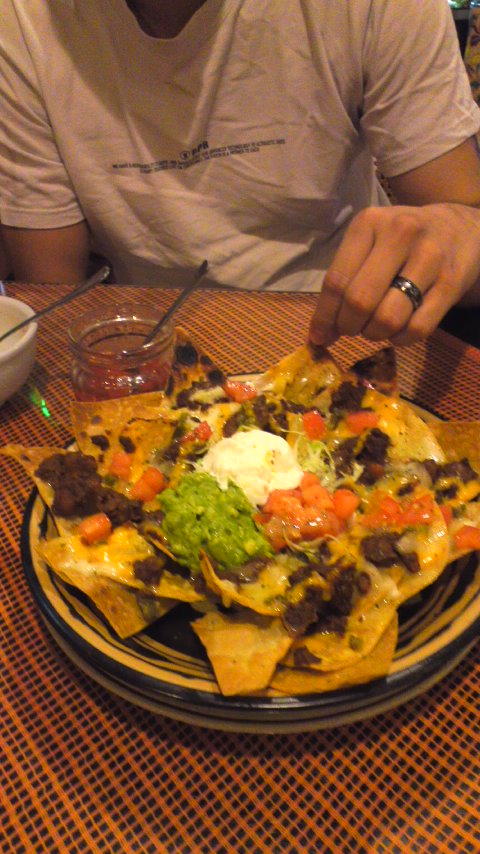
Our servers wore traditional pink and orange Mexican blouses, puffy at sleeves, low at the chest, and frilly to the max. They promptly bought menus, which were short but filled with pictures. Immediately, we ordered macho nachos, chimichanga combination plate, and a summer special plate. The macho nachos were huge, enough to satisfy three ravenous people. It came with guacamole, sour cream, chopped tomatoes, cheese and refried beans over flaky, crispy chips that seemed like corn tortila chips. The presentation itself was influenced by Japanese taste–a lot neater and easier to eat, minus the mess.
When the combo plates came, we were amazed by the quantity and quality. The plates were big and brimming with Spanish rice, beans, and shredded pork. My husband’s plate had only chimichangas, and mine had a chimichanga, a crunchy taco, and an enchalada. All tasted great and very close to authentic Mexican food.
The only thing that was below par was the salsa. It tasted more like spaghetti sauce than tomato salsa. My husband fixed that problem the second time we went; he brought his favorite salsa.

4 Strange Things to Notice About Japan

Japan is known for having some useful things, but what comes with great machines are also strange inventions and innovations.

1. The Sense-roid is more than a mannequin with a vest–it’s a hugging device. Yes, a hugging device that you hug and hugs you back. It’s simple. Just strap on an identical vest that’s packed with sensors and give the unarmed mannequin with silicon skin a hug. It’ll vibrate to simulate a hug. What’s weird about it–besides the informational video found on Youtube–is that the Sense-roid is really depressing. Do you really need to buy a hug machine for some human affection? I bet if you ask a stranger on a street, you can get a nice, fully-armed hug for zero yen.

2. If you thought tofu burgers were strange, there’s another kind of burger that’ll make you swear by tofu burgers. They’re called turd burgers, or burgers made from human excrement. A scientist in Japan developed a process to extract proteins from sewage mud, and by making it into an artificial meat shape, it is edible in burger form. According to the scientist, the meat itself would cost more than twice the amount of normal meat because of the careful process. “But it’s high in protein,” he claims, adding that the meat is very healthy. At those prices and my wallet, would I really trade in a tofu burger for a shit burger? I think not.

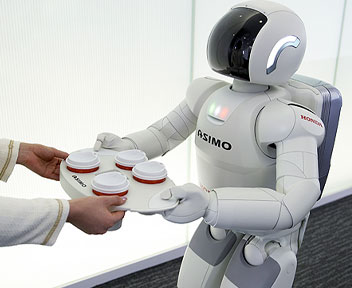
3. Like every industrialized country, Japan also seeks to push the limits of technology. Still, Japan definitely has some neat yet strange robots lurking in the daily aspects of their citizens’ lives. One of the most popular robots from Japan is a Honda-created robot named Asimo, who can walk, run, and serve coffee. Another robot is the catwalk robot from the 2009 Japan Fashion Week who can walk and talk like a young Japanese woman. And lastly, there’s the Gundam Wing mecha that was sitting in Tokyo.

ASIMO serves coffee

You’ve got served…by ASIMO (from “World of Houg” blog)

4. Japan is good at “borrowing” other countries’ stuff and claiming it as their own. Sometimes, they make it better. For instance, bread is actually a commonality to the Japanese grocery store, unlike what Western people tend to believe that Japan is a non-bread country. In actuality, bread is done better in Japan than in the United States. (Of course, this is my personal opinion, but there’s a sure reason to not hate Japanese bread). The bread is soft and moist, and some breads are thick–perfect for sandwiches or even homemade burgers. Sometimes, Japan borrows foreign food and makes them, well, not as good. The ever-popular taco rice from Okinawa comes from, you guessed it, tacos of Mexican descent. Taco rice is made with ground beef and seasonings that you can find underneath “taco seasonings” from the El Paso brand. The beef goes on top of tomatoes, lettuce, and rice. It’s just as it sounds, and if you’re an avid taco-eater like I am, you’ll definitely want real Mexican food to wash it down. Then there’s curry rice, commonly called kare (カレー). For people who like Indian curry, it doesn’t have a lot of spice, but as a Japanese food, it tastes pretty good without the spicy burn.

Japanese Curry Rice

Japanese Curry Rice (from the “Closet Cooking” blog)

Super Saiyin Soda

I’ve said it before–characters and mascots are a common aspect of Japan. There are few places where you won’t find an insanely cute mascot describing some easy instructions or a popular anime character showing off on a special edition candy wrapper.
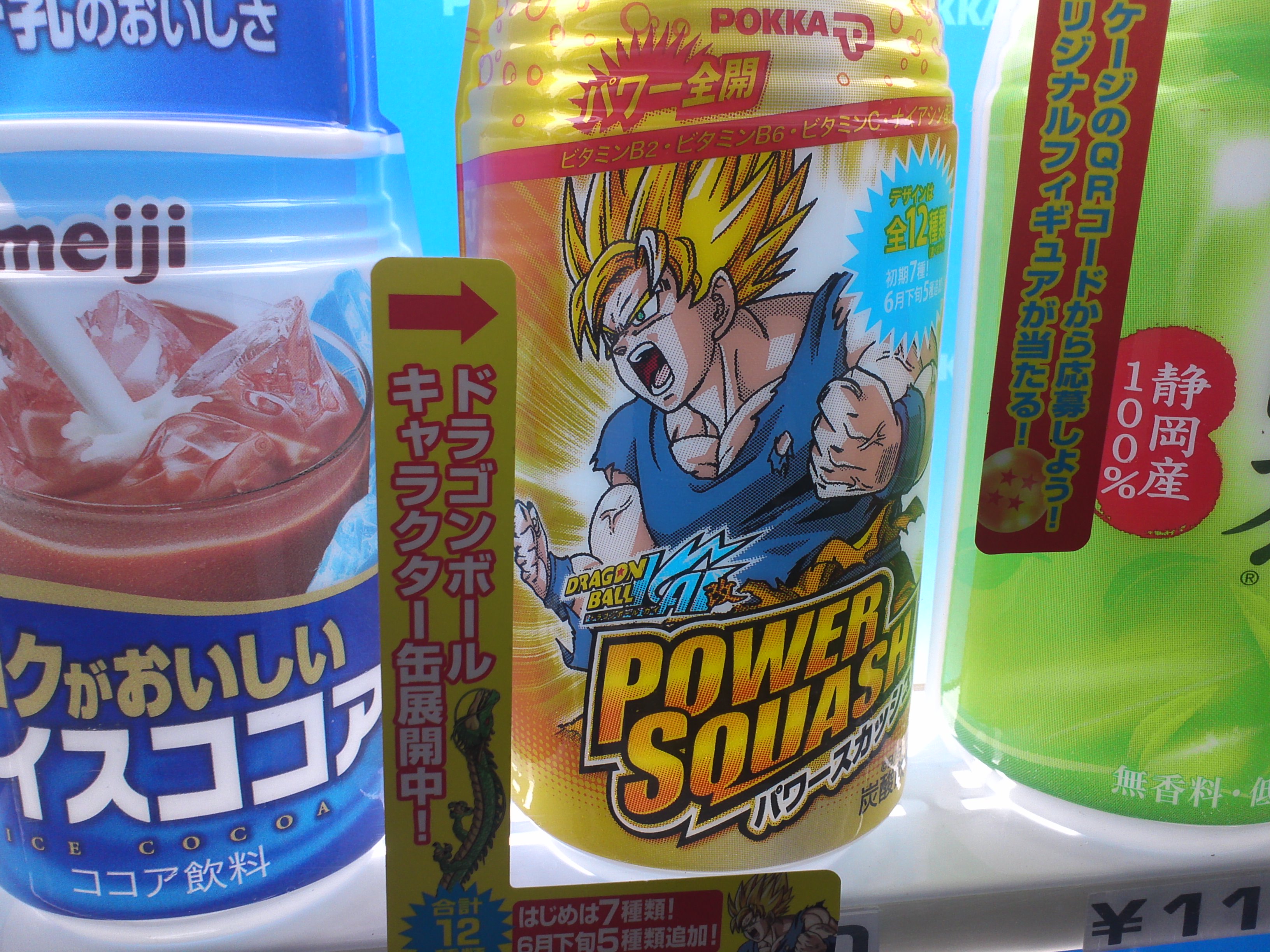
I found this new Dragon Ball Z drink on one of the innumerable amount of beverage vending machines in my city. Goku, who is popular character in the US and Japan, goes Super Saiyin on a can of soda called Power Squash worth less than a dollar. Even the drink’s name is appropriate for Goku.

6 More Things to Learn When Living in Japan

Here are a few more things to learn when you’re a foreigner living in Japan:

1. Everyone loves to say “kawaii” (cute), “kakkoi” (cool), or “ikemen”  (slang – cool or hot) whenever you wear, say, or do something interesting. It seems that Japanese people are always watching you, especially when you’re a newcomer. If you’re new to an office or school, people will notice even the smallest things about you, like your hair, earrings, bracelets, watches, or clothing. It’s a little more daunting if you’re not used to being watched, but for teachers like me, it’s a good conversation starter in English.

2.  You’ll get invited to everything. Whether the invitation is from other foreigners or from Japanese people, there is a need for everyone to invite you to every event taking place in the city. For foreigners, it’s just another chance to hang out with part of the 4%-foreigner statistic in Japan. For Japanese people, it’s a way of showing off their culture that most foreigners would be unaware of.

3. If you know how to use chopsticks, you’ll get comments wherever you go. Because there’s this misconception that foreigners don’t know how to use chopsticks, if Japanese people see a foreigner eating with them, they’ll point out in Japanese, “You use chopsticks very well.” If you come to Japan to work or teach, you’ll hear that incessantly. It’s just a way for Japanese people to get to know you. (For me, I tell them that I’ve used chopsticks since I was in high school because I knew I would come to Japan one day.)

4. It’s hard to get anywhere with “maybe”. It’s more of a cultural thing than foreigners realize. In the United States, “maybe” means that you’re considering something, but there is no clear-cut “yes” or “no”. If you say “maybe” when talking to a colleague in Japan, unless they’ve lived in a Western country before, most Japanese people will take it as a “yes”. Also, most students don’t learn the word “maybe” until they’re in senior high school, so using it freely in a conversation with junior high schoolers and elementary school students will get you confused stares. Be careful about saying “maybe” when someone invites you to an event you don’t want to go to. They’ll be expecting you to show up!

5. Customer service runs really high in Japan. Even if you’re a customer in a McDonald’s, you won’t find customer service like that in Japan. Being a foreigner who hasn’t studied Japanese, going to a fast-food place can be a little scary because everything is written in Japanese. However, most places in Okinawa has an English, Korean, Chinese, and/or Spanish menu ready for foreigners. There are some restaurants on mainland Japan where the menus have Japanese with English translations. Aside from language, places like airports are really impressive with customer service, though they must be strict with the rules. Recently when my husband and I were at Haneda Airport looking for their popular roll cake, a worker told me that they didn’t have it at their shop, but she called around to find which shop had the roll cake. She directed us and when we arrived, the other worker was ready with roll cake in spite having to close in that last few minutes.

6. Advertised food actually looks like the pictures. More than likely, when you order something, the food actually looks like the pictures. It’s not just slapped together like someone didn’t care. There isn’t too much of anything on it (unless you’re a picky type). Just right.

Mega Burgers from McDonald's

Mega Burgers (2007) from McDonald's (source: supersizedmeals.com)

Typhoon Cuisine: Mmmm, Poisonous!

My husband and I took a spontaneous trip to a nearby beach a day after the type 4 (out of 5) typhoon. As we walked through the debris of trees from the night before, we found a few dead fish on the shoreline. One was a small flounder fish, but one fish was blue with spots. “It’s a pufferfish!” my husband exclaimed upon closer inspection.

Pufferfish, or fugu, is notorious in Japanese cuisine for its poison. Chefs take around 7 years to learn how to properly remove the poisonous parts of the fish without contaminating the meat. It’s normally served as sashimi (raw fish) or chirinabe. The liver, which is where the poison exists, was banned from being served in restaurants in Japan in 1984.

Fugu fish

Live fugu fish


10 Things to Learn from Living in Japan

Being an English teacher in Japan, I’ve learned a few things from living in the Land of the Rising Sun that you can’t learn from Japanese anime, manga, or video games.

1. The students and people aren’t like the characters from anime, manga, and video games. You won’t see anyone carrying a samurai sword or wearing ninja costumes randomly on the streets. It’s more likely you’ll see a non-Japanese person wear these things than a Japanese person.

Tiny White Fish

Tiny White Fish (from "A box of kitchen" blog)

2. Watch out what you eat! If you are allergic to anything or you specifically can’t eat anything, you’ll have to state it before they give it to you, or come prepared. My husband hates these tiny white fishes that have black eyes. They don’t have tails when you eat them, so they look like worms. He absolutely can’t eat them, and when he finds that his rice and soup is mixed with them, he can’t eat it. My thing, like many non-Japanese people, is natto, which is a type of sticky bean produced opposite of miso. Either way, just be prepared to eat some unusual meals!

3. Don’t be a vegan and come to Japan. Many teachers I’ve met who are vegan have it hard in Japan. In general, Japanese food is loaded with veggies, but they also coat things in some type of animal-derived sauce or soup. Miso soup, for instance, is from a bean paste, but it uses a type of pork stock. In Okinawa, it’s especially hard to be a vegan because the diet has influences from China, Korea, and the United States, so instead of the conventional boiled egg, the egg will have a ball of meat in the middle and coated to be fried.

4. English classics are easy to find. If you’re looking for some English literature, like Uncle Tom’s Cabin, How to Kill a Mockingbird, and books of those caliber, you can find them at the local bookstores. Most likely, they’ll be a bilingual edition or have complicated English words translated into Japanese. A lot of the time, these bilingual editions are for students wanting to study for their eiken exams or college entrance exams, but you can utilize them just for some leisurely reading.

5. Make friends with people in military places. There are things that you’ll miss from your home country, and the best place to get them without paying an arm and a leg through Amazon or eBay is at the military base. Some military folks are just so happy to see another non-Japanese person, they’ll befriend you rather easily and allow you to go onto base with them. Of course, this mostly applies to people in Okinawa where military bases are as common as sushi restaurants, but if you happen to come across someone in mainland Japan, utilize that resource!

6. If you’re going to stay in Japan for a while, learn some Japanese before you get to Japan. If you’re in your home country and you can learn Japanese, take advantage of it. Getting a Japanese tutor or taking JSL, or Japanese as a Second Language, courses can get expensive and time-consuming. Plus, in your home country, learning Japanese can be more comfortable in your usual atmosphere than in a foreign one. This is one of my pet peeves, since many teachers from the JET Programme are sent Japanese books to self-study before arriving in Japan. However useful these books are, most JET teachers don’t even study them, yet, they complain about not being able to understand anything. Even knowing things like “My name is…” and “Please wait” are extremely helpful to both you and the Japanese folks you’re communicating with. Let’s avoid the frustration and crack open the books!

7. Presentation, plastic, and packaging will be everywhere. In Japan, a lot of things are based off of presentation. For example, burgers at McDonald’s actually look like the pictures that are advertised. Part of looking good is the packaging. And within the packaging is the plastic. You’ll find that even cookies will be individually wrapped. Sometimes, things like onigiri, or a rice ball, will have arrows showing how to unwrap it. It’s amazing at first–everything is because you’re in Japan!–but after a while, it’s like, “Oh, it’s individually wrapped…again.” Shrink wrap should just be for CDs.

8. Though there are anime and manga advocating giant robots and mecha, Japan isn’t as technologically-advanced as everyone thinks. Sure, there are hyper-fast bullet trains, and yes, the cell phones are practically hand-held computers now. But just because there are more gadgets doesn’t mean that there are cars or cell phones ready to transform into some type of freedom fighter.

9. Respect for the environment beats out any green movement. For the 1964 Summer Olympics, Japan built a stadium in Tokyo. For every tree that was displaced by the building, a tree was planted somewhere else. Even things like trash day is a way to preserve the environment. Cans, bottles, and newspapers are separated. Even milk cartons are unfolded and recycled. Schools reuse copier paper packages for re-packaging leftover school milks. Tissue boxes are converted into sanitary napkin holders. Everything has the ability to be reused or recycled in Japan, so be weary of just throwing things out. They still have life!

Pedestrian Light10. Everyone follows the rules. When the pedestrian light turns red, people don’t cross–even if there are no cars and the distance to the other side is merely a few steps away. Of course, there are a few stranglers who influence the others, but mostly, everyone follows the rules and stays put.

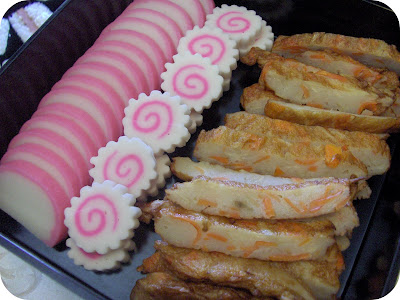
There’s Strange Kamaboko in the Window!

In Odawara, there’s tons of shops with their signature kamaboko (かまぼこ), or fish cake. If you’ve ever eaten or seen naruto (not the blond heathen from the series) in real ramen dishes, kamaboko has a similar texture and taste. A real fishy taste, like a sweetened fish was added to its smooth but firm existence. Most of the time, kamaboko is the half the shape of a circle with a pink outer layer and a white inner layer. When I showed this image to my co-workers, they were impressed to see the various shapes and colors of these kamaboko.

The Usual Kamaboko

The usual kamaboko with naruto (Picture from zakkalife.blogspot.com)


Pasta in Odawara

I love pasta! It’s one of my most favorite foods, so I eat it a lot. When we went to Odawara, my husband told my friend a story about how I disliked a pasta dish at Eastlake’s Cheesecake Factory. The noodles were undercooked and the seasonings weren’t mixed together in a flavorful way. I had it sent back twice, and in the end, the dish was the same.
Somehow, I was marked as being a princess. I mean, if I was paying $10 for plate of pasta AND had to wait nearly 30 minutes for it to be made, don’t you think it should be a great plate of pasta?
So, my husband embellished the story-as he does with every anecdote-and made my Odawara friend believe that I would hurl the plate of pasta from Odawara Station’s Excelsior Cafe into someone’s face if it wasn’t good enough.
The pasta was ok, leaning toward good. I really liked the flavor of the sauce, but the seasonings didn’t completely meld together. Still, it was cheap and fast and presented well. If I’m going to pay around $10 for a plate, it shouldn’t be bad or slow. I mean, it’s pasta!

Mixed Up at Dinner in Odawara

I’ve noticed that many food menus in Japan,especially bars or drinking places, don’t stick strictly to Japanese food or Asian food in general. You might find french fries (フライドポタト – fried potato) right next to the gyoza. Either way, you should try it!

Eating Okonomiyaki in Ginza

My friends took us to Ginza to eat okonomiyaki, a kind of Japanese pancake or pizza. “Okonomi” means “favorites” (but not to be confused with “My favorite thing is…” in usage) and “yaki” means “baked” or “grilled”. It has so many ingredients in it, like noodles, cabbage, Japanese herbs, and shrimp, depending on the type you order. We ate the Osaka-style okonomiyaki, which is different from Hiroshimo-style okonomiyaki. It was delicious, but the best part was when the waiter put the mayonaise on every okonomiyaki we ordered. It was such a showmanship of skill, I had to share it!

Eating Lunch in Harajuku

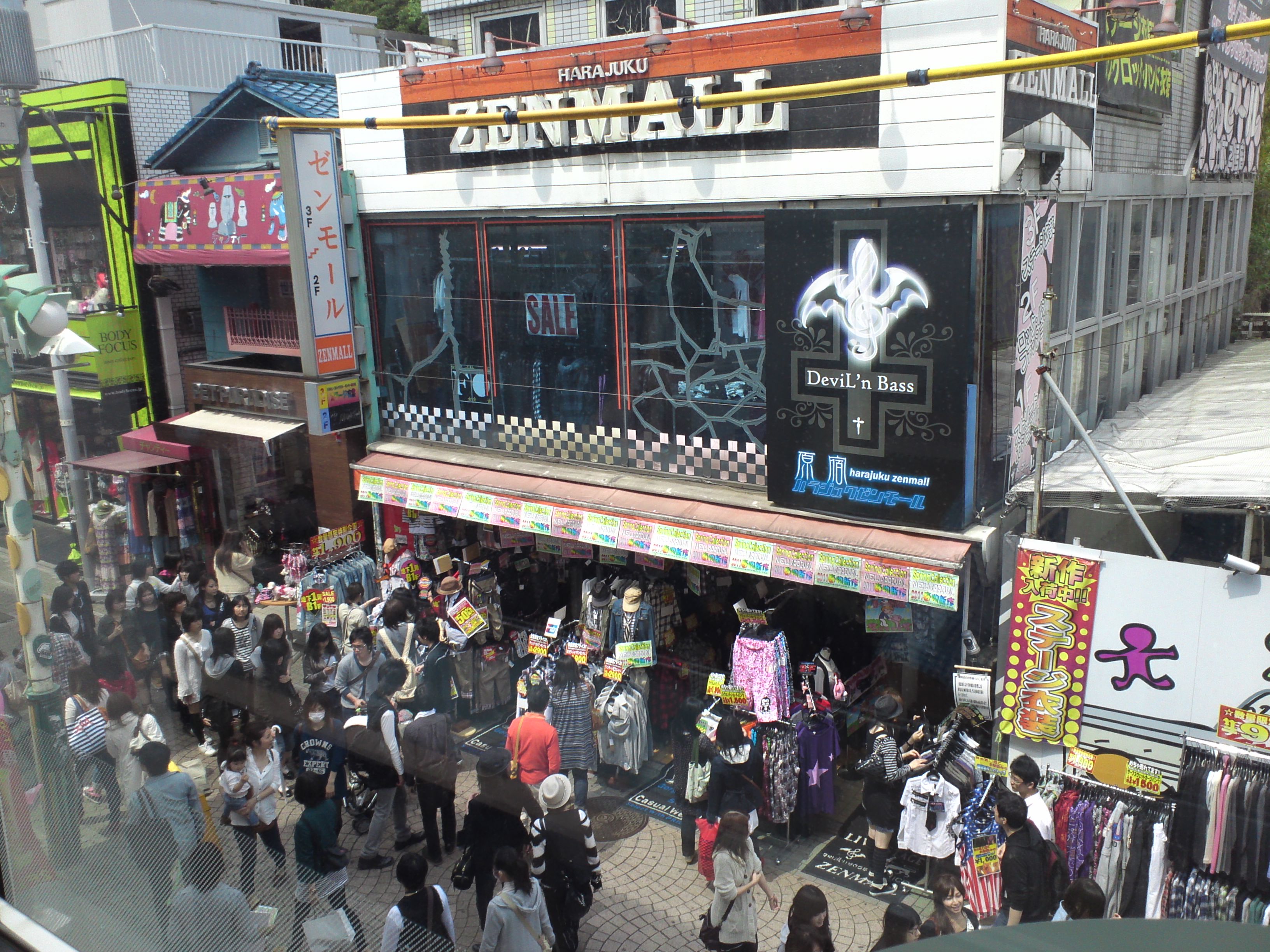
This is my 4th time to Harajuku and it’s not too busy. There are many sales because of Golden Week, a holiday week where most Japanese people go off on vacation to tourist spots. Maybe because of the earthquake, there are fewer foreigners around to clog the street.