#1 of 33 Art Projects in a Year

#1: T-shirt Design Submissions for my friend’s book release

I created two submissions based on two poems from my friend’s book, Vogue 3:16
.

This design is from the poem “Denture Love”.

Image

I really love this poem because it’s filled with warmth. As a married woman, I look at this poem as a standard for growing old with my husband (if time allows). I used a red shirt instead of a muted tone because the glass uses a blue almost monotone palette. Also, the poem has a calm flow but lasting love is very much passionate, at least, in my opinion.

Here’s the process of creating the design.

Image

First I penciled and inked a simple sketch.

Image

After I scanned it into the computer, I traced and colored it in Illustrator and copied the vector to Photoshop.

Image

This was my third time using Photoshop to color an image. I only recently learned how to do this technique. The good thing is I am a traditionally-trained artist, and I borrowed some ideas from painting and color theory. The original base color of the entire image is a very light powder blue because I wanted everything to look submerged and glass-like. I used layers for each different color. It took me a long time to get the look to where it is now. I need more time to analyze glass. Anyways, it took me several days to color this in.

This design is from the poem “Johnny Appleseed”.

Image

This design took more time to do because I don’t like drawing technical things (machines, cars, straight lines). I wanted the pain in the man’s face to be the first thing everyone sees. Though the poem itself depicts a man who has given up on many things and has accepted his sad environment, I think that the man hasn’t truly given up. He is just trying to find somewhere that isn’t where he’s at, but he’s being forced back into the stereotypes and lifestyle that society won’t let him leave. I might be wrong about the interpretation of this poem. Even so, I’m just happy making a design close to my heart: being a black person trying to get away from the “machine”, the stereotypical identity that “higher ups” have coerced everyone to believe in.

Here’s the process.

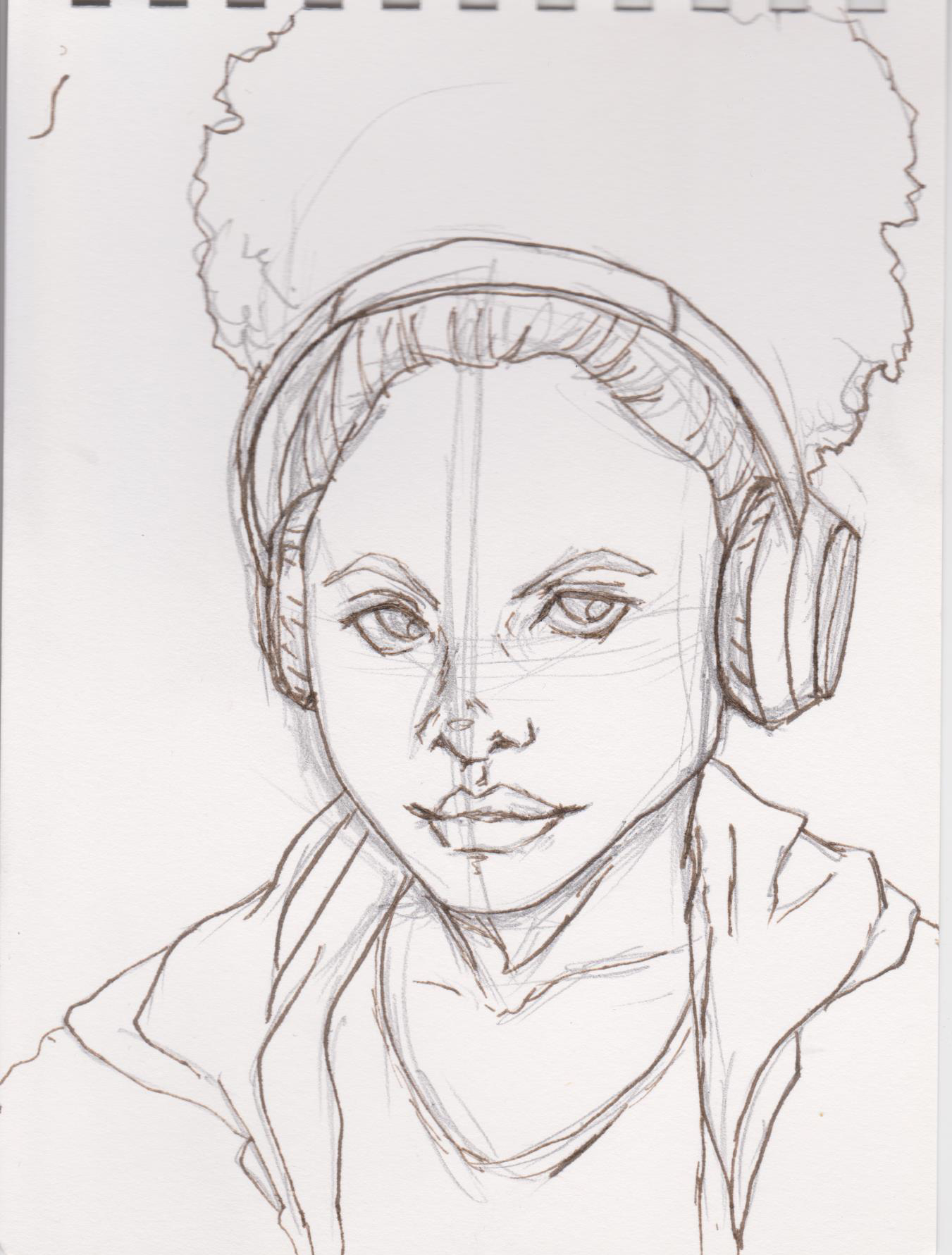
Image

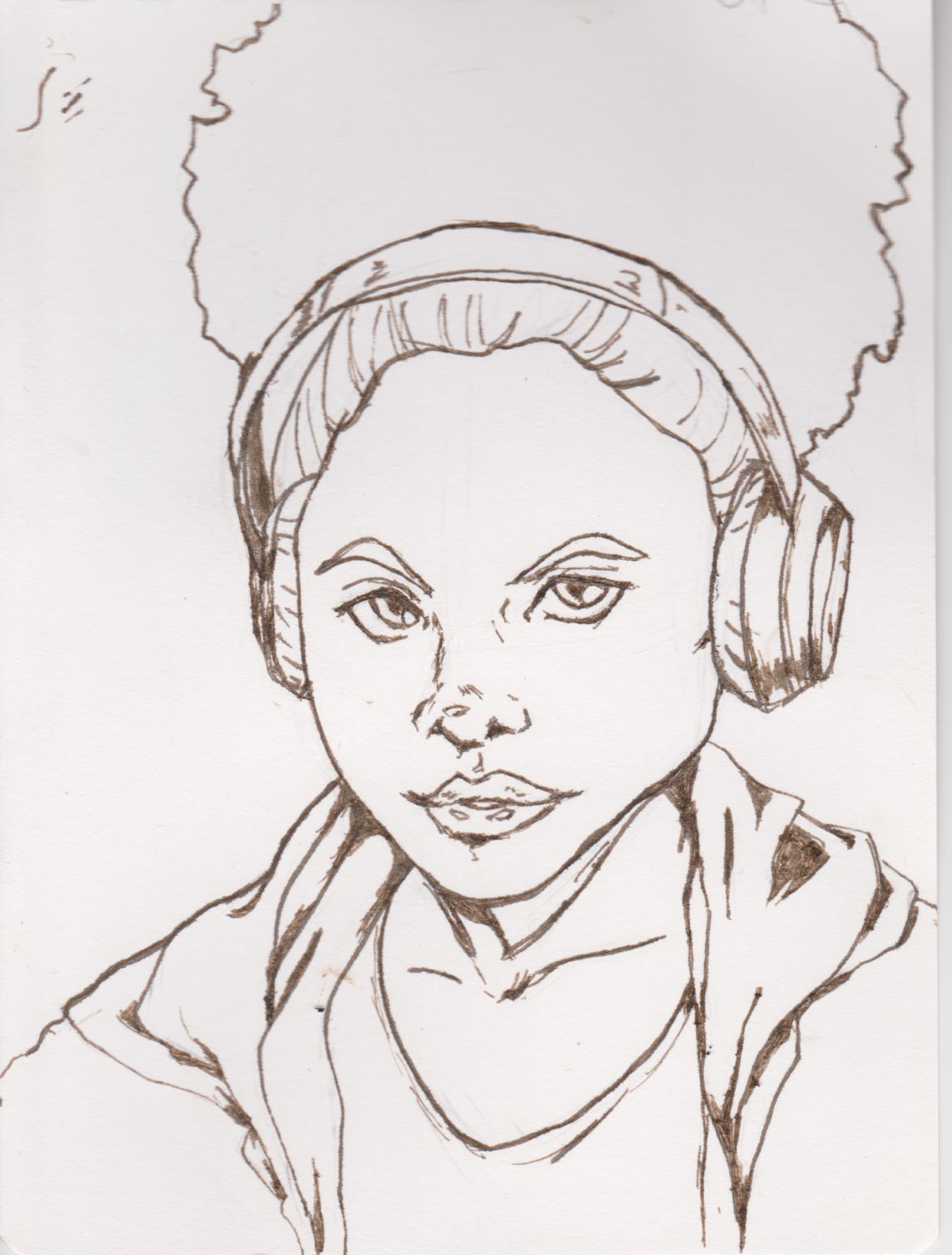
Image

I used Copic Multiliner Pens to outline this image. It took a long time…Image

I scanned it and traced it in Illustrator. ImageI colored it using layers for each item (machines and skin). I didn’t want the things from the poem (mic, ball pencil, headphones) to disappear into the folds, so I used burnt orange over grey to make them stand out a little bit.

If you like poetry or the concepts of these designs, please buy my friend’s poetry collection, Vogue 3:16!

Western Actors in Japanese Commercials

Japan should be called “Land of the Forgotten Commercials” starring Western actors looking for some easy money and international fans outside of their famous roles.

The former California governator, Arnold Scwarzenegger, made many Japanese commercials in his younger days for Nissin’s Cup of Noodles, Arinamin C Drink, and Direct TV. In the commercial above, he stars as a foreigner gambling with Japanese middle-aged men. In superhero fashion, he dashes away to pull out a Japanese energy drink while saying, “Good!”

Leonardo DiCaprio (Great Gatsby remake) in Japanese commercials mean that regular items like whiskey are going to be promoted as cool, premium items–even if those products will be sold for 800 yen ($9) at the local supermarket. Here’s Leo in a recent Cool Bourbon Jim Beam commercial.

Although Bruce Willis (Die Hard) tries hard to say his Japanese lines in these Daihatsu commercials with the disapproval of the director, he still looks very awkward and dubbed in every scene. I think taking the same measure as his Hollywood pals and saying very little (or nothing at all) would help.

The actor who takes the cake–er, the coffee–is acting veteran Tommy Lee Jones (Men in Black series). He didn’t just star in commercials for different products. Even to now, he’s a face for the canned coffee brand, BOSS. Everywhere in Japan, his wrinkled face adorns BOSS vending machines and ads.

New Year, New Skills, New Profile Pic

My husband showed me a tutorial on coloring images, and I decided to try it out since I’m trying to transition from traditional media to digital media.

ImageI sketched out a random picture of myself on a crummy piece of notebook paper (see edges). Then I used a sepia-colored School-G Tachikawa pen to outline it.

profile2 Cleaned up the pencil marks with a plastic eraser.

profile3Went over the outline with the same pen and darkened some areas.

profile4Put the file into Adobe Illustrator, traced it, and colored it with base colors.

profile6Took the image to Adobe Photoshop, made a transparent layer, used the “Lasso” to pick the highlights, and brushed and smudged the colors for the face.

profile7Finished my first Photoshop mini-project (and my new profile pic)!

Galloping to the Goal in the Year of the Horse

Last year, I made 5 resolutions:

1. Lose weight. I managed to lose 15 pounds from July to November by exercising 3 to 4 times a week. Injuries got in the way. I injured my left knee twice in June and July and strained my neck in December. Even though I’m starting from zero again for 2014 (at 154 pounds, only 1 pound lighter than last year), I’ve figured out the exercise program that works for me.

2. Learn Japanese. I had planned to take the Japanese Language Proficiency Test (JLPT), but I missed the deadline. Still, this year, I finished one full journal in Japanese, applied for a Japanese speech contest for foreigners, and re-started organized Japanese studies with an advanced course.

3. Save more money. I didn’t save more money this year. I spent more money (yikes!). I did, however, started seriously paying off my student loans and my husband saved the majority of money.

4. Travel more. Because of our savings, my husband and I decided not to travel.

5. Get to reading and writing! 2013 was a good year for me in regards to writing and reading. I won a science fiction writing contest and one of my stories was selected for a science fiction anthology. I also read 32 books out of my Goodreads’s goal of 30 books in a year. Along with my writing and reading progress, I took two very insightful Coursera classes: Comic Books and Graphic Novels (University of Boulder) and Fantasy and Science Fiction: The Human Mind, Our Modern World (University of Michigan). They helped me improved my writing style and approach to fiction.

Now that I’m staring my 2013 resolutions in the face, I understand why most of these goals failed. They’re so broad! I need concrete, realistic goals, not general ones that can be transposed from me to another person.

So here’s another shot at my resolutions:

1. Lose 25 pounds in 2014 and keep it off. If I exercise 30 minutes 3 times a week every week for a year, that’ll make 144 workouts in a year. This is possible if I look at it as in half a pound a week is lost in 48 weeks (a year). Luckily, I’ve found some great workouts online for free (save money!) and I can put my birthday gift to use (Nike Plus Fitness on Kinect). And, since my husband and I have decided to only eat meat in one meal a day, we’ll be helping each other stave off the pounds.

Ultimate goal: Weigh 130 pounds.

2. Take the lowest level of the Japanese Language Proficiency Test (JLPT). I missed the deadline last year, but I have another chance in July. I have a tutor to help me with this resolution now, and I can concentrate on kanji (Chinese writing system) and grammar through old textbooks.

Ultimate goal: Pass N1 of the JLPT, finish 2 Japanese journals, and pass my Japanese advance course.

3. Pay off 100% of my last credit card, pay off 95% of my student loans, and save at least $1,000 a month. This is totally possible if I ignore the horrid yen-to-dollar exchange rate. From October, I already implemented my student loan pay off. This year, I have to take the reigns of my budgeting plans by creating monthly bill deadlines and alerts.

Ultimate goal: Have $0 on all credit cards, have $700 left on student loans, and have $10,000 in savings.

4. Read 50 books this year and win 2 writing contests. I’ll have to pace myself and read more e-books while I’m at school. I need to develop a writing schedule and stick with it for the year.

5. Create 8 manga podcasts on Anime 3000. I’m a manga podcaster for Anime 3000’s Manga Corner. I was able to release only 4 manga podcasts last year. I’d like to re-vamp the show a little and interview 8 different guest stars. If you’re an anime, manga, or Japanophile podcaster, you can contact me (mangacorner [ at ] anime3000 [ dot ] com) about being a guest star.

Favorite Manga in 2013 (Licensed and Unlicensed)

Learning Japanese and living in Japan has its perks: I get to read manga just as they come out. I also get to see what Japanese people think of the manga and which manga make it to the top ten lists. This year, I made it a point to read unlicensed manga in Japanese and licensed manga in English, even ones that weren’t released this year. Here’s my top five manga from this year.

s-Graineriecover5.  Grainerie (グライネリエ)

(Genre: Fantasy, Shounen)

Unlicensed, Published in GFantasy Magazine (Square Enix).

I love all the works by Rihito Takarai, including her boys’ love (BL) series. In my opinion, I think that Takarai-san’s works are great examples for all manga creators should aim to achieve. The stories all have an even pace, tasteful art, great characters, and realistic dialogue. Grainerie is no different. Only granted “graineliers” can produce “seeds” that have different powers. An ordinary boy named Lucas decides to use these mysterious “seeds”, soon becoming an illegal human in the world.

I also practiced my Japanese, and made a little bit of contact with Takarai-san through Twitter (@twittakarai). I wrote to her, “I read Grainerie and Ten Count. They were interesting! Thank you so much! I’ll be getting the next manga. –From a foreign fan (Is my Japanese OK?).「グライネリエ」と「テンカウント」を見た。面白かった!ありがとうございます!次の漫画を待っています(★^O^★) –外国人のファンより(日本語大丈夫ですか?(⌒_⌒;))”. She responded, “Your Japanese is good. Did you enjoy Grainerie and Ten Count? I’m very happy! I’ll do my best so that you can enjoy it. 日本語お上手ですよ~~ 「グランネリエ」と「テンカウント」楽しんで頂けましたか?とっても嬉しいです! 続きも楽しんで頂けるようがんばりますね”. So, not only is Takarai-san a great manga creator, she’s a responsive Twitter user!

s-lastgame4. Last Game (ラストゲーム)

(Genre: Comedy, Shoujo)

Unlicensed, Published in LaLa Magazine.

I love stories where two people grow up together, even if those stories are from 2011. A Japanese teacher at school lent me the first four volumes in Japanese because she said, “It’s as enjoyable as Kimi ni Todoke.” (I borrowed all of the Kimi ni Todoke volumes from her, too.) In Last Game, rich pretty boy Yanagi has made his life mission to beat his childhood rival, Kujou. From elementary school to college, Yanagi follows her, but through the years, he begins to fall in love with her. The only problem lies in brainy and sporty Kujou. Can she let herself fall in love at all?

I let this series become a standard for girl-boy friendships that blossom into love. Kujou, who is really intelligent, doesn’t look at boys because she’s always thinking of getting to the top. She’s not a typical female anime character. Even though lots of manga resort to using rich boys in prestigious schools as romantic interests (Boys over Flowers, Hana Kimi, Ouran High School Host Club), Last Game makes the rich boy chase the poor girl in nonreputable schools. I love when manga breaks the cliche!

s-yamadaand7witches

3. Yamada and the Seven Witches (山田くんと7人の魔女)

(Genre: Supernatural, Comedy, Shounen)

Licensed by Crunchyroll/Kodansha USA.

My favorite genre of manga is shounen (Please read My Answers to an Anime Q&A), and Yamada and the Seven Witches definitely embodies it! It’s funny, adventurous, and a little bit corny. When high school slacker, Ryuu Yamada, collides with studious Urara Shiraishi, they learn they can swap bodies by kissing. But they aren’t the only ones with special powers at Suzaku High.

Even though this series is very tamed compared to ONE PIECE and Fairy Tail, it’s still fun to watch Yamada form friendships with a hint of sexy detective work.

Skip-Beat!_cover_vol01

2. Skip Beat (スキップビート)

(Genre: Supernatural, Comedy, Psychological)

Licensed by Viz.

OK, so maybe Skip Beat was originally released in

Skipbeat_officialpromoposter

Extravagant Challenge‘s Promo Poster

2010, but I decided to read the popular title this year after I re-watched the Taiwanese TV series, Extravagant Challenge (華麗的挑戰) starring my favorite Super Junior member, Siwon ヽ( ★ω★)ノ. Skip Beat centers on rising actress Kyoko Mogami who joins the entertainment industry to get revenge on her childhood friend, Sho Fuwa. With the help of Fuwa’s rival, fellow actor Ren Tsuruga (Siwon!), Kyoko learns about acting and love.

I think that this is another series every aspiring manga creator should read. Some of the methods that Kyoko learns are essentially from method acting. If acting were reduced to a more puristic level, acting comes from a script or screenplay, or written works. Great dialogue isn’t by expression alone. It’s by good writing. Skip Beat made me realize that I have to write in a similar way. Now, I act out the dialogue of each character I write and I put myself into my characters’ shoes. This has improved my writing, even helping me win one writing contest and get selected for an anthology (The Loaner and The Visitor).


Shingeki_no_Kyojin_manga_volume_11. Attack on Titan (進撃の巨人)

(Genre: Supernatural, Horror)

Licensed by Kodansha USA.

I really hate the horror genre, especially series with man-eating monsters. Still, I put my hatred of zombie-like creatures aside and diligently read Attack on Titan. After 100 years of the appearance of giant humanoid Titans, humans live in three concentric walls which protect them from attacks. When the outermost wall is breached by a colossal Titan, the humans are forced behind the other two walls. The story centers on Eren Yaeger, his adopted sister, Mikasa Ackerman, and their childhood friend, Armin Arlert, as they fight the Titans to save humanity.

This series is very different from horror genre series such as Gantz, Claymore, I am a Hero (アイアムアヒーロー), and Uzumaki (うずまき). Though all of these series deal with humanity fighting against monsters, Attack on Titan perfectly captures desperation and hopelessness, which is the reality of today’s world. It also says a lot about Japan and its complicated relationship with foreigners and foreign customs. I can think of few series that do this!

50 Questions: My Answers to an Anime Q&A

Found this on Ephemeral Dreams‘s blog and thought it would be fun to do. Updated 5/27/2020. 

1. Who is your favorite male anime character?

Toss up between Ichigo Kurosaki from Bleach and Ulquiorra Schifer from Bleach. I love Izuku Midoriya, aka Deku, from My Hero Academia for his positivity and not being a mindless punching or smiling machine 

2. Who is your favorite female character?

I have so many female favorites! Clare from Claymore and Momo Yaoyorozu from My Hero Academia and Ryo Miyakozuka from Otomen and Sakura from Naruto Shippuuden. I love strong and smart women.

3. What is your favorite anime soundtrack?

Love all of Bleach and NANA‘s music. I’m also liking lots of the music from Carole and Tuesday.

4. What is your favorite anime opening + animation?

“D-tecnolife” by UVERworld on Bleach.

5. What is your favorite anime ending song + animation?

“Gravity” by Maaya Sakamoto from Wolf’s Rain.

6. What is your favorite anime scene?

Absolutely love the final fight between Ichigo and Ulquiorra in Bleach…Can you tell that I’m a Bleach fan?

Here’s another scene: A piano begins to play as a girl on a motorcycle swings her bike through giant robots. She delivers deadly blow as she makes her machine dance to the music. This scene was the last action scene in RideBack.

7. If you could meet an anime character who would it be?

Totoro.

8. What anime character is most similar to you in terms of personality?

Even though he’s a guy, I relate the most to Kazuhiko Fay Ryu from CLAMP’s Clover.

9. What is your favorite thing about anime?

The transformation of characters (Level up! Level up!), the fun factor, the storytelling, the animation…so many things… 

10. What is your least favorite thing about anime?

The over-done themes with high school students, ranks, and main characters being sucked into a parallel magical world. There are other people and storylines in the world!

11. Who are your favorite anime couple?

Nana (Hachiko) and Nobuo from NANA.

12. Who is your favorite anime animal?

Kilala from Inuyasha.

13. What anime would make a good game?

Redline and Onepunch-man (not as Jump Force). 

14. What game would make a good anime?

Soul Calibur.

15. What was the first anime you ever watched?

Old school Sailor Moon!

16. Do you think you’ll ever stop watching anime?

Well, in the long run, no, but I’ve watched less and less anime and started to read more and more manga as I’ve matured, so…

17. What is your favorite genre of anime?

Shounen.

18. What is your least favorite genre of anime?

Horror. 

19. Are you open about watching anime with people you know?

I used to be, but now, I’m not. It’s mine, mine!

20. Have you ever been to Japan?

Um, I lived in Japan for 5 years and not having to do with the military…

21. What anime was the biggest let down for you?

SkyCrawlers. Slowest. Anime. Ever.

22. What anime was better then expected?

Law of Ueki.

23. What is the best anime fight scene?

Ichigo Kurosaki versus transformed Ulquiorra Schifer in Hueco Mundo from Bleach. I think I noted this already…just love it way too much.

24. Who is your anime waifu?

Um, I have a husband, so… Major from Ghost in the Shell?

25. What was your favorite video game as a child?

Tetris (the only game I could beat my brothers at because I’m a spatial learner), DDR (the only game I could beat my brothers at on the controllers), Soul Calibur (the only game I could beat my brothers at without them having a handicap), Mortal Kombat (the only game that motivated me to win against my brothers so I could do the most awesomest kill scenes), Killer Instinct (the only game I could beat my brothers at as a female character), and Street Fighter II Turbo (the only game I could never beat my brothers at). My brothers really beat the crap out of me with video games…

Questions about me

26. Most Embarrassing moment?

One day from my first year in college, I was sitting in my drawing class, and everyone was quietly working on their projects. I remember the class being completely silent when I farted.

27a. Can you drive?

In the U.S. and Japan!

27b. Do you own a car?

Yes! A Scion! (It was free. If I could choose a car, I’d like a Skyline.)

28. Are you mature?

Sometimes.

29. What year were you born?

1985.

30. Do you prefer cats or dogs?

Cats. They’re smart and take no shit.

31. Describe yourself physically.

Short, brown skin, black hair, brown eyes, curvy, athletic build, and round face.

32. What would you name your first child?

None. Don’t plan on having kids. I’d like to keep my money, individuality, and sanity.

33. What is the worst injury you have ever had?

Tore my ACL in both knees.

34. What is your worse habit?

I procrastinate when I get too much work. I usually read manga or watch anime (in three days, I watched over 100 episodes of Bleach during Finals Week). Why? Because I know I can do whatever work in, like, 30 minutes. 

35. Do you drink or smoke?

Nope! I like to keep my money in wallet and my health, well, healthy.

36. Do you have a tattoo?

No!

37. Are you a morning person or a night person?

Both! I can wake up with the alarm and I can stay up and work.

38. Have you ever slept past midday?

Yep! It’s called going to sleep late.

39. Do you regret anything?

Yes! What person doesn’t? But if you can move past it, even use your regrets to fuel your future, things should turn out OK.

40. Can you count the number of friends you have on one hand?

How about a closed one? 

41. Do you wear glasses?

Yup! And contacts, too.

42. Are you a picky eater?

No, but I definitely don’t like corn beef hash. Gross.

43. Would you die for someone?

My husband…after he stops annoying me.

44. If you could have any superpower, what would it be?

Unbreakable body.

45. Do you believe in the supernatural?

Yes!

46. Would you rather be rich or famous?

Rich, not famous. Too much baggage with fame.

47. Have you ever committed a crime.

Yup, stealing a pack of gum when I was seven. Forgot I had it in my hand before we walked out the store.

48. Pirates or ninjas?

Totally ninjas! Why? Because I have a black cat named Ninja! Plus, they’re so quiet, you don’t even know they’re there (unlike my cat).

49. Does someone have a crush on you?

Any guy or gal with lots of muscles…

50. Are you in a relationship?

My marriage license says I am.

You Can Make a Piñata in Japan!

I don’t like balloons. I loathe them. So what was I to do when websites kept saying, “Hey, you have to use a balloon”? Find another balloon-phobic soul with piñata-making skills on a budget!

I made my piñata, a beautiful and large Frankenstein head, with cardboard, tape, hot glue gun glue, and origami paper. If you go to Daiso, it’s around $5 of material. It’s the labor that sells a Halloween piñata for $17 (Oriental Trading). Took me a day to make!
For a step-by-step guide to make a cheap piñata, please go to http://keephomesimple.blogspot.jp/2013/02/how-to-make-homemade-pinata-for-under-5.html.

Video Games Suck Now

I grew up in the 80’s and 90’s and played games like Mario Brothers, Double Dragons, Zelda, Doom, and Sonic the Hedgehog. They were simple in concept; beat the boss and save the girl or the world. As I grew up, I watched platforms and game graphics became more sophisticated. No more pixels running around as Mario or Link. No more overheated Segas and Nintendos.

While the platforms today seem more like computers than consoles, the games for these platforms have taken a big jump back.

Look at Capcom’s Dead Rising, Techland’s Dead Island, and Bethesda’s Skyrim and Fallout. Players usually talk to Character One, go to the other side of World One, get Item One, and go back to Character One. Then repeat. And repeat.

Image

Am I in a wash cycle or video game?

Today’s video games still have a core story—defeat the Big Bad Dragon and save the world—but it’s forgotten somewhere between Character Eighty-Seven and Item Five Hundred. Sure, players get to kill zombies, mutants, and gods, but that’s all there is to it. Mindless killing. Mindless Retrieving.  

Don’t get me wrong. The visuals are great and the gameplay is smooth. Even the loading time is forgivable (save for Dead Rising and Fallout) compared to the older consoles. Still, the formula is the same: talk, kill, retrieve, and return. Game developers have dropped the controller on recent games just to make sales. I understand that business can’t be business without money, but if I pay fifty bucks for one game, I want my money’s worth or at least have something fun to play.

Games today leave me with one question: what happened to video games between the 1980’s and the 2000’s? It could be that the gamers themselves have changed and the game developers are trying to appeal to that change. In the 1980’s, it was cool to be anyone. Androgenism, nerds, and Flocks of Seagulls haircuts were cool. In the 1990’s, it was cool to be aware of deep issues like education, racism, drugs, poverty, pollution. In the 2000’s, people hated people. The Rise of Fear and Haterism came up and squashed the open-minded, experimental, fun-loving 80’s and 90’s attitude to a pulp. Many products followed suit, and video games weren’t immune to the haterism. Some of the most marketable games, namely Call of Duty and Dead Island, are racist, war-supporting games OK with murdering Afghanistan or Iraqi people and depicting black and Mexican people as gun-toting thugs and drug-dealers. Not cool or fun anymore. No more hard-boiled, take-no-shit characters. Just emotional train wrecks with guns and a sore spot for colored people.

Game developers didn’t ask for this paradigm shift. They’re regular folks who grew up with the same games I did, maybe dreamed of developing the same fun games. Between their creative minds and their investors, something’s gotta give, and that would be the fun and the story. Those are the two things that keep gamers gaming. I’d rather play Tetris all day than play five minutes of trying to find a saving point in Dead Rising or facing a million of the same zombie in Dead Island or picking up one more useless item on the way to delivering another useless item in Skyrim or Fallout. It’s not my idea of a good time.

The recent video games that are exciting with a polished story are few and far between, but they do exist. PopCap Games’s Peggle, Ubisoft’s Assassin’s Creed II, Telltales Games’s The Walking Dead, Vogster Entertainment’s Unbound Saga, Capcom’s Devil May Cry, Konami’s re-released Castlevania, and id Software’s Rage are reminiscent of the 80’s and 90’s optimistic attitude, only with today’s graphics and gameplay. Their core stories and uncompromising characters make up a fun world. In Assassin’s Creed II, players bring conspiracies to light while free-running in Renaissance Italy. The Walking Dead’s in-depth character and story development keep gamers coming back. Unbound Saga embodies Double Dragons’ and Streets of Rage’s linear game play while the hard-boiled main character remains hard-boiled. Rage gives players everything Skyrim and Fallout couldn’t: a small yet interesting world, cool cars and weapons, unique personalities, and fast loading times.

What makes these games memorable and re-playable? These games are reduced to a condensed but polished arena. People have short attention spans, and making the world too big means pushing that attention span to its limit. Rage understood this by taking the player to a different world before the game began to feel repetitive. Players want realism in their games, but games like Skyrim and Fallout abuse it by making everything interactive. Who wants to carry around a billion flowers? The Walking Dead, Assassin’s Creed II, and Rage limited the interactivity to the core stories. Even something as basic as letting players save whenever and wherever they want keeps players happy (Dead Rising, ahem). And the hard stages are beatable—without the help of Google.

Let’s remember: gamers play games to get away from reality. If games are created to frustrate the player with overly-vast worlds, repetitive characters and missions, excessive interactivity, slow loading times, insensible saving controls, war-supporting and racist undertones, and complicated bosses, what’s the point of escaping reality?

Kumamon Kraze


Kumamon

Maybe you’ve seen a happy-go-lucky bear, maybe you haven’t. If you’re in Japan, you’re likely to see him on everything. Yes, I mean, everything. Tissue boxes, frozen fried rice packages, candy, cookies, soba bags…I think even on Ninja‘s shaved tummy (from her spay).

Kumamon is a mascot bear from the Kumamoto Prefecture. Since his creation in 2010 from the Kumamoto Surprise campaign for tourist through the new Kyushu Shinkansen line, Kumamon has become a hit in Japan. In 2011, he won a national mascot contest, generating a large revenue prize for the Kumamoto region.kumamon pocky


Kumamon isn’t just a prize winner; he’s a profit builder as well. Anything with Kumamon is expected to be bought up. Is it because of his sheer cuteness? Who knows? All I know is that Kumamon looks very much like my Bombay cat.


Happy Tanabata! 幸せ七夕!

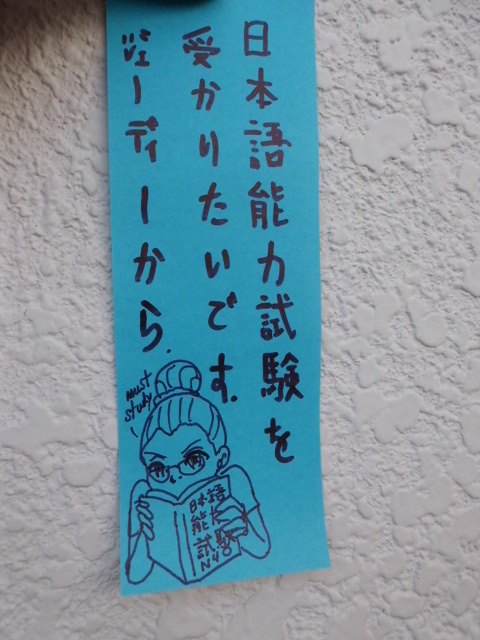
People usually write wishes (お願い) for Tanabata and tie them to a bamboo branch. My wish this year: "I want to pass the Japanese Language Proficiency Exam".

People usually write wishes (お願い) for Tanabata and tie them to a bamboo branch. My wish this year: “I want to pass the Japanese Language Proficiency Exam”.

There are many festivals celebrated throughout the year in Japan. However many festivals exist in Japan, there is only one fixed festival that honors the representation of stars: hopeful wishes.

Tanabata (たなばた, 七夕), or the Star Festival, is celebrated every year on July 7th all over Japan with local variations. It honors the legend of two lovers separated by the Milky Way. Fortunately, the lovers, Cowherd Star, or Altair, and Weaver Star, or Vega, are allowed to meet once a year on the evening of July 7th.

The legend, which is derived from a Chinese  folktale known in Japanese as Kikkoden (きっこでん, 乞巧奠), is about a cow herder named Hikoboshi and a weaver princess, Orihime, who played together so much, they forgot their duties, upsetting the king. In response, the king separated Hikoboshi and Orihimi by a river called Amanogawa River, or the Milky Way. However, Orihimi begged the king to allow her to see Hikoboshi again, so the king set aside one day for them to meet. Though tanabata’s legendary story is one about two lovers, the festival itself is a time where wishes are asked to come true.

During tanabata, people write their wishes onto small and colorful strips of paper called tanzaku (たんざく, 短冊). Once the tanzaku are hung onto bamboo stalks or trees and displayed in their yards and home entrances, people pray for their wishes to come true. The next day, the decorations with the tanzaku are released into oceans, rivers, or streams. Colored streamers are also used to show off the tanabata spirit around the neighborhood. Other decorations include a casting net, or toami (とあみ, 投網), for good luck in fishing and farming, and a purse, or kinchaku (きんちゃく, 巾着), for wealth and good business.

Each area of Japan celebrates tanabata differently. Several areas light torches as part of the celebration, while others use horse-shaped puppets instead of bamboo stalks for displaying their tanazaku. Though tanabata is largely celebrated on July 7th, some areas of Japan celebrate tanabata on August 7th alongside the ancestral summer holiday, Bon (ぼん, 盆), which honors the return of the family’s ancestors. Outside of Bon, some cities couple tanabata with another celebration. Aomori of the Touhoku Region also celebrates the star festival with the Nebuta (ねぶた) Festival, parading lanterns made of papier-mache alongside customary tanabata decorations.

Amongst all of the tanabata celebrations, Sendai of the Miyagi Prefecture and Hiratsuka of the Kanagawa Prefecture are known to have elaborate tanabata events. Because of this, Sendai and Hiratsuka have become tourist attractions during the month of July.

With the exception of the original tale, tanabata is one of Japan’s celebrations where hopes and wishes are requested in full festival fashion.

Sources:

Japan National Tourism Organization. “Tanabata (Star Festival)”. http://www.jnto.go.jp/eng/indepth/history/traditionalevents/a69a_fes_tanabata.html.

Renshaw, Steve and Saori Ihara. (1999). “Orihime, Kengyuu, and Tanabata: Adapting Chinese Lore to Native Beliefs and Purposes”. Appulse; Bulletin for the Philippine Astronomical Society. Vol. 9:8. August, 1996. http://www2.gol.com/users/stever/orihime.htm.

“Tanabata”. Kids Web Japan. http://web-japan.org/kidsweb/explore/calendar/july/tanabata.html .

“Tanabata”. Leighton Buzzard Childminding Association. http://www.lbcma.org.uk/festivals/Mtanabata.asp.

“Tanabata”. (2007) Encyclopedia of Shinto. Kokugakuin University. Tokyo, Japan.
http://eos.kokugakuin.ac.jp/modules/xwords/entry.php?entryID=1057.

How Much of the Snake I’ve Eaten

In January, I posted my New Year’s resolution. Now, six months later, I’m doing a check-in.

Gotta get that fat outta here!!

#1: Losing weight: Drop 25 pounds.

In January and February, while my husband did a cleanse, I opted for only eating meat once a day. I don’t know if I dropped weight, but my clothes did fit differently–good for not exercising (my husband did, though). Just when we were going at a good pace, my husband hurt his back and the exercising (for him) and the non-meat meals stopped. It goes to show how much being in a relationship can affect your body.

Three weeks ago, I started doing Tae Bo again. It wasn’t as bad as I remembered (I did it last year for two months), but I decided to do cardio three times a week and strength training once a week. A week ago, I hurt my knee, so I’ll have to stick with strength training and minimum cardio. Injuries are the worst!

Plan: Do 30-45 minutes of exercise every other day. Two times a week include a strength training regiment (12 reps, 3 sets with weights), and work on abs every exercise day.

How to write “learn” in kanji

#2: Learn Japanese: Become a more fluent speaker.

I entered an international speech contest in Japanese, but I wasn’t picked. Maybe next year… Every day, I learn a new Japanese word (today’s word is 野良猫, noraneko, or “stray cat”) to build my vocabulary. I also write in a journal in Japanese, and some of my posts on this blog have a Japanese translation. So far, my reading comprehension has gotten easier as well as my kanji.

Plan for the rest of the year: Sign up for the JET Programme’s free advanced Japanese course and get ready for another speech contest (to get picked this time!).

#3: Save more money

I haven’t saved any money (according to my Mint account), but I have managed to slim our daily expenses. Instead of buying many snacks and going out to eat, we cook at home and avoid sugary products like cookies and fruit juices.

Plan: Send a set amount of money to my American bank account and not touch it except for emergencies and bills.

#4: Travel more.

Because of Item Number 3, traveling is out of the question. Sadness!

Once upon a time, there was a writer…

#5: Get to reading and writing!

I became a part of a creative writing circle. We get a prompt and two weeks to write something, then we post in on Google Plus. It’s very convenient because I never know how people will react to it. Also, it keeps me on my toes in keeping with deadlines!

Plan: Continue with the writing circle. Win at least one writing contest!

Links

  1. Scale: http://www.johnstonefitness.com/wp-content/uploads/2012/01/Weighing-Scales-1.jpg

  2. “Learn” kanji gif: http://nihongoichibandotcom.files.wordpress.com/2011/04/5b66.gif

  3. Piggy bank: http://sj.sunne.ws/files/2011/09/Piggy-Bank1.jpg

  4. Suitcase: http://henricodoctors.com/util/images/TravelMedicineSuitcase.jpg

  5. Books: https://jadesescape.com/wp-content/uploads/2013/01/books.jpg?w=257

5 Things I Carry From Reading Rainbow

Readingrainbow_logo

I was humming in the copy room, and Reading Rainbow popped into my head. I couldn’t help but smile. I love Reading Rainbow! From the theme song (below) to LeVar Burton (Roots, Star Trek: The Next Generation) to each book, I fell in love with the show. Reading Rainbow taught me many useful things, some things that I still carry into my adulthood.

 The theme song was inspirational. “I can go anywhere” and “I can be anything” inspired me to believe in myself, especially as someone who liked to read. When I was in fourth grade, I realized that most of my classmates hated reading, and if you read, you had a big “Pick on me” sign on your forehead. The first time I heard Reading Rainbow‘s theme song, I realized that it was OK to read. It was a catchy, cool theme song (up there with the Fresh Prince of Bel-Air and Family Matters). I believed in it. I could go anywhere and I could be anything–as long as I was reading. Reading gave me the friends I didn’t have, took me places my family couldn’t go, taught me lessons that my parents couldn’t teach. To me, Reading Rainbow said, “It’s not only OK to read. It’s great to read!” As an English teacher, I encourage my students and colleagues to read books.

I’ve been using folded paper cups for over ten years. I learned how to fold paper cups when I was in fifth grade. My English teacher put on an episode of Reading Rainbow, LeVar folded a paper cup and put water in it, and we followed suit. When I got home that day, I showed my mom how to make a paper cup, and she commented, “Oh, this can hold more than water.” Eighteen years later in Japan, I use folded paper cups to hold game pieces, stickers, and laminated papers.

My mom is really a Chinese descendant or she knows the value of woks. My Filipino mom always used a big wok for making pancit (Filipino noodles), and I always wondered, “Why does Mom use that gigantic pot? Is she the wicked witch from Hansel and Gretel?” When I watched an episode with LeVar in the Mandarin Inn Pell (above), I remembered my mother saying, “Oh, we’re Chinese descent,” before going on about her roots and Buddha. Now as an adult, I plan to use a wok because it heats the food evenly–and I get to say, “It woks!”

Mummies taught me to love mythology. Episodes about Egypt, like “Mummies Made in Egypt” (above), was a gateway into Egyptian mythology. By the time I hit seventh grade, I loved Egyptian, Greek, Roman, and Norse mythology, and my knowledge of them was vast for an eleven year old. When I was a sophomore in high school, I joined a quiz league (not Decathlon) as the mythology expert. Now that I’m a high school teacher, I don’t study mythology anymore, but it does influence the stories I write.

Cultures are awesome! Growing up in a homogeneous area (either black or white people), “culture” was a word that made people uncomfortable. My brothers and I were the only half-black, half-Filipino kids in our side of town, and for some reason, I always felt that my parents were trying to down-play our differences. We weren’t sure what to do about ourselves. It was important for me and my brothers to see LeVar–a black man–appreciating different cultures–Chinese, Japanese, Native American, you name it. I learned that it was OK to respect other cultures no matter what your skin color said.

Reading Rainbow isn’t on TV anymore, but it’s still around for the old and new generations of kids to love. But you don’t have to take my word for it.

Rainbow Origami Slinky!

Wow! A throw-back with a creative spring!

Hiragana Mama's avatarHiragana Mama

slinky1

I’ve made a lot of things out of origami in my lifetime, but I have never made something as fun as this! I was inspired by Kozue of Kozue’s Show and Tell) to make a slinky out of origami paper (折り紙スリンキー). You guys, it is seriously so cool!

slinky2

slinky3

slinky4

The instructions for this slinky are pretty simple (video at the end of this post). BUT you have to fold 50+ pieces of paper so it takes quite a bit of patience. It took me about 2 hours to complete my slinky (while watching a movie with the kids), and mine used 64 pieces of origami. My 5-year old daughter attempted to help me, but she did not have the patience to make more than one ;). This would be a great little project for a child in elementary school, or really, anyone for the matter. It would be the perfect activity…

View original post 195 more words

Next-generation vending machines

Japan and its awesome vending machines!

tokyo5's avatarTokyo Five

In your country, do vending machines give weather forecasts and recommend a drink for you based on your gender and estimated age ( using facial recognition software) like here in Japan?

image

We can also pay for the drinks by using our train commute IC cards.

View original post

Milky Matcha

Today, I bought Lipton’s Matcha Milk drink. It’s not tea, just milk. I wonder if the U.S. has this flavor…

今日私はリプトンの抹茶のミルクの飲物を買った。それは茶じゃありませんが、ミルクだけ。私は米国では味があるかなあ。

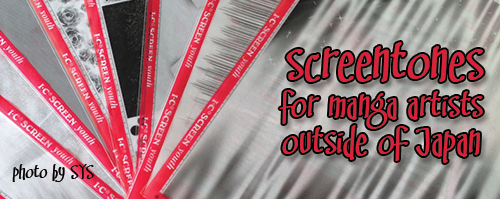
Screentones for Manga Artists Outside of Japan

screentones_header

Screentones for Manga Artists Outside of Japan

“Where do you get screen tones if you’re outside of Japan?” 

If you want to make manga the traditional way by cutting screentones and applying them directly to your drawings, you can find some online, but they’ll be a bit pricey. It’s better to go to a Japanese district if you’re near one and find a bookstore. Otherwise, you can go online and order them.

If you’re more of a digital artist, you can use a computer program to make the screentones. The most common programs are Clip Studio Paint ($49.99) and Photoshop ($699). (If you go to an anime convention, you might see a booth selling Manga Studio with discounted versions available. If you don’t have this program and you’re on a time crunch, just download the trial versions.) You can also download  free screentone packs from other artists like the Screentone Society on Deviant ArtAshura’s Screentone Depot, OrneryJen’s screentone page, Psychobob’s screentones (password: psychobob), Shounen Ai Go’s screentones (old), or Jason Tucker’s “Screentones” page. The only bad side to using purely digital screentones in manga is that sometimes the tone looks too digital, too clean. Some ways to get around that is to scan a few physical screentones and use them when the manga looks off after toning.

Here’s a video on how to do digital screentoning on Photoshop (new and old versions of Photoshop are applicable):

If you want the best of both worlds–the traditional way of making manga with the digital ease–you can print screentones on transparent paper and apply them to the physical manga. You can also scan the physical screentone to your computer, define a block of it as a pattern in Photoshop, and use it (Edit>Fill>Pattern) after selecting the area you want toned.

If you’re skilled with a pen, you can also use carefully planned hatchbacking and pointillism, but it won’t look so professional (just more artsy).

Hope this helps with your manga dreams!

Also, please read former Prince of Tennis manga assistant Jamie Lynn Lano’s (http://www.jamieism.com) posts and theshazerin’s (http://theshazerin.deviantart.com/) post about manga supplies.

Need more inspiration? Check out these manga with Renta! that use many different screentones, but really pay attention to the softer tones!

Rentascreentones

Check out Renta! manga for screentone inspiration!

Bonus

If you don’t know how to apply traditional screentones to your manga, here’s a tutorial from Manga University.


If you’re looking for pens to ink your manga that will suit your budget, please read this post (Manga Pens for Manga Artists Outside Japan) comparing Japanese manga pens and their prices from online shops.

Improving my Broken Japanese! 頑張ります!

japaneseI came to Japan two years and eight months ago, and my Japanese is still broken. What the…OK, it’s not a big deal. I just live in Japan is all. Ever since I stopped doing the self-study Japanese courses (provided through the JET Programme), I haven’t been diligent in studying Japanese. I’ve tried to make up for the slack by entering a Japanese speech contest. My problem: I don’t practice every day. I do speak Japanese every day, but I don’t practice Japanese enough.

I’ve decided to learn a new Japanese word every day. I’ve decided this since Friday. The words I’ve learned since then are kangei (歓迎, “welcome”), ooku no (多くの, “many”), koma (駒, “piece”), and kaikai  (開会, “opening of a meeting”). I suppose these choice of words alone show what’s going on in my life now.

At this time, Japanese schools are welcoming new teachers and students–and there are many this year at my school–while opening ceremonies and introduction games are taking place. Can you guess what word goes with what statement? Bet you can.

On top of that, I’ve discovered Japaneseclass.jp, a website designed for self-study (and competition, whatever way you look at it). Every time I pass a vocabulary question, I get points which up my ranking score out of everyone on the website. It’s a bit addicting, so I guess Japaneseclass.jp is doing its job.