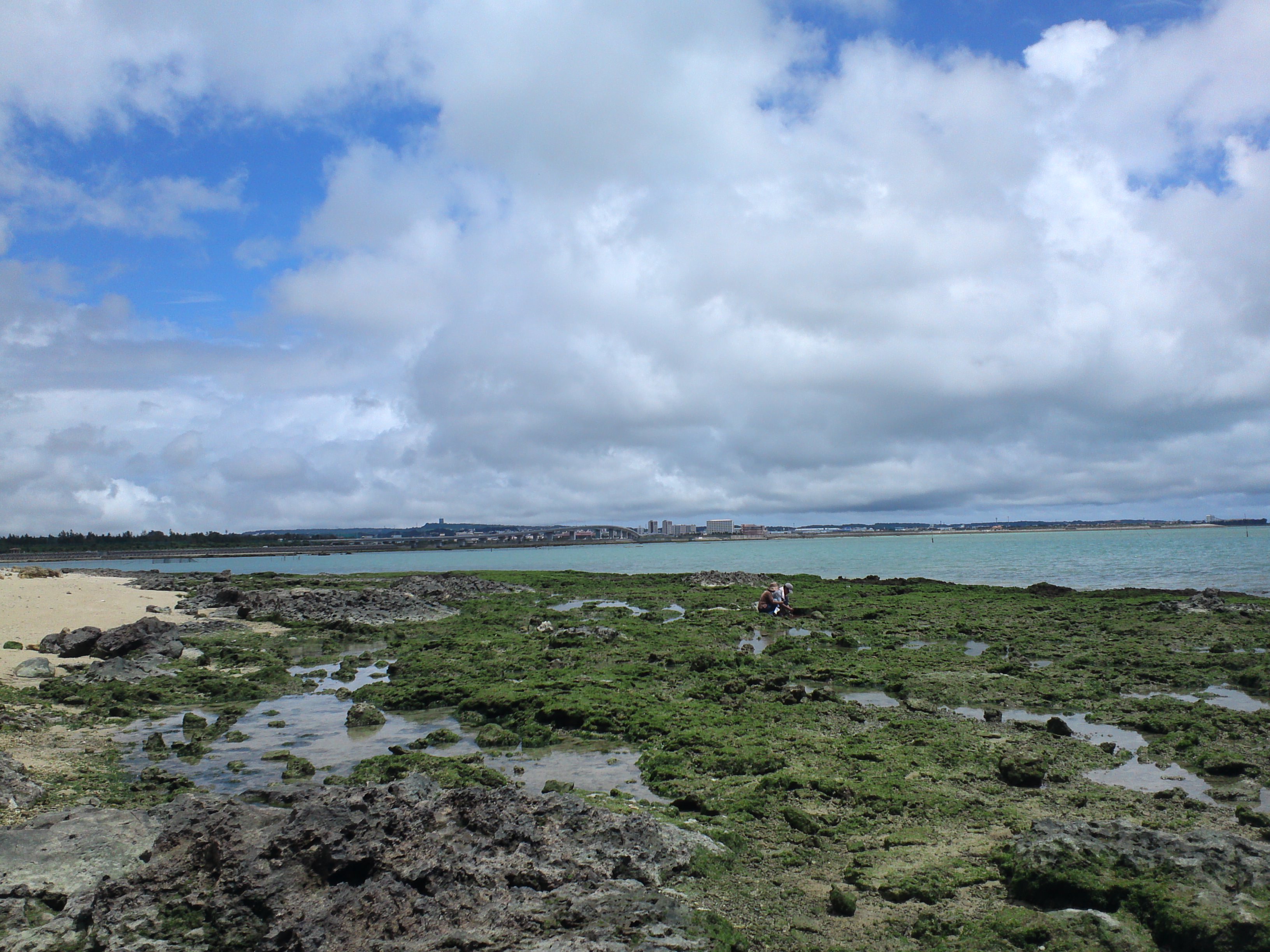
Ok, so no, I didn’t go to enter some odd-ball place opened by a big rock like in Murakami’s Kafka by the Shore, but my husband and I went for a spontaneous drive around Senaga Island. It’s really beautiful with ocean water surrounding the small island. Many locals visit just to look out at the sea.
In the distance lies the city of Itoman. It’s funny how in Japan, you can find a sprawling area of apartments and concrete buildings then look over and find a gorgeous view of the ocean. When you’re able to see this every day, the United States seems like it’s behind. Japan makes it easy to integrate nature and man-made structures, creating a harmonious atmosphere with the natural world. I wish that the United States could learn that co-existing, not crushing, what is natural–whether it’s the sea, the forests, or the people–can be a beautiful thing, like sitting on the edge of this shore.
Life (生活)
A little deeper insight into life
There’s Strange Kamaboko in the Window!
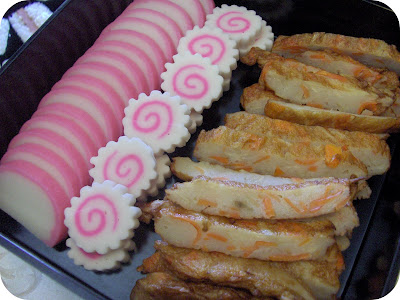
In Odawara, there’s tons of shops with their signature kamaboko (かまぼこ), or fish cake. If you’ve ever eaten or seen naruto (not the blond heathen from the series) in real ramen dishes, kamaboko has a similar texture and taste. A real fishy taste, like a sweetened fish was added to its smooth but firm existence. Most of the time, kamaboko is the half the shape of a circle with a pink outer layer and a white inner layer. When I showed this image to my co-workers, they were impressed to see the various shapes and colors of these kamaboko.
Spring has Come, and so has Allergies
I don’t have allergies, but my husband does, so this year, when I thought he would be the only one sneezing and hacking, I found myself having allergies as well. What the heck, Spring?
Recently, we found out that we weren’t the only sniffling sneezers around. Every minute, we could hear another tenant in our sea-breezed apartment either sneeze or cough. Even with a nice ocean breeze, we all have bad allergies, even people who don’t get allergies. What the heck, Spring?
It turns out that this year is the worst year of allergies. With the rise of global warming, winters become shorter and springs get longer, so flowers produce more pollen earlier. The pollen and increased heat from global warming combined can cause any non-allergic people to start sneezing.
The best way to overcome allergies is to use an AC in your home, drink a lot of water, wear cold masks, and if needed, take an allergy-fighting medicine (beware of medicines that cause drowsiness). If your eyes swell or become itchy, using a piece of ice wrapped in a paper towel or refrigerated teabags can reduced the swelling and redness. For the nose, put some lotion or moisturizer on it to keep it from drying out and becoming painful. And, in all cases, keep boxes of tissues nearby. It’ll come in handy!

Spring has come in Okinawa
Okinawa has come into the spring season. I have heard, “Spring has come,” but it has a different meaning in Japan than just blossoming flowers and warmer weather.
One of my friends from school told me that when a girl or boy got into a relationship, people would say this phrase. It’s the equivalent of “S/He is taken.”

White Day
Inspite of the earthquakes destruction, some Japanese folks can still try to enjoy a social holiday called White Day.
On March 14th, boys give girls chocolates and sweets. This holiday isn’t as popular in anime as Valentine’s Day, where girls give boys chocolate. Still, I enjoyed the cakes the men at my school pitched in to buy for the women.

Warning, Foreigners! There’s a Tsunami!
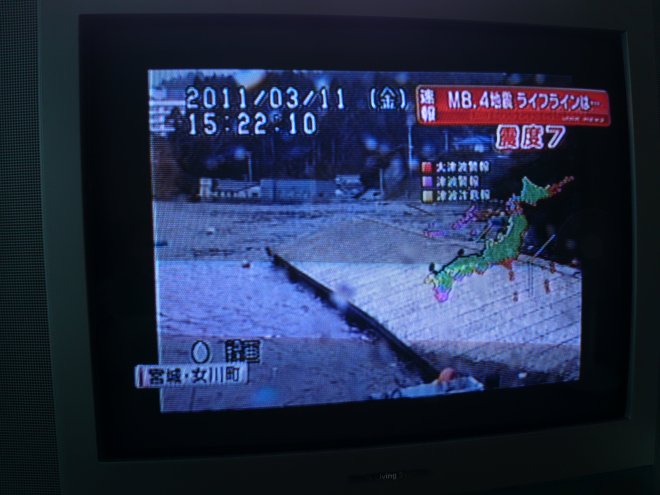
I didn’t realize an earthquake had ripped through the northeastern side of Japan until I watched ten minutes of Japanese news. I had just come out of the toilet and immediately noticed all of the education office staff clustered around the tiny television.
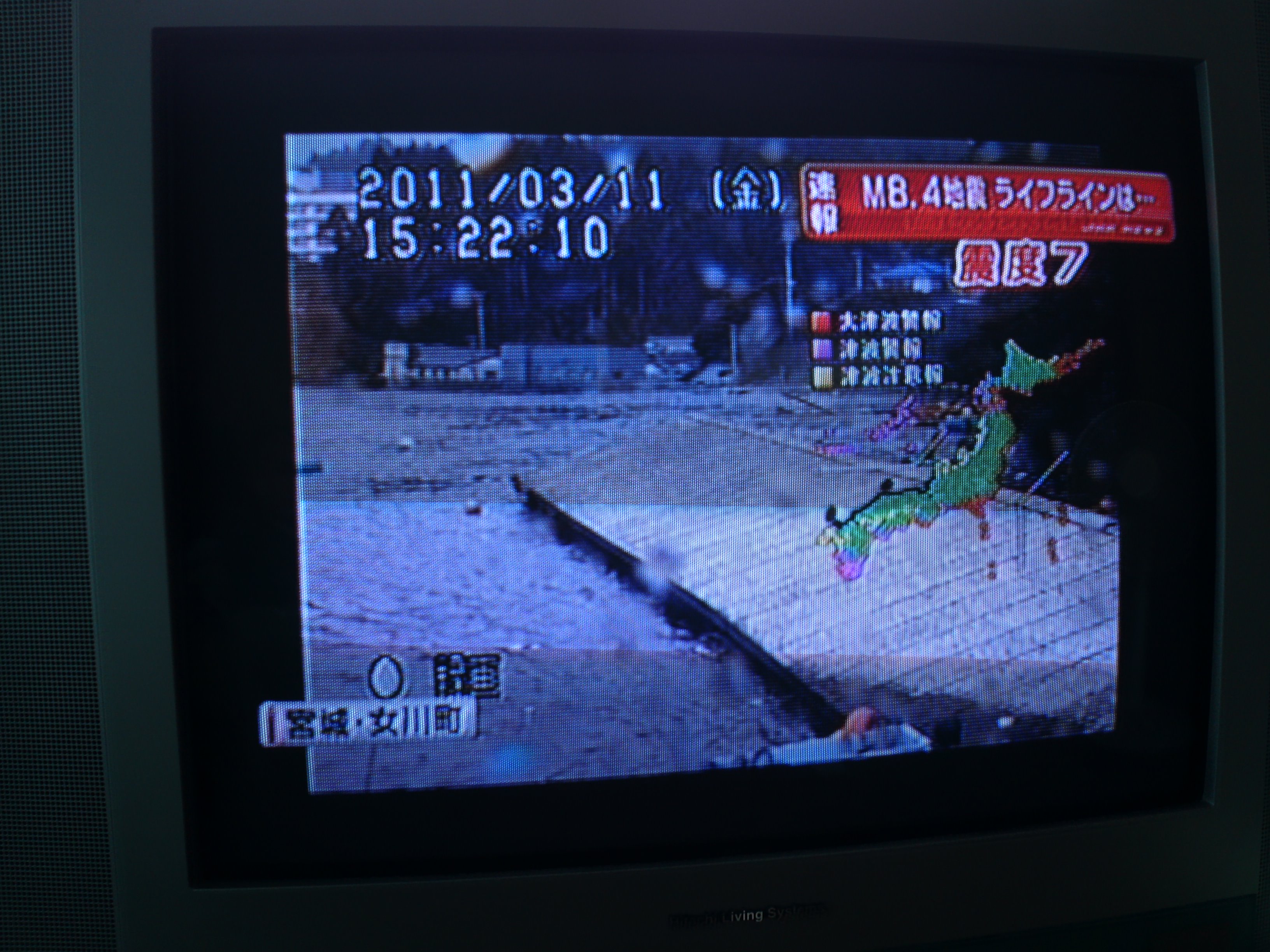
I watched in horror as cars were swept over bays and under bridges in Miyagi like they were bottles of plastic. We watched, my Japanese co-workers commenting their disbelief and shock in their native tongue. The image of Japan that showed the dangerous parts of the country were color-coded. Okinawa, a small pack of islands at the very south end of Japan, suddenly changed color, and within five minutes, everyone abandoned the blaring television.
I asked my coordinator what was wrong and why the water in the footage was reaping such destruction. “There was an earthquake on mainland Japan,” he told me calmly. “Now, there is a tsunami.”
I followed him and everyone else back to the staff room. I didn’t know there was an earthquake, and none of us would’ve known if it weren’t for the news. Being at the southern tip of Japan put us the farthest away from the epicenter, and we didn’t feel anything, not even aftershocks of the earthquake. Soon, everyone had made a list of the surrounding districts and the outer island schools. Though Okinawa is one big island, there are multitudes of outer islands, or islands that are separated from the main part of Okinawa. If Lost were a deserted island, Okinawa had many Lost-like brothers and sisters except they were inhabited by the local Okinawan people. Unfortunately, these islands were the most susceptible to floods and property damage, even to one meter of water.
My co-workers quickly phoned schools and district offices, telling them the latest news on the tsunami and asking if they were ok. Once a plan was situated, co-workers marked off each school and office contacted while others double-checked the conditions on the internet.
I didn’t know what to do. I had never been in a tsunami. Being from San Diego, California, the most I’ve endured besides the desert heat was a mild earthquake or two. However, watching everyone spring into action and some co-workers hurriedly leave for their homes, I worried. My husband, who came to Okinawa a week before, was at home, most likely without a clue about what was happening because he didn’t speak Japanese nor watched Japanese television. He also had no cell phone or home phone, so my worry increased. My supervisor looked at me, saw the worried expression, and told me to go home.
“Go to higher ground around 5:00 PM,” he warned before instructing me of places I could go. “It should hit around 5:40 PM today.” I left and drove, worriedly, towards my home. When I entered, I found my husband airing out the laundry. I quoted my coordinator and started packing an emergency bag. My husband was calm the whole time, even joking around about surfing on the water (because he is a surfer).
Around 5:00 PM, I phoned my friend on the mainland. Her phone was busy, as was many Japanese phones that day. I phoned another teacher who was from Florida. “Ah, I think I’m going to go out for a run,” he declared, upbeat and unperturbed by the news. “I’m closer to the coast anyways, so if I see anything, I’ll phone you. But I don’t think you’ll have to move.” So, since he just transferred from Yamanashi and been through several earthquakes, tsunamis, and typhoons in the last three years, I decided to trust his words.
My husband and I stayed home, and when he began to worry over the footage of cars bobbing in the Japanese bays and fires in the cities, we switched it off. I know it seems really strange to try to calm down, but we ended up watching random things online until 10:00 PM. Still, when we went to bed, the emergency bag sat the door in case we really needed to use it.
End of the School Year – Japanese Style!
Flowers in the Gutter
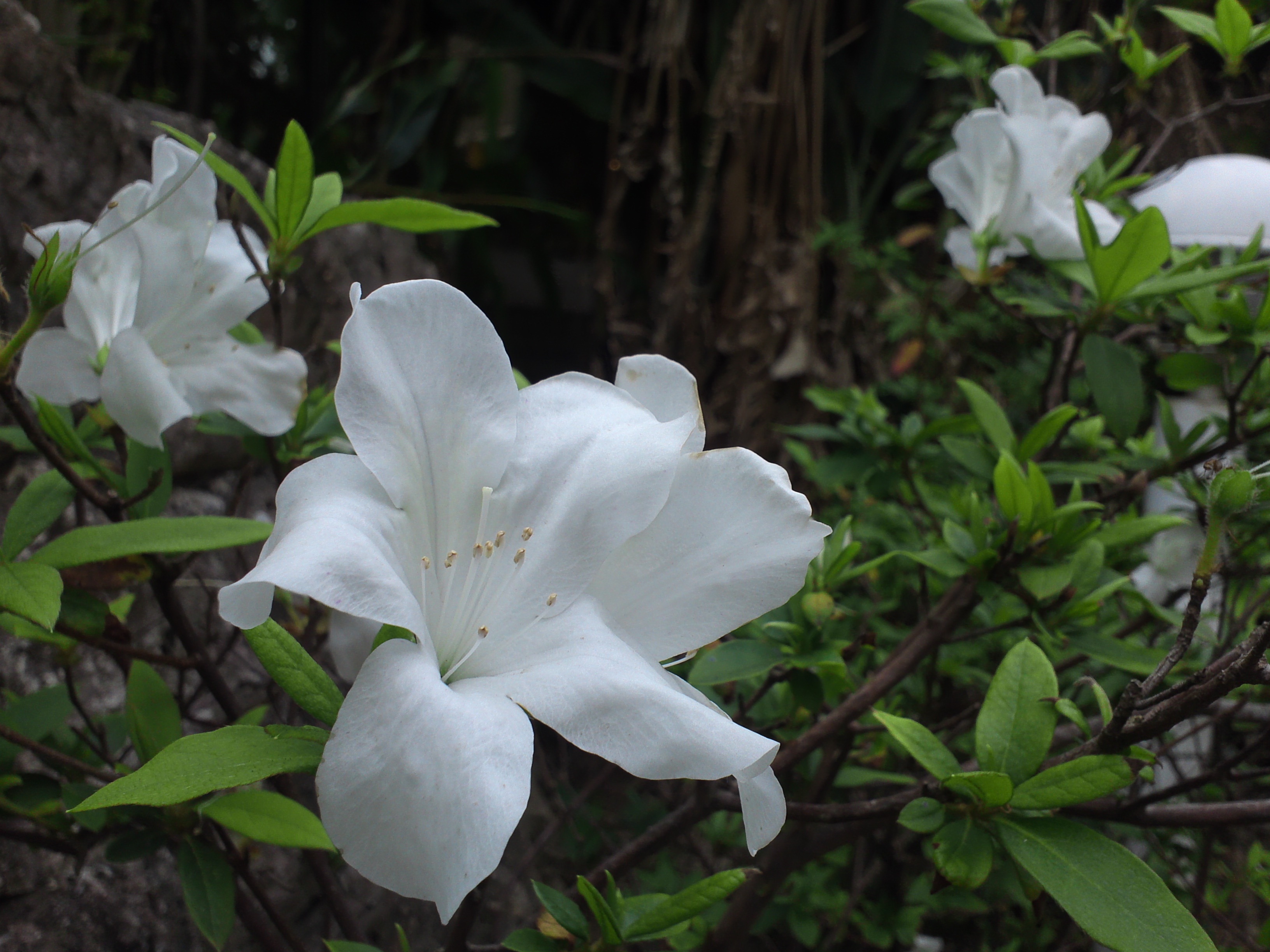
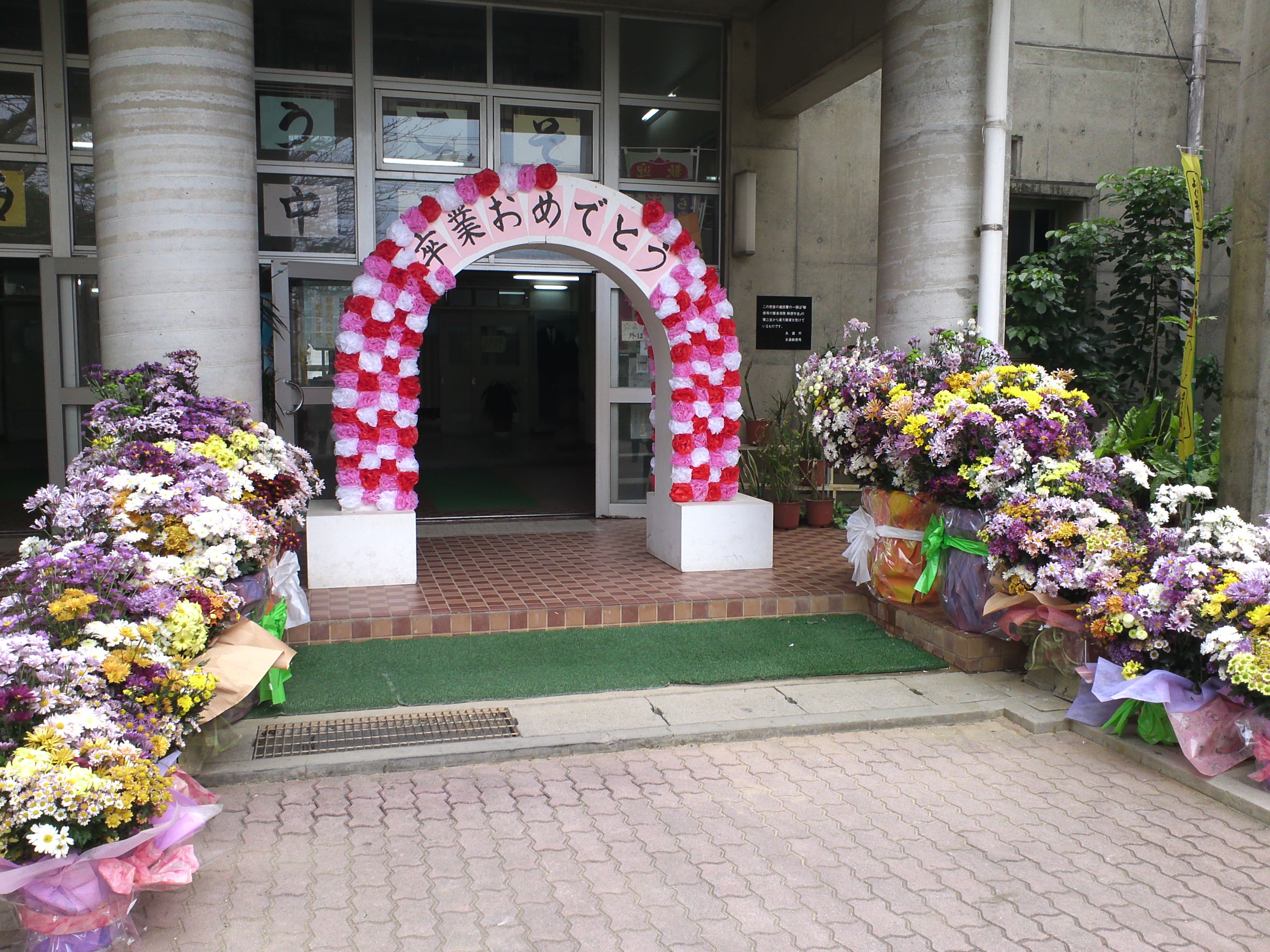
At the junior high school I work for, I noticed these beautiful flowers growing inside a drainage well outside the school’s entrance. It was really rare to see these white flowers bloom so wonderfully in the darkest place. Some people are this way, too. In the darkest situations, people can bloom.

When I told another teacher about these flowers, he was quite surprised. “What? Did someone put it in there?” he inquired, showing his astonishment on his face. I pointed out the gutter before we both went over to it. We both stooped down to look closer at the white flowers. I think the same thoughts were going through his head. Did someone plant these here?
As we walked back, some eyes from the other teachers and students on us–“What were they looking at in their indoor shoes?”–I asked Hiroyuki-sensei if it was a common thing to have flowers growing in that place. “Oh, no, it’s not common,” he replied, still amazed. He turned questionable eyes on me. “Why? Does that happen often in America?”
I shook my head as we changed from our indoor shoes into our outdoor shoes. “No, but I had to ask,” was my answer. After I told him I took a picture of them, we briskly walked to class, almost forgetting about those precious and strange flowers along the way. I think even people, who have bloomed in complete darkness, are soon forgotten as soon as they’re discovered. The only time these blossomed people can even reach past the same depth of their darkness is to reach out of the gutter into the sunshine. I suppose that’s why the wallflower and the sunflower references in books and anime are commonly used. These flowers, though ignored, are still occasionally remembered in their existence at one point or another.
Unfortunate for these beautiful, pure flowers within the gutter, the tendrils of support from the sun and water runoff can’t make it reach out of its forgetfulness. I feel pity for these flowers for knowing that I will forget them sometime soon, so I stooped to take a picture, by myself, to capture it in my memory.
This is Work?!
Car Crashes, Teaching English, and Siblings
The sound of glass shattering and metal colliding caused me to run to the window this morning. It was so close, I though maybe somebody hit my tiny Japanese car. But it wasn’t until I climbed into my car, safely parked in my parking stall, and drove down the road I always drove on in the morning.
A car in front of me nearly crashed into my car as it backed up to avoid the crumbled pieces of two stopped cars at the light. The rest of the time I drove to the junior high school I worked at, tension settled into my bones. My imagination runs wild with certain observations, and sometimes, I experience imaginary things with such a visceral quality, I nearly shake with fright.
But I arrived at school very early in one piece and said, “Good morning” to all of the teachers. Working in the junior high school in Japan has made me switch the gears installed into my head through living in America for 25 years. In America, I jumped between the quiet me whenever I worked in a place dominated by white people because I didn’t want to confirm any stereotypes. Outside of work, I was a louder more free me.
In Japan, it’s different. I get to be closer to the free me, where my wings only hit the top of the Japanese societal rules, not the American ones. I can speak more honestly. The difference is the language barrier, but even that is shattered once a bridge is erected. The only real boundary in school I’ve found is having to speak English to students. With the staff and other teachers, I can switch between Japanese or English, depending on their level of understanding. Still, I don’t have to cover myself up because of my obvious skin color. Already being in the country is enough to start to break down stereotypes, preconceptions, and assumptions.
I think the students are interesting, to say the least. In the junior high school I currently work at, the students greeted me with varying tones of “Hello” and “Hi”. As I passed classrooms to get to class, I felt eyes follow me down the hall and surprised calls, “It’s Miss Jd!” Several students ducked past me after a quick “Hello!” and a wave of their hand. I always respond back with the same greeting.
The funniest moment today was when I finished at the junior high school almost thirty minutes from my home. I turned off my computer, put on my i-Pod, and walked up to the junior high school four minutes from my house. After I greeted several students, two girls from the volleyball club stopped to talk to me. Soon, we were laughing and giggling at what some Japanese TV stars said on their respective TV shows. Even though we didn’t fully understand each other (although I’m understanding more of what people say in Japanese), I could feel their carefree spirits come from their small bodies. It made me smile to know that even when people couldn’t understand the words you say, they could understand the meaning in your heart.
I felt more energized as I went on to talk to a few basketball players. Although the stop into the office was simply to write a few sentences of English for the English teachers, I quickly realized that there was more to do. I worked at my desk and the time floated by like a butterfly. It was past 7:30 PM when I finally talked to my Okinawan brother, Ayuta. I decided to adopt him as my “younger” brother on Monday during our weekly run to the sea. Today, we talked for nearly an hour after gobbling a kimchi rice ball (onigiri), just talking about our “twins”, or our best friends. It was always fun talking to him because he reminds me of my older brother so much. I think he keeps me sane when I start to really miss my brothers.
When I walked back home in the dark, the air was so quiet, I became afraid. In America, I hardly walked in the dark anywhere, and the feeling of silence in nature worries me. It means that there is something dangerous out there and even the birds quiet themselves to avoid it. But in Okinawa, the things that I’ve come to understand in America don’t apply here, and I am sometimes confused. I calmed myself down to enjoy the warm air, and when I arrived at my apartment, I realized how peaceful life was here.
I want to remain in this peace forever, but I know I won’t. Still, I love living, working, playing, and being here in Okinawa.
Arrival
It almost feels like I’ve never left the United States! There’s an excitement making its way through the air, but I can’t seem to fully breathe it in. Maybe it’s my anxiety in being abroad, being by myself, and being who I am in a different country, and in doing so, I refuse to acknowledge the reality of my situation.
This is my dream. I wanted to stay in Japan at some point in my life. Nothing permanent, just experience it, and here I am!
Since our arrival in Tokyo, all of us JET participants have been going through orientation. What’s this and why that gets answered. I also get to practice my Japanese, which is something I’m looking forward to learning. Small goals, they say, and you’ll get through everything.
The only time reality sinks in is when I talk to my boyfriend online. He’s more than my boyfriend–he’s my best friend. Whenever he emails me, I remember where I’m at, where he isn’t, and I feel sad. Then, he makes me laugh and he reminds me that I’m away from him because I’m pursuing my destiny. I’m grateful for this opportunity and having him in my life. I get a rare chance to become a stronger and better person by making connections with strangers and maintaining a long-distance relationship.
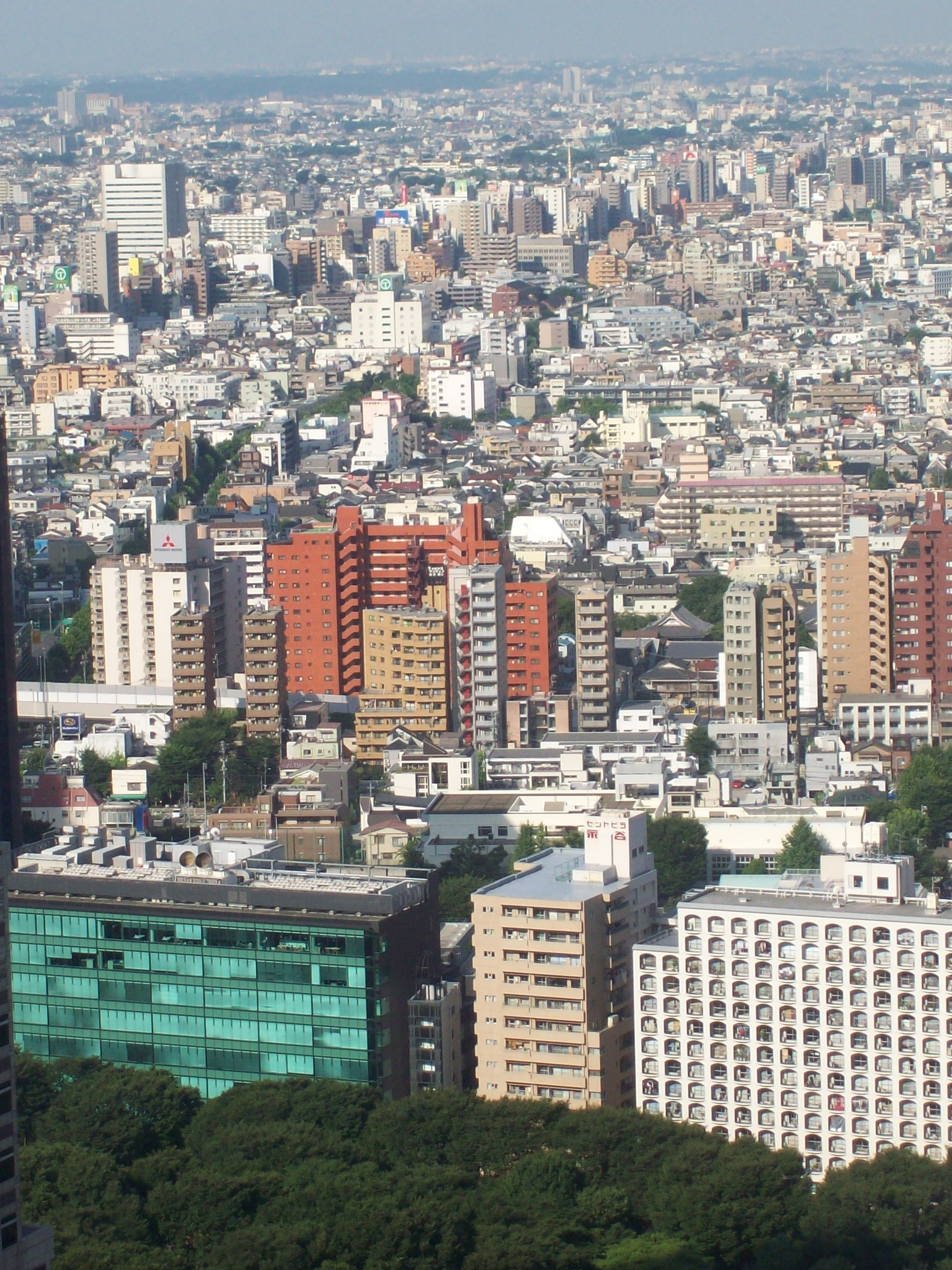
The first few days being in Tokyo are a blur really. I found this fantastic view on the 43rd floor of the Keio Plaza Hotel yesterday. It was breath-taking to see all of the buildings vanish into the horizon. I find it amusing how no matter times I see this landscape of skyscrapers and man-made forests of steel, I still find it fascinating.
I have been meeting so many people, all so great and wonderful. We’re all very very tired thanks to back-to-back meetings, workshops, and have-to’s, but we’re all very excited to reach our base schools and see what being an ALT is really about.
Supposedly there’s 4 stages: euphoria, hostility and depression, gradual adjustment, and complete acceptance. I don’t know what stage I’m in, but I’m supposed to hit these stages sooner or later. I know that whatever happens, I’ll probably do my whole breakdown when I get to my new apartment. We’ll see, but for now, I still don’t believe I’m in Japan!
The Escape
I’m not a house person. In fact, I spend most of my time away from the home, but I love my family. I decided early on in life that I wasn’t the type of person to stay in a freezer, chiseling away my life just to become a housewife or live within a black box of stereotypes. It meant pulling away from the rest of the world, including the people that didn’t accept me. Peeling away my inhibitions, I worked my butt off to get to Japan to teach English and to change my life. Now, it’s up to me to live up to my own expectations and potential.