
Yup, my husband and I stumbled across a can of whale meat at our local supermarket. It’s less than 500.

Okinawa

The Three Amigos at a Nomikai
My husband and I were invited to a nomikai, or drinking party, for my office, and my coordinator showed us how to make penguins out of our wet napkins. My husband exclaimed, “Ah, the three amigos!” before we explained to my confused coordinator what it meant.
It was a fun party. Unlike American office parties, Japanese office parties normally has tons of alcohol and not the weak kind either. There’s premium beer, sake, and owamori, a strong Okinawan alcohol that holds a candle to vodka or tequila. Most Japanese people can nurse these liquors without doing any gross or sightly damage. My husband, being a newcomer to all things Japanese, was impressed with their drinking and eating ability.
What impressed the both of us was when my coordinator told us more about the Okinawan people. “We focus more on relationships here. You can’t buy friendship.” That’s something I’ll always remember. Well, that and the three amigos.

Share this:

Papa’s Kitchen in Okinawa
I was invited to a women’s luncheon at a school I worked for and the restaurant turned out to be an Italian restaurant. I love Italian food!
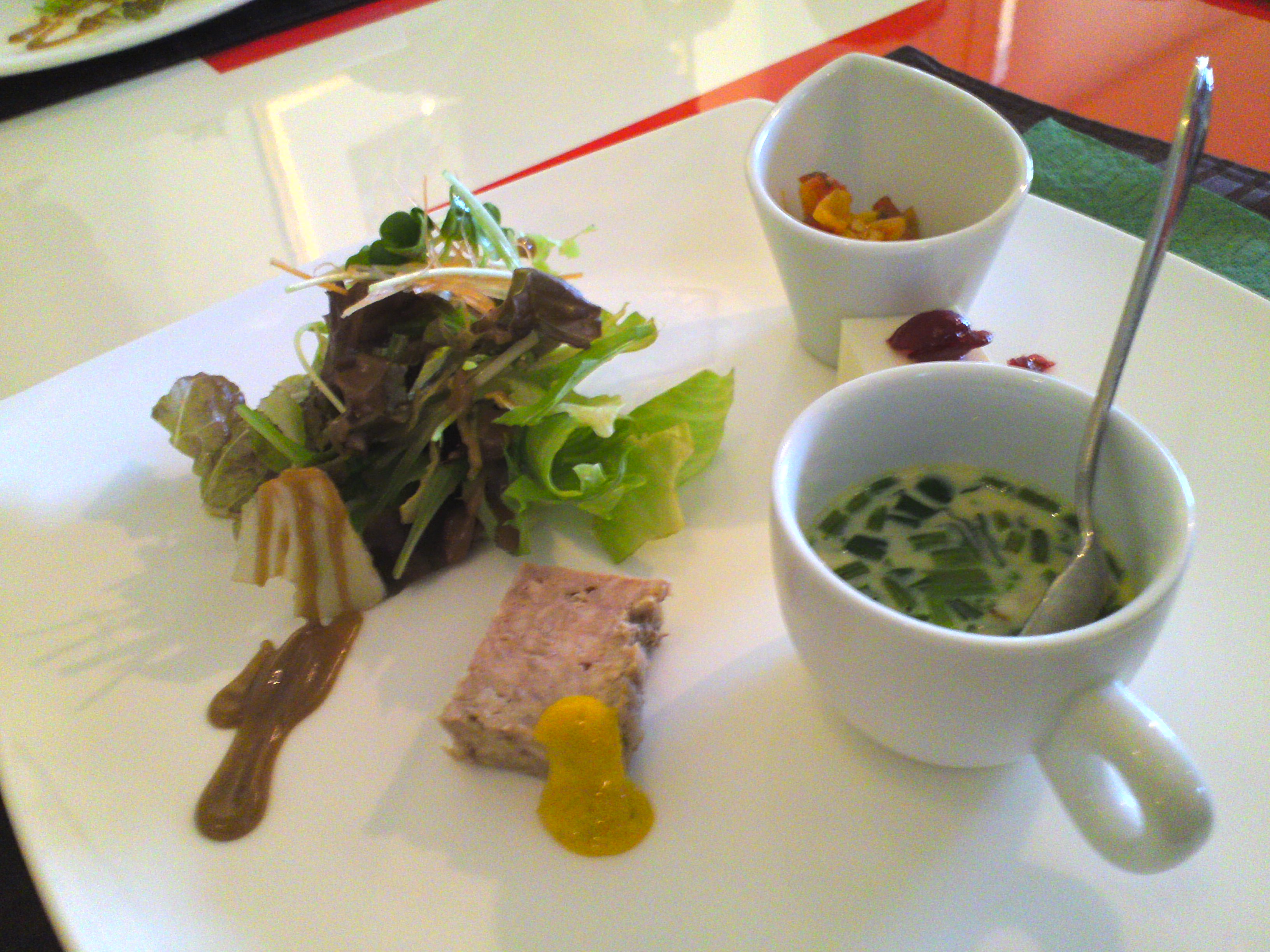
First, they served salad (sarada ) with an egg soup, light cheese-tofu square, and a bit of meatloaf with a dallop of mustard. It tasted very well, though the taste was more towards the Japanese tastebuds than the Italian ones.
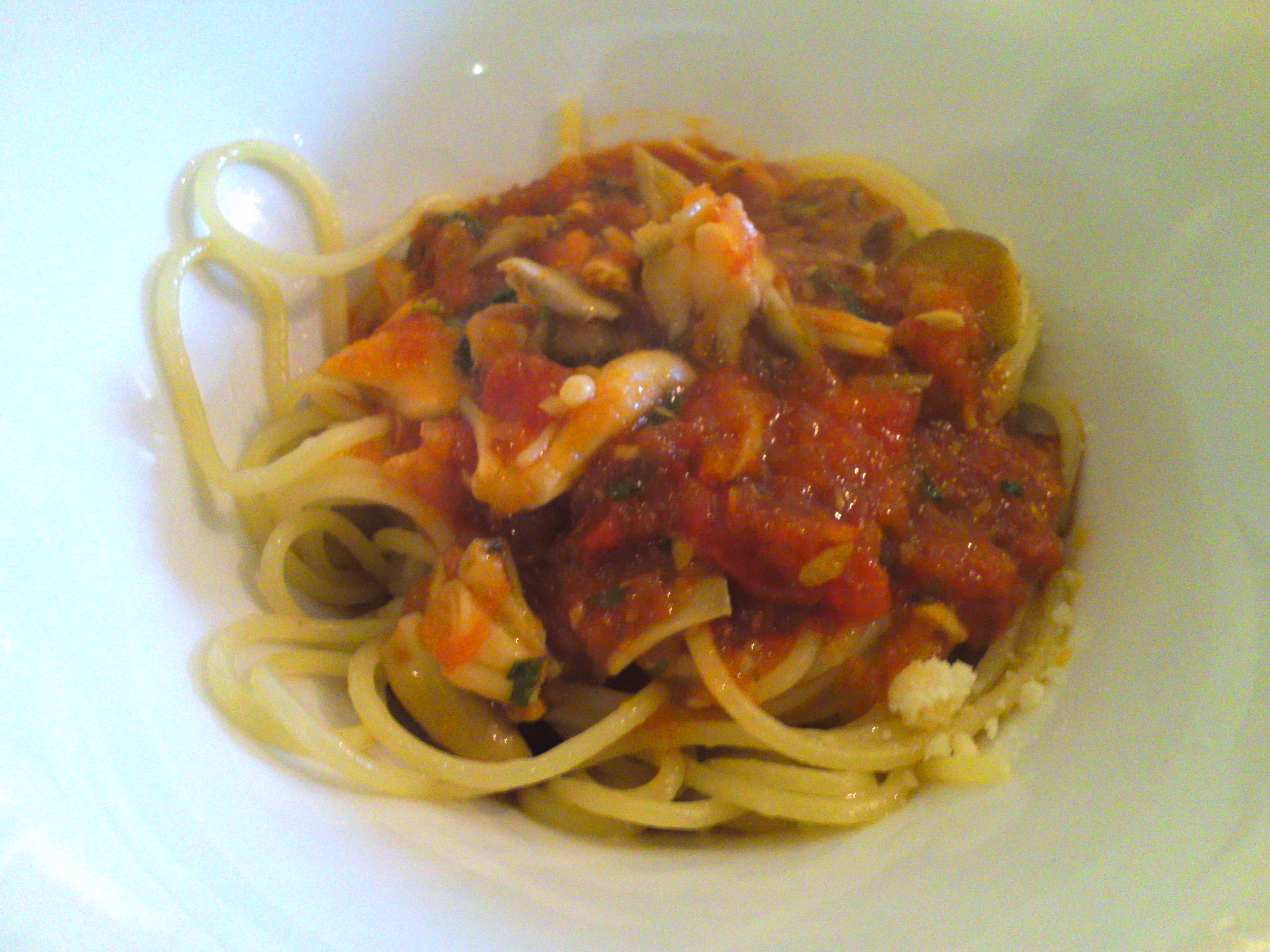
Pasta promptly followed the salad. It came a big, funnel-like bowl and looked like it wouldn’t completely satisfy my Italian-loving tastebuds. I was wrong; the pasta was absolutely delicious. The sauce wasn’t too heavy and the pasta wasn’t over or undercooked. It definitely beat out the jar of Prego my husband and I bought from San-A (a chain grocery store similar to Vons or Albertsons).
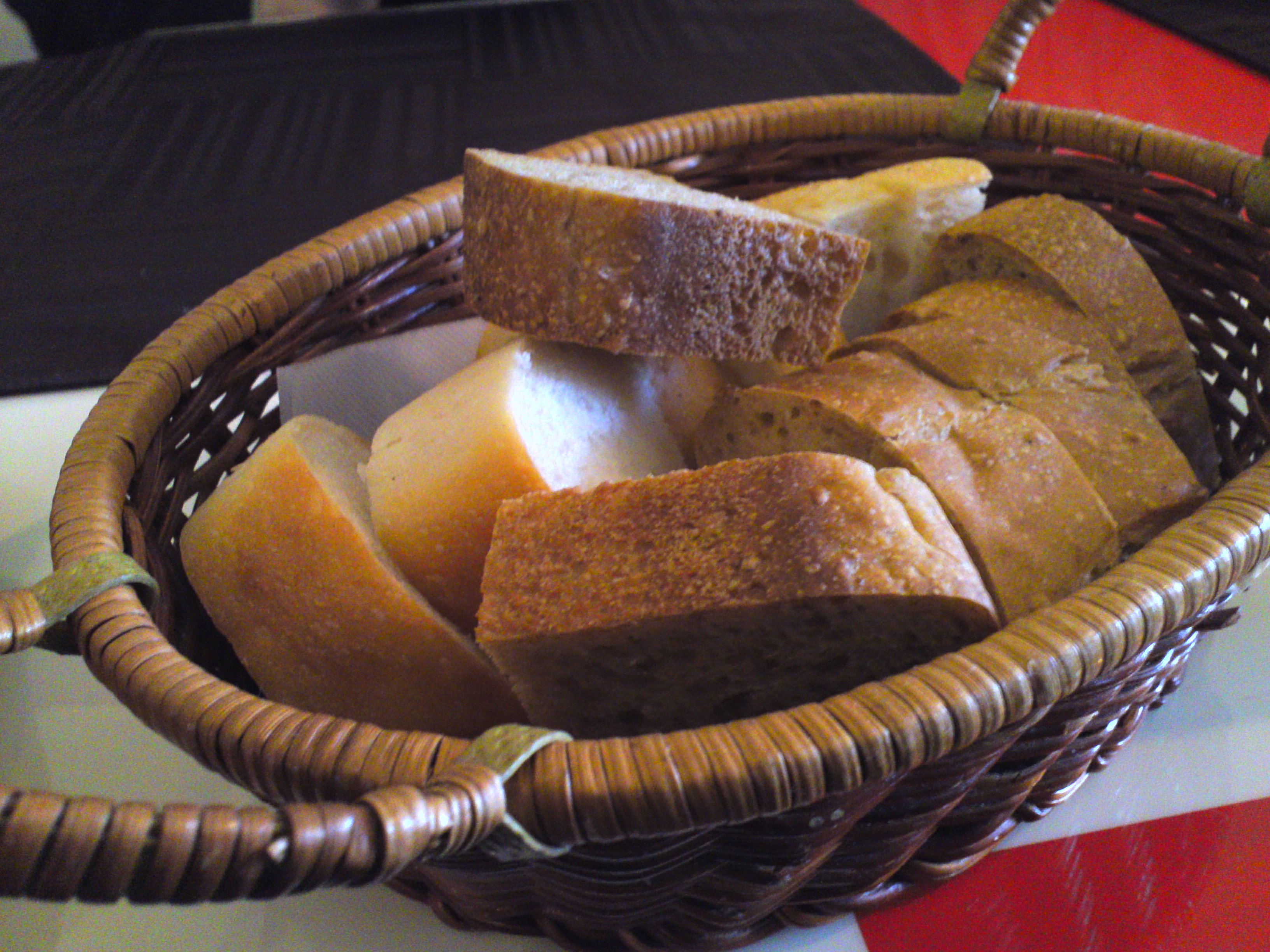
Handmade bread came to our tables in baskets, fresh from the oven. Having no oven, I had forgotten what it was like to eat handmade fresh bread. The outside was slightly crunchy while the inside was soft and fluffy. It reminded me of the bread served at the Cheesecake Factory, except this bread didn’t have that cardboard-paper taste. There were two kinds, wheat and white. The wheat was slightly sweeter than the white, and knowing that it was healthier as well, I took more than one slice of the warm bread.

Once the bread was nearly gone, the main course arrived, piping hot and beautifully arranged. A single piece of potato, broccoli, daikon (Japanese radish with a slight pungent flavor), and some purple mush I couldn’t identify surrounded a slice of saucy chicken. The chicken was so plump and moist, the vegetables flanking it was almost forgotten. The sauce was slightly sweetened and complemented the chicken and the various vegetables. As everyone ate their entree, I could hear the purrings of approval from the other women. Some even dipped the handmade bread into the sauce.

Lastly, the dessert came. Served with a thinly-sliced piece of sponge cake were arranged fruits and an ice cream cake. The fruits, which turned out to be sliced bananas, baked apples, and strawberries, tasted fresh but not overly sweet. The ice cream cake was chilly with its vanilla ice cream and cranberry cake mingling together for a wonderful, soft flavor. After the dessert, coffee or tea was brought to everyone, and it needed little sugar to sweeten the end of an amazing meal.
Share this:

Warning, Foreigners! There’s a Tsunami!
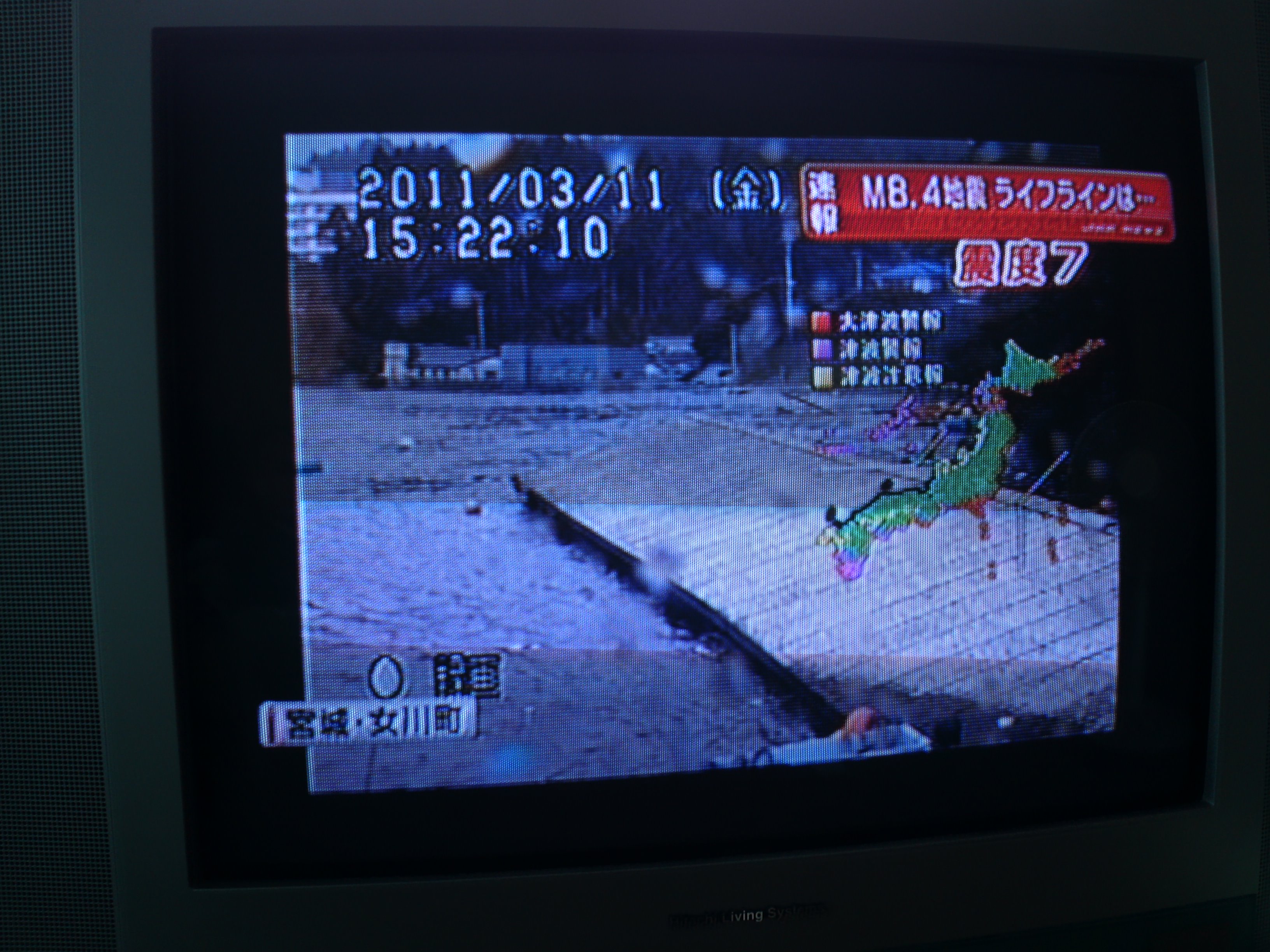
Footage from Japanese TV at 4:42 PM, March 11th.
I didn’t realize an earthquake had ripped through the northeastern side of Japan until I watched ten minutes of Japanese news. I had just come out of the toilet and immediately noticed all of the education office staff clustered around the tiny television.
I watched in horror as cars were swept over bays and under bridges in Miyagi like they were bottles of plastic. We watched, my Japanese co-workers commenting their disbelief and shock in their native tongue. The image of Japan that showed the dangerous parts of the country were color-coded. Okinawa, a small pack of islands at the very south end of Japan, suddenly changed color, and within five minutes, everyone abandoned the blaring television.
I asked my coordinator what was wrong and why the water in the footage was reaping such destruction. “There was an earthquake on mainland Japan,” he told me calmly. “Now, there is a tsunami.”
I followed him and everyone else back to the staff room. I didn’t know there was an earthquake, and none of us would’ve known if it weren’t for the news. Being at the southern tip of Japan put us the farthest away from the epicenter, and we didn’t feel anything, not even aftershocks of the earthquake. Soon, everyone had made a list of the surrounding districts and the outer island schools. Though Okinawa is one big island, there are multitudes of outer islands, or islands that are separated from the main part of Okinawa. If Lost were a deserted island, Okinawa had many Lost-like brothers and sisters except they were inhabited by the local Okinawan people. Unfortunately, these islands were the most susceptible to floods and property damage, even to one meter of water.
My co-workers quickly phoned schools and district offices, telling them the latest news on the tsunami and asking if they were ok. Once a plan was situated, co-workers marked off each school and office contacted while others double-checked the conditions on the internet.
I didn’t know what to do. I had never been in a tsunami. Being from San Diego, California, the most I’ve endured besides the desert heat was a mild earthquake or two. However, watching everyone spring into action and some co-workers hurriedly leave for their homes, I worried. My husband, who came to Okinawa a week before, was at home, most likely without a clue about what was happening because he didn’t speak Japanese nor watched Japanese television. He also had no cell phone or home phone, so my worry increased. My supervisor looked at me, saw the worried expression, and told me to go home.
“Go to higher ground around 5:00 PM,” he warned before instructing me of places I could go. “It should hit around 5:40 PM today.” I left and drove, worriedly, towards my home. When I entered, I found my husband airing out the laundry. I quoted my coordinator and started packing an emergency bag. My husband was calm the whole time, even joking around about surfing on the water (because he is a surfer).
Around 5:00 PM, I phoned my friend on the mainland. Her phone was busy, as was many Japanese phones that day. I phoned another teacher who was from Florida. “Ah, I think I’m going to go out for a run,” he declared, upbeat and unperturbed by the news. “I’m closer to the coast anyways, so if I see anything, I’ll phone you. But I don’t think you’ll have to move.” So, since he just transferred from Yamanashi and been through several earthquakes, tsunamis, and typhoons in the last three years, I decided to trust his words.
My husband and I stayed home, and when he began to worry over the footage of cars bobbing in the Japanese bays and fires in the cities, we switched it off. I know it seems really strange to try to calm down, but we ended up watching random things online until 10:00 PM. Still, when we went to bed, the emergency bag sat the door in case we really needed to use it.

 Jade's Escape