4 Strange Things to Notice About Japan

Japan is known for having some useful things, but what comes with great machines are also strange inventions and innovations.

1. The Sense-roid is more than a mannequin with a vest–it’s a hugging device. Yes, a hugging device that you hug and hugs you back. It’s simple. Just strap on an identical vest that’s packed with sensors and give the unarmed mannequin with silicon skin a hug. It’ll vibrate to simulate a hug. What’s weird about it–besides the informational video found on Youtube–is that the Sense-roid is really depressing. Do you really need to buy a hug machine for some human affection? I bet if you ask a stranger on a street, you can get a nice, fully-armed hug for zero yen.

2. If you thought tofu burgers were strange, there’s another kind of burger that’ll make you swear by tofu burgers. They’re called turd burgers, or burgers made from human excrement. A scientist in Japan developed a process to extract proteins from sewage mud, and by making it into an artificial meat shape, it is edible in burger form. According to the scientist, the meat itself would cost more than twice the amount of normal meat because of the careful process. “But it’s high in protein,” he claims, adding that the meat is very healthy. At those prices and my wallet, would I really trade in a tofu burger for a shit burger? I think not.

3. Like every industrialized country, Japan also seeks to push the limits of technology. Still, Japan definitely has some neat yet strange robots lurking in the daily aspects of their citizens’ lives. One of the most popular robots from Japan is a Honda-created robot named Asimo, who can walk, run, and serve coffee. Another robot is the catwalk robot from the 2009 Japan Fashion Week who can walk and talk like a young Japanese woman. And lastly, there’s the Gundam Wing mecha that was sitting in Tokyo.
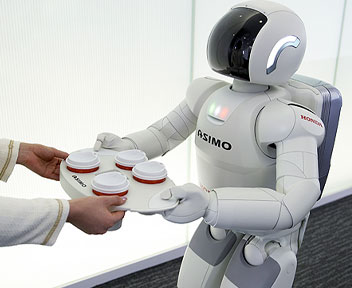
ASIMO serves coffee

You’ve got served…by ASIMO (from “World of Houg” blog)

4. Japan is good at “borrowing” other countries’ stuff and claiming it as their own. Sometimes, they make it better. For instance, bread is actually a commonality to the Japanese grocery store, unlike what Western people tend to believe that Japan is a non-bread country. In actuality, bread is done better in Japan than in the United States. (Of course, this is my personal opinion, but there’s a sure reason to not hate Japanese bread). The bread is soft and moist, and some breads are thick–perfect for sandwiches or even homemade burgers. Sometimes, Japan borrows foreign food and makes them, well, not as good. The ever-popular taco rice from Okinawa comes from, you guessed it, tacos of Mexican descent. Taco rice is made with ground beef and seasonings that you can find underneath “taco seasonings” from the El Paso brand. The beef goes on top of tomatoes, lettuce, and rice. It’s just as it sounds, and if you’re an avid taco-eater like I am, you’ll definitely want real Mexican food to wash it down. Then there’s curry rice, commonly called kare (カレー). For people who like Indian curry, it doesn’t have a lot of spice, but as a Japanese food, it tastes pretty good without the spicy burn.

Japanese Curry Rice

Japanese Curry Rice (from the “Closet Cooking” blog)

The Living Sea – Dragons in the Water

Sleeping on the boat ride over to Kudaka Island, a tiny island several miles from the southern shore of Okinawa, felt like a waste of a perfectly peaceful morning. From the emerald green mountains that loomed in the distance to the rolling blue sea immediately beneath the boat, the sight was worth more than a few extra snores. The sea itself amazed me. It looked like a living thing, the sea, with every tiny depression appearing closer to an azure dragon’s skin. It swelled and fell, breathing, waiting for something to challenge it before it broke white, hungry waves over everything in its path.

I suddenly understood why people strove tirelessly to protect the sea. When you look at it with keen, clear eyes, the sea is just as alive as humans are. Pushing garbage into it is the equivalent to forking rotting food into our mouths. And though humans can dispose of any poisonous morsels, the damage can’t be undone. The beautiful sea is the same way. Trash builds up on the shoreline and the sea creatures within its belly suffer. Ironically, at the end, we humans pay the penalty for our inconsideration. The infected sea creatures, like shrimp, calamari, and fish, go straight into our mouths, and the beaches our children delight in cannot grant them love anymore.

But, if humans with seeking eyes, take a boat ride–any boat ride–over the sea, they will understand its distress. After all, the sea is an extension of life.

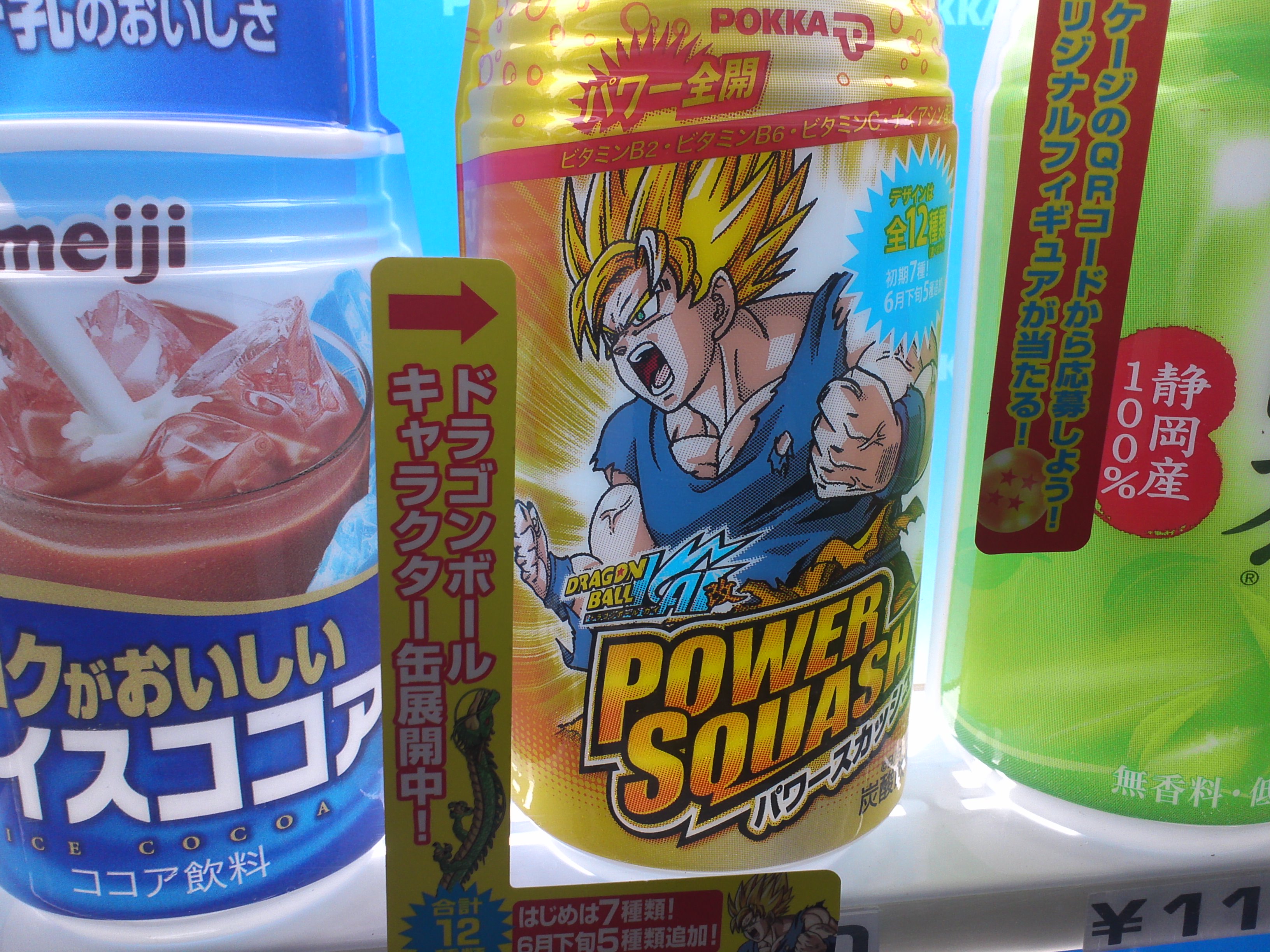
Super Saiyin Soda

I’ve said it before–characters and mascots are a common aspect of Japan. There are few places where you won’t find an insanely cute mascot describing some easy instructions or a popular anime character showing off on a special edition candy wrapper.
I found this new Dragon Ball Z drink on one of the innumerable amount of beverage vending machines in my city. Goku, who is popular character in the US and Japan, goes Super Saiyin on a can of soda called Power Squash worth less than a dollar. Even the drink’s name is appropriate for Goku.

3 Things to Notice While living in Japan

Another list about living in Japan, narrowed down to three things.
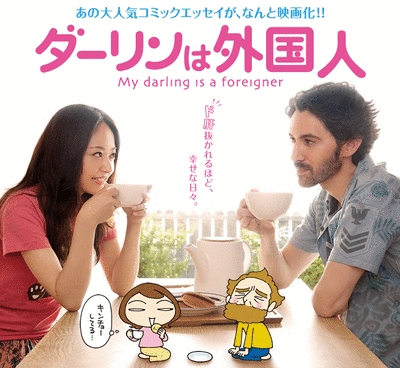
1. You’ll see foreign men with Japanese women, but not so much Japanese men with foreign women. I don’t know the exact reason, but there are many half-Japanese kids I’ve met with foreign dads. Maybe it has something to do with the ratio of men to woman, or if Americanized imports, like Hollywood movies and Disney fairy tales, play any role in these couples, but there’s a stereotype that foreign men will do chores. Every foreign bachelor who comes to Japan will have a Japanese girlfriend within a few months. (Just look at the 2010 movie make of the popular My Darling is a Foreigner manga!) But for foreign bachelorettes, it’s not the same. The way that Japanese culture is set up doesn’t support Japanese men–who are used to being served first–to be with a foreign woman–who is more likely to see everyone as equals, especially if they are from the Western world. There isn’t much space for outright opinions, which is a stereotype towards foreign women.

My Darling is a Foreigner

My Darling is a Foreigner from icollectmovieshq.blogspot.com

2. You get more for your buck…er, I mean, yen. The quality is better, but so is what you can get. At the convenience store, I can buy breakfast for my husband and I for under five hundred yen. There are already prepared dinners–not the frozen kind– for sale at the supermarket that can feed a small family of four for around a thousand yen (less than $10). And if you like to drink, there’s all-you-can-drink specials for around eight hundred yen. Even car insurance is reasonable and you can easily customize your coverage. It may seem expensive to live in Japan, but the actual value and quality gives a lot of worth.

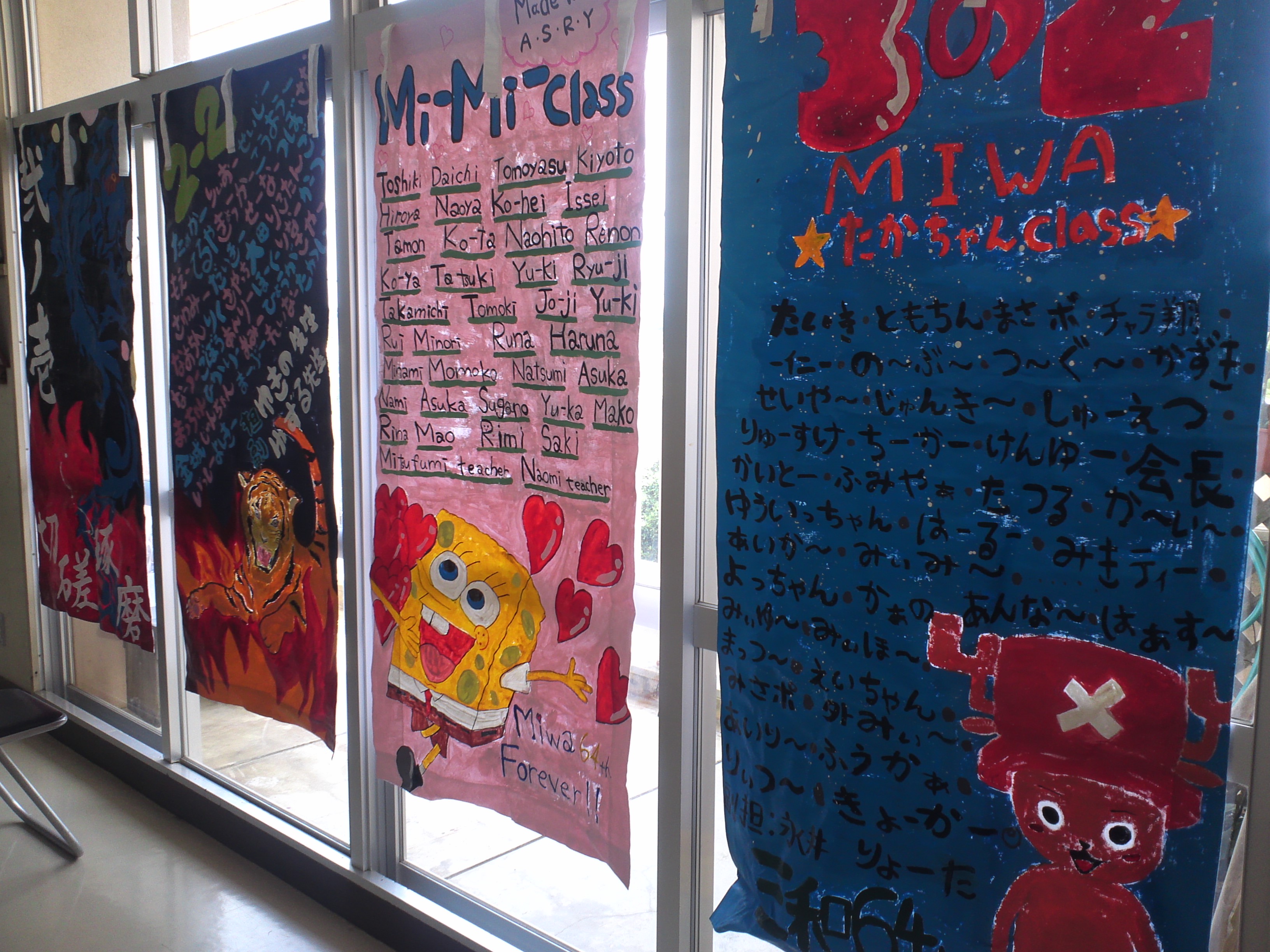
3. Characters and mascots are everywhere. All products have cute or appealing characters to entice buyers or explain instructions. My students even like putting popular characters to represent their class banners.

Mascots on my students' class banners (Chopper from ONE PIECE, SpongeBob, and Tigers)

5 Things to Think About in Japan – The Downer Edition

Since I’ve been doing a lot of lists about things in Japan that might not be known by the people in my home country, I’ve decided to do a more thoughtful list. But, this list isn’t as happy-go-lucky as the other ones, so be prepared to think and wonder.

1. Japan has a lot of nice countrymen–so nice, that the usual codes don’t feel like discrimination. I’ve read stories of foreigners in Japan being turned away from clubs, bars, and other places because they aren’t Japanese. For those who don’t know Japanese, you probably won’t understand the situation until someone points it out. For others who do and have learned Japanese culture and code, it will always be a shock and disappointment. I’ve learned that Japan can still have close-minded people or methods. For example, when I went to open a bank account, the bank requested that a letter of employment from me–and the person who I went with was a bit angry. “That’s discrimination,” he pointed out later, and I didn’t understand until he told me that this was his first time hearing this and he’s helped many people open bank accounts in Japan. Another example happened more recently. My husband and I decided to check out a nearby bar that had pool. Right when we walked in, a bartender stopped us and kindly stated, “You must have a member’s card.” We were refused before ordering a drink. Everyone else in the bar was Japanese. This event also happened to some ALTs on mainland Japan, who noted it in a JET writing contest, the code of having a “member’s card” or being a “VIP” as the same thing. So, before anyone thinks that Japan is a quiet haven free of stereotypes and discrimination, remember that Japan was once closed to the rest of the world for several decades.

2. The quality of service in Japan is one that makes Western countries pale in comparison–or is it? In the United States, everyone expects McDonald’s hamburgers to be slapped together without a care, or other people to ignore you when you’re in a state of need. In Japan, it’s a little different. Food is made with more care, presents can be wrapped at any store, and people generally help you out when you look like you need help. My husband made a great point when he looked around with fresher eyes than myself; “Is it because the quality in Japan is so good, or is it because the quality in my home country is so bad?” My answer would be the latter. Why? Individualism has to have sacrifices, and one of them is human decency. The mantra, “Think of yourself! Buy for yourself! Be yourself!” rings more strongly than “Think of others! Buy for others! Be kind to others!”

3. Image is too important. When I went to a soccer match for one of my schools, all of the students that weren’t involved in the sports had to go to the match to cheer on their school. I sat there with my students–and became immediately bored and disgruntled. Why were these kids sitting in the hot, sweltering sun in these thick uniforms? Most of them were digging in the dirt or trying to stay cool. They weren’t even paying attention to the soccer match, and some teachers lectured them about it. What’s the point of dragging these kids to “cheer on” their school if they don’t want to? To form a stronger bond with their school’s team when the players don’t even realize they’re there? Or is it really just about images, like the image that there’s so many people to support you because there’s bodies in the stands? This is something to see in every aspect of Japanese life, too. Going to a nomikai, or a drinking party, is attended by a whole office to reinforce bonds for working. A non-drinker could feel left out, so why should they go? For an evening of watching other people get drunk? Or is it image again, the image that there’s unity amongst the office workers who really don’t know each other?

4. Everyone does everything hard–school, work, and playing. Students start studying rigorously for exams in junior high school. Adults work well past 5pm–sometimes until 8 or 9pm–just to complete a report. Additionally, adults can party hard in Japan. Lined on every street, there are armies of izakaya, or bars. Some you can recognize simply by the red lanterns glowing outside of their doors. Others are openly advertised with 100-yen beers on banners. Many adults go to these bars, drink until they’re drunk, stumble onto another bar, drink, maybe go to a karaoke place or bowling, then go back to drinking. And this can happen on any given night, most of the time, immediately after that 10-hour or more job. It’s really common to see a salaryman stumbling through the streets drunk. But does all this de-stress people, or does it add to the stress? It’s not like their livers are getting any better at filtering beer, work, or studying.

5. As a teacher, there is another close-mindedness that extends beyond the classroom. Many people just assume that as a foreigner, you don’t speak Japanese. For example, in meeting my husband’s school principal, he could introduce himself in English very well. Then, he looked at the Japanese librarian and said in Japanese, “She’s cute.” I said to him in Japanese, “Thank you,” and his eyebrows went up in surprise. In class, it’s fine if the students struggle a little bit to find the English word–they’re studying the language and every bit of practice can help them on their tests and in the real world. But as an adult, it’s somewhat sightly to see the internal struggle. Just say it in Japanese, and if I don’t understand, it’s not a big deal. Gestures work too. English, or any other language that’s learned, doesn’t have to be perfect. This is where students and people get in an unnecessary panic. I, as a native English speaker, simply just appreciate the willingness to try to communicate in English.

6 More Things to Learn When Living in Japan

Here are a few more things to learn when you’re a foreigner living in Japan:

1. Everyone loves to say “kawaii” (cute), “kakkoi” (cool), or “ikemen”  (slang – cool or hot) whenever you wear, say, or do something interesting. It seems that Japanese people are always watching you, especially when you’re a newcomer. If you’re new to an office or school, people will notice even the smallest things about you, like your hair, earrings, bracelets, watches, or clothing. It’s a little more daunting if you’re not used to being watched, but for teachers like me, it’s a good conversation starter in English.

2.  You’ll get invited to everything. Whether the invitation is from other foreigners or from Japanese people, there is a need for everyone to invite you to every event taking place in the city. For foreigners, it’s just another chance to hang out with part of the 4%-foreigner statistic in Japan. For Japanese people, it’s a way of showing off their culture that most foreigners would be unaware of.

3. If you know how to use chopsticks, you’ll get comments wherever you go. Because there’s this misconception that foreigners don’t know how to use chopsticks, if Japanese people see a foreigner eating with them, they’ll point out in Japanese, “You use chopsticks very well.” If you come to Japan to work or teach, you’ll hear that incessantly. It’s just a way for Japanese people to get to know you. (For me, I tell them that I’ve used chopsticks since I was in high school because I knew I would come to Japan one day.)

4. It’s hard to get anywhere with “maybe”. It’s more of a cultural thing than foreigners realize. In the United States, “maybe” means that you’re considering something, but there is no clear-cut “yes” or “no”. If you say “maybe” when talking to a colleague in Japan, unless they’ve lived in a Western country before, most Japanese people will take it as a “yes”. Also, most students don’t learn the word “maybe” until they’re in senior high school, so using it freely in a conversation with junior high schoolers and elementary school students will get you confused stares. Be careful about saying “maybe” when someone invites you to an event you don’t want to go to. They’ll be expecting you to show up!

5. Customer service runs really high in Japan. Even if you’re a customer in a McDonald’s, you won’t find customer service like that in Japan. Being a foreigner who hasn’t studied Japanese, going to a fast-food place can be a little scary because everything is written in Japanese. However, most places in Okinawa has an English, Korean, Chinese, and/or Spanish menu ready for foreigners. There are some restaurants on mainland Japan where the menus have Japanese with English translations. Aside from language, places like airports are really impressive with customer service, though they must be strict with the rules. Recently when my husband and I were at Haneda Airport looking for their popular roll cake, a worker told me that they didn’t have it at their shop, but she called around to find which shop had the roll cake. She directed us and when we arrived, the other worker was ready with roll cake in spite having to close in that last few minutes.

6. Advertised food actually looks like the pictures. More than likely, when you order something, the food actually looks like the pictures. It’s not just slapped together like someone didn’t care. There isn’t too much of anything on it (unless you’re a picky type). Just right.

Mega Burgers from McDonald's

Mega Burgers (2007) from McDonald's (source: supersizedmeals.com)

Architecture Doesn’t Have Feelings

Though most foreigners think that Japan only has pagodas and deep-red architecture, the building landscape is different than what you see in anime (manga is a little more realistic but only by a slight margin). Actually,pagodas are influences from China.
Many buildings are really old and damaged-looking. They are built to last for a long time. Some apartments are built with the ground floor as the parking lot while the rest of the building is supported only by pillars or columns. I suspect that these kind of buildings are remnants of Japan’s earlier days when the nomads began to settle and more permanent settlements began. The buildings were similar, except the purpose: to protect food stores. But it’s funny to see these things still around after several hundreds of years.
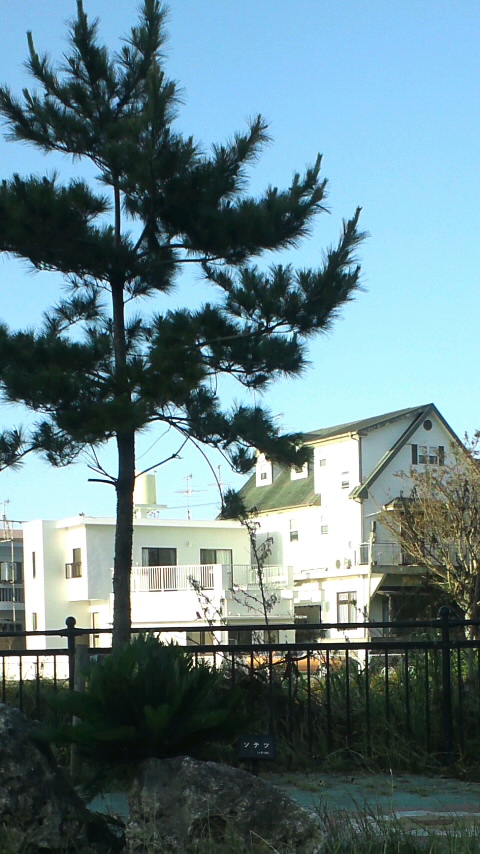
I live in Okinawa, so you are more likely to find some non-Japanese architecture, like the old house in the picture.